For most modern workloads, a steady, predictable traffic flow is a non-negotiable when it comes to naming what truly matters for operational efficiency.
Application platforms need stable paths to deliver consistent response times, and backup processes depend on reliable links to protect data. Now, AI workloads add even more pressure, since training and inference demand constant access to large datasets. If connectivity performance is weak, delays start surfacing across the entire stack, and hardware often remains underutilized.
It’s true, infrastructure planning does start with hardware, comparing compute options, looking at storage capacity, and assessing GPU availability. These choices matter, but they tell only part of the story. The actual performance of your environment will depend on the network beneath it, because hardware can only work properly when data movement is reliable.
Modern architectures make that dependency unavoidable. Hybrid and multi-cloud designs introduce frequent data exchanges between on-premises systems and cloud services. Distributed applications increase east-west traffic as components communicate across the facility. These patterns add up and turn connectivity into one of the most important operational needs. This leads to a simple but necessary question: Does your connectivity performance support what your workloads need?
A strong network foundation lets your hardware operate at its intended level. It also prepares your environment for the data-heavy, latency-sensitive demands of AI. Read this blog to find out why connectivity performance is at the very foundation of AI success.

Why Modern Connectivity Performance Means More Than Bandwidth
The way you design your routes also affects real operational stability. If all traffic relies on a single path, a single incident can halt everything. When multiple, diverse paths exist, traffic shifts naturally during outages, scheduled maintenance, or upstream failures. This architecture is what keeps services running when conditions change.
Another major influence on connectivity performance is how you reach cloud platforms. Strong peering relationships and direct access to cloud on-ramps create shorter, cleaner routes. These routes bypass the public internet and support hybrid and multi-cloud workflows with greater predictability and control.
Hardware In Itself Is Not Enough
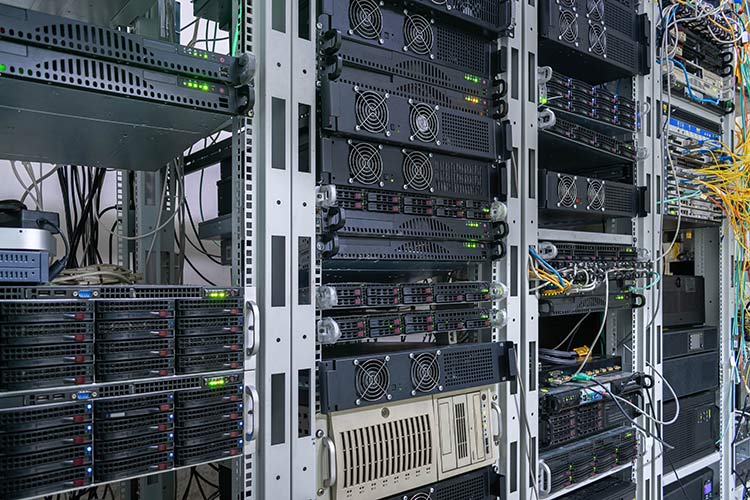
High-performance servers, GPU clusters, and dense compute architectures understandably receive most of the attention during capacity planning. However, their real value depends on the network that feeds them. Hardware in itself is not enough to deliver strong results if the connectivity layer struggles to move data with consistency. This is because connectivity performance is directly linked to how efficiently those systems are able to operate. Today’s workloads rely on fast decision cycles, and every component in the chain depends on predictable, steady data flow. For instance, AI inference requires immediate access to model assets and upstream applications. Real-time analytics pipelines likewise depend on continuous streams without irregularities. Storage systems also need consistency to replicate across domains. When latency rises or packet behavior becomes unstable, these systems fall out of sync. Even the most expensive hardware then remains underused as it waits for data.
It’s easy to see why connectivity performance supporting this environment becomes as critical as the compute stack itself. Dense computing generates heavy east-west traffic inside the facility, placing constant pressure on the interconnection architecture.
When these paths fail to maintain stable latency or control jitter, workflows slow down. This happens regardless of the raw power available at the server level. Hybrid and multi-cloud designs extend this dependency further. Their performance heavily depends on clean routes to cloud on-ramps, strong peering relationships, and, of course, redundancy that holds under load. Weak points anywhere in these routes create bottlenecks that diminish the overall value of your infrastructure investment.
Why AI Raises the Stakes
These challenges become more visible as AI adoption expands. With large models and data movement growing in volume, even the smallest weaknesses in the network design become amplified. The hardware may be the most capable there is, but its output can quickly plateau if the connectivity layer can’t keep pace. Ultimately, hardware produces the best results only when it operates on top of a network engineered for precision, resilience, and sustained connectivity performance.
The Real Risks Behind Subpar Connectivity
The tricky part is that subpar connectivity doesn’t show its impact in obvious ways. Most environments continue functioning, which makes the underlying issues easy to underestimate.
However, the network influences every part of the data-center stack, and when connectivity performance becomes weak, the effects spread through applications and workflows. These issues don’t appear as major outages. Instead, they show up as slower interactions, inconsistent API behavior, longer processing times, and growing pressure on downstream systems.
This means that small connectivity issues start showing up everywhere once you operate at scale. In distributed and hybrid environments, applications depend on constant communication between services, systems, and locations. When latency creeps up or packet delivery becomes inconsistent, workflows slow down in ways that are hard to isolate. Systems retry requests, background processes take longer to finish, and then data movement starts competing for limited paths. None of this looks dramatic on its own. However, together these problems put a load on the entire environment. Over time, throughput drops and applications start to underperform.
Hidden Degradation That Accumulates Over Time
Subpar connectivity performance doesn’t manifest its impact in dramatic failures and outages.
Most issues begin just as subtle slowdowns that can be easily misattributed to something else. Systems keep running, creating the illusion that everything is all right. But slowly, teams typically start noticing small delays that are hard to trace back to the network. These issues often appear as:
- Requests are taking longer to complete than expected
- Interfaces feel less responsive during routine interactions
- Background processes retry when responses arrive late or are inconsistent
- Replication tasks extending beyond their normal completion windows
- API timeouts are increasing under otherwise normal load
- Internal queues are building as services wait for upstream responses
Of course, these behaviors mean extra work for the infrastructure. The infrastructure has to deal with systems repeating actions and waiting longer for responses, which gradually increases overall load. As the pressure spreads across connected services, connectivity performance issues begin to surface in the most unexpected places.
Strategic Limitations That Restrict Growth
There is also a long-term business cost hidden in poor connectivity performance.
Most modern workloads function within strict performance boundaries. When the network can’t support those boundaries, the organization loses access to technologies and markets that rely on them.
The consequences? AI inference pipelines built for real-time decisions fail to meet latency requirements. Customer-facing platforms are unable to expand into regions where paths lack stability. High-availability designs remain merely theoretical because the network can’t provide true path diversity for failover.
These limitations act as a ceiling on growth. Even if your current environment appears functional, weak connectivity performance restricts future expansion and, as a result, competitive evolution. A strong connectivity foundation should remove these constraints and support the level of performance modern architectures require.
Connectivity Performance in the Age of AI
When organizations start deploying AI at scale, they often discover that the network behaves very differently than it did for traditional workloads. Training pipelines push large volumes of data back and forth between storage systems and distributed compute nodes. This increases east-west traffic inside the data center. Inference introduces a different kind of pressure. Response times become critical, so even small increases in latency can change how applications behave in real time. That creates a sustained demand on the network.
Models grow in size, and decisions around where data and compute live are becoming more and more complex. Moving datasets across long distances introduces delay and inefficiency. Bringing inference closer to data sources improves responsiveness, but in exchange, it also concentrates traffic around local and regional interconnection points. At that stage, predictable latency and reliable failover paths start to matter just as much as raw capacity.
Because of the motives stated above, connectivity performance is starting to move to the center of infrastructure design discussions. Private links, local peering opportunities, and well-placed cloud-on-ramps shape how smoothly AI pipelines operate and how manageable costs remain over time. Many organizations find that connectivity performance becomes the limiting factor sooner than expected, and long before compute resources are fully consumed. Planning for this early creates the flexibility needed to support continued AI growth without constantly redesigning.
Meet-me Rooms and Carrier Equipment Rooms
Inside a data center, meet-me-rooms and carrier equipment rooms sit right at the center of interconnection. These define how traffic enters, exits, and circulates within the facility. Their layout and capacity directly influence how efficiently carriers, cloud providers, and customer networks exchange traffic. That makes them a key factor in overall connectivity performance.
The meet-me-room serves as the aggregation point for cross-connects, where carrier panels and customer fibers meet. When designed well, this concentration simplifies routing decisions and supports consistent latency for workloads that depend on stable and high-quality paths.
The carrier equipment room supports this environment. It houses the network gear that carriers deploy when they establish a Point of Presence in the facility. This space holds the switches, optical systems, and routing hardware that feed capacity into the meet-me room. When a new carrier arrives, it typically places a rack in the MMR. It also installs a cabinet in the CER to operate its equipment. Strong design in these rooms provides diverse fiber paths, growth capacity, and reliable power. All three are necessary to support the expansion of interconnection ecosystems.
The importance of both rooms increases with the acceleration of AI adoption, making the MMR and CER essential components of connectivity performance.
AI’s Impact on the Network
Connectivity performance becomes a central concern as training pipelines consume significant bandwidth as data moves between compute clusters, storage systems, and cloud environments. Inference workloads come with strict latency requirements, especially when applications rely on rapid decision cycles. These two patterns increase the pressure on network services and reveal the need for higher capacity and more predictable connectivity.
Carriers are responding by preparing optical systems that support 400G wavelengths and upgrading backbone routes across major regions. Dedicated optical networks are being built inside and between data centers to provide clean, high-capacity paths that sustain AI traffic at scale. Redundancy, physical diversity, and high throughput are becoming core design requirements rather than optional features.
Data centers also face new responsibilities. Growth in carrier equipment requires additional space and power, and facilities must accommodate these needs without constraining future expansion. As AI-driven workloads evolve, strong connectivity performance and rich interconnection ecosystems become more important for long-term planning.
The network environment in the AI era depends on speed, scalability, and continuous readiness. Organizations benefit when carriers and data centers work in alignment. Together, they create connectivity architectures that support both current AI workloads and the next generation of high-performance services.
The Importance of an Abundant Interconnection Ecosystem
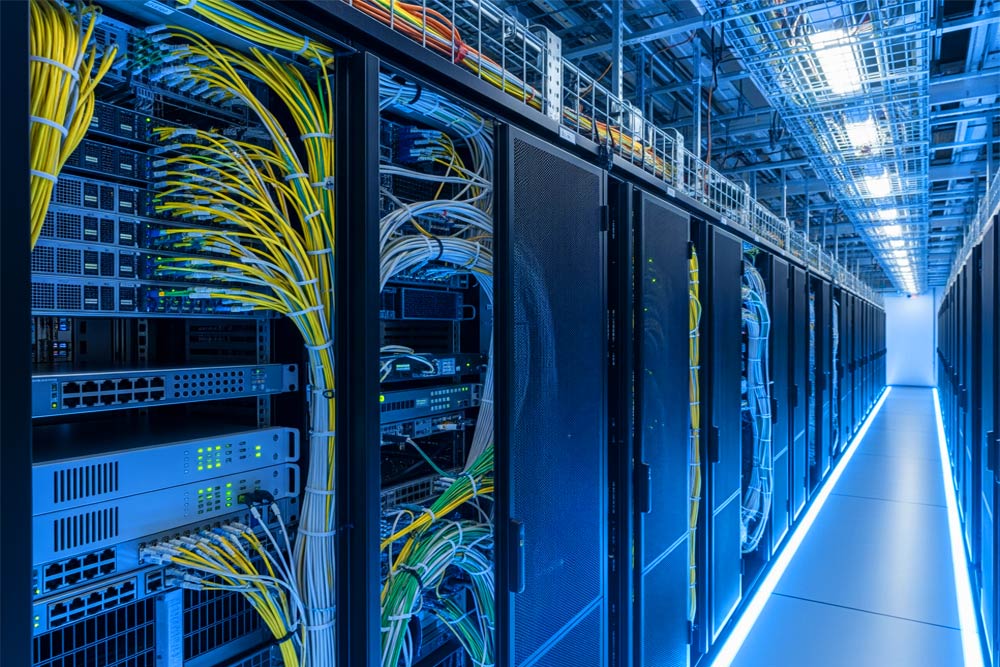
Connectivity performance depends heavily on the interconnection ecosystem surrounding your workloads. Specifications such as bandwidth or link capacity matter. But their value grows inside a data center with a wide range of carriers, cloud providers, and network partners. In these environments, you gain access to multiple routing options, diverse paths, and the ability to choose the most efficient connection for each workflow. This flexibility becomes a strategic advantage as your infrastructure grows.
Direct cloud connectivity is a major part of this ecosystem. Access to hyperscale on-ramps gives you predictable latency, stronger security boundaries, and more efficient data movement for hybrid and multi-cloud environments. When applications depend on frequent interactions with services in AWS, Azure, or Google Cloud, private connectivity matters. The difference from general internet transit is impossible to ignore. Private connections let traffic reach cloud destinations through shorter, cleaner routes. They also keep it away from congestion and unpredictable public internet paths.
Why Proximity Improves Connectivity Performance
Many enterprise workflows rely on continuous communication with partners, suppliers, or customers. API-driven services, transactional integrations, and real-time data exchanges all benefit from physical proximity and direct connectivity. When your workloads sit close to the networks they interact with, you gain lower latency and more stability. Mission-critical interactions also see more consistent connectivity performance.
This is why choosing a data center based only on price or location often leads to limitations later. If the surrounding ecosystem lacks the carriers, cloud providers, and partners you depend on, your ability to expand becomes restricted. Strategic placement means positioning your infrastructure in an environment where options are abundant and where the connectivity landscape can evolve with your business.
A rich interconnection ecosystem strengthens every layer of your architecture. It supports scalable AI deployments, improves multi-cloud performance, and provides the routing diversity required for long-term resilience.
Connectivity Performance That Stands the Test of Time
Connectivity decisions have long-term consequences, because network architectures remain in place far longer than most application lifecycles. When you design for today’s requirements alone, you risk creating constraints that surface just as workloads become more complex or data flows intensify. Planning for the next three to five years is crucial, especially as AI, multi-cloud adoption, and real-time services continue to grow. Selecting data-center locations with strong interconnection ecosystems provides room for expansion and more consistent long-term performance.
A vendor-neutral approach is very important for keeping this flexibility alive. Your connectivity architecture should let you add carriers, introduce new cloud on-ramps, or adjust routing strategies without physical relocation. That way, your environment can evolve in step with business requirements. This adaptability is clearly a strategic advantage that ensures that your connectivity performance remains strong as technology and demand continue to advance.
Secure Your Connectivity Performance With Volico
Want to see how connectivity performance translates into real operational advantage? Take a closer look at what Volico Data Centers delivers across its facilities. Our connectivity solutions center on dense interconnection, strong carrier presence, and direct access to cloud-on-ramps. They offer multiple paths to design for latency control, redundancy, and scale. Meet-me-rooms, carrier equipment rooms, and cross-connect infrastructure are engineered to support various workloads. Whether your priority is predictable latency, path diversity, or flexibility, Volico provides an environment where connectivity supports long-term growth.
Contact us today to explore our connectivity ecosystem or get a practical view into how smart network design can improve performance.