For a long time, infrastructure economics has had an almost predictable pattern that teams could easily follow. If you waited a little before deploying, prices would usually drop as hardware got better and more capacity came online. This assumption dominated how teams planned everything from procurement cycles to cloud adoption strategies. However, what we’re seeing today breaks that pattern in a very tangible way. The conditions underlying the market have changed across multiple layers at once. The result is a reverse effect now: the longer you delay the decision, the more it compounds the cost in the end.
The old playbook of spot pricing and unlimited cloud scaling no longer offers the same security. In many cases, it starts to work against you. That’s why a dedicated server comeback keeps showing up in conversations that cloud-first thinking dominated until recently.
What’s driving costs right now is a combination of pressures all hitting at the same time. AI workloads are absorbing a growing share of semiconductor supply. Power capacity is becoming more expensive in key regions. Licensing models are evolving in ways that make long-term planning less predictable. When those layers overlap, infrastructure economics change, and this involves more than simple cost increases. The questions now revolve around control, visibility, and consistency over time.
This leads to many organizations revisiting dedicated environments and returning to bare metal. This stabilizes performance and brings more predictability back into their infrastructure strategy. The dedicated server comeback we’re witnessing is happening because of this.
Let’s unpack.

The Supply Pressure Behind the Dedicated Server Comeback
At the root of today’s infrastructure pricing, there’s silicon, and how limited it has become because of demand stacking up. Scarcity is also what’s indirectly driving the dedicated server comeback. Organizations want more control in a market where supply is unstable.
How AI Memory Demand Reshapes Supply
To understand the server market, we have to look at how manufacturers allocate memory upstream. That’s where the imbalances show.
AI workloads are consuming a growing share of global DRAM output. Estimates suggest that AI infrastructure alone now accounts for a substantial portion of total memory demand. In some projections, it could absorb the majority of high-end DRAM capacity.
That demand centers on High Bandwidth Memory, which is essential for modern GPU accelerators. The catch is that HBM is far more resource-intensive to produce. It requires roughly three times the wafer capacity per bit of standard DDR5. As manufacturers prioritize these higher-margin AI components, less capacity remains for conventional server memory. What you get is a direct squeeze on the parts that power everyday infrastructure, such as DDR5 RDIMMs and enterprise storage. Availability drops and prices rise across the board.
Why RAM Costs Are Climbing Again
When supply becomes unstable at that level, price surge is next. The numbers coming out of the market right now reflect just how aggressive that movement has been. DDR5 prices have already surged dramatically. In some cases, they have increased severalfold within a single quarter. Broader forecasts point to 50 to 95% price jumps entering 2026, depending on contract terms and supply conditions.
And this isn’t a short-term spike driven by inventory cycles. It’s tied to a deeper reallocation of manufacturing capacity toward AI, which is resetting the baseline for memory pricing. That also explains the dedicated server comeback we’re starting to see today.
DRAM and NAND have already seen cumulative increases exceeding 200% since early 2025. The industry expects prices to stabilize later in the year, but not to return to previous levels. That means more standard server configurations, especially high-density builds with 64GB or 128GB modules. These now carry a noticeably higher cost than they did even two years ago.
The Cost of Waiting
The pressure shows up directly in how teams buy infrastructure, because timing suddenly matters more than it used to. In a tight market, hardware sells out quickly. Pricing can shift within weeks as buyers reserve the remaining supply.
At this point, the risk of waiting can become very real. Between planning and approval, availability can shrink and costs can creep up. That makes it harder to stick to the initial budget. It’s one of the reasons why a dedicated server comeback is gaining traction. More teams want to lock in both capacity and pricing before things start to change again.
Power Constraints
Silicon sets the pace for how much hardware manufacturers can build. Power determines how much of it can run in practice, and that distinction is hard to ignore in 2026. In many major markets, available power (not floor space) has become the primary constraint on data center expansion. That changes capacity planning and pricing. The operating cost of electricity used to be more or less stable. Today, it’s at the mercy of market dynamics that make it far more volatile.
This means that infrastructure costs are increasingly tied to energy availability and not just hardware. Data centers can still build out space, but without sufficient grid capacity, that space doesn’t translate into usable compute. As demand continues to rise (driven largely by AI workloads), power is becoming a limiting factor. Pricing is starting to reflect that scarcity more directly. This growing pressure is part of what’s fueling the dedicated server comeback. Organizations want to operate within more predictable power and cost boundaries.
Rack Density Increases Outpacing Power Supply
The amount of power required per rack is rising at a pace that infrastructure hasn’t yet caught up with. AI and high-performance computing environments are now regularly pushing into the 50 to 100 kW range per rack. That is a significant jump from the 5 to 10 kW baseline of most enterprise deployments a few years ago.
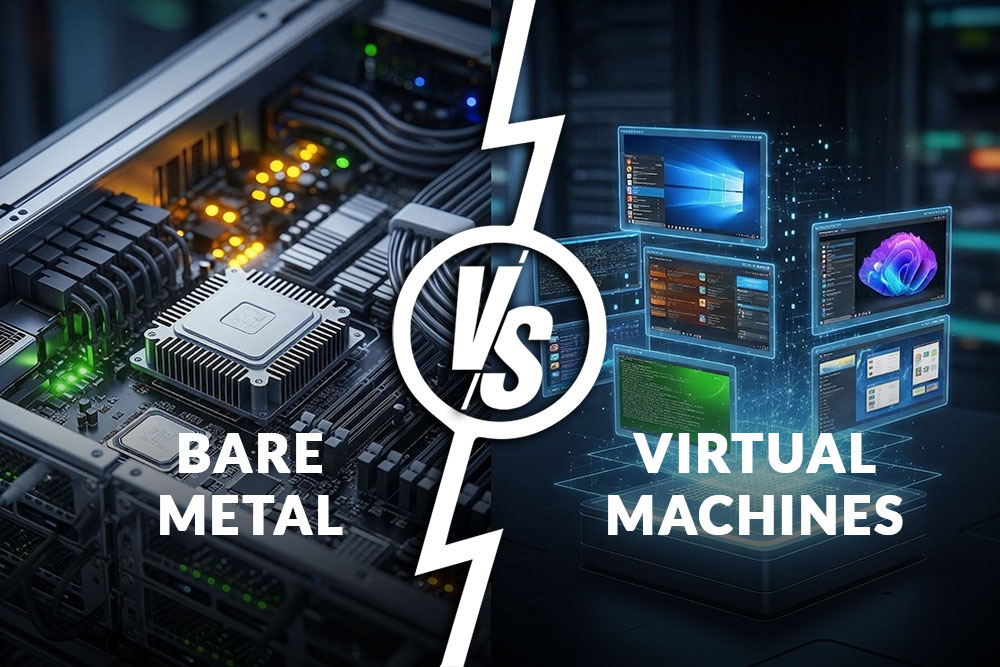
This often creates a mismatch between what workloads require and what facilities can realistically deliver at scale. Power distribution, cooling, and grid capacity have to align to support these densities, and that alignment is not always there. In this context, efficiency can turn into a central concern. Environments that introduce overhead (such as heavily virtualized public cloud setups) can amplify the cost impact. That’s because not all consumed power translates directly into useful compute. With bare metal, however, the relationship is more direct. That is another reason a dedicated server comeback is gaining traction. Organizations want more value from every watt they consume.
The Northern Virginia Power Surge
Nowhere is this more visible than in Northern Virginia. It is the largest data center hub in the world and a core region within the PJM Interconnection. In the 2025/2026 delivery year capacity auction, power prices jumped from $28.92 per MW-day to $269.92 per MW-day. That nearly tenfold increase caught much of the industry off guard.
That kind of increase doesn’t stay isolated within the energy market. It flows directly into colocation pricing, where operators have little choice but to pass those costs through to customers. Higher base rates, additional power surcharges, and stricter allocation policies are becoming common, especially in high-demand interconnection hubs. The expectation that power would remain abundant and inexpensive in these regions no longer holds up.
Virtualization is No Longer the Cheap Option It Used to Be
For a long time, virtualization was the default way to get more out of your hardware. It let multiple workloads share the same physical resources while keeping costs relatively predictable. That logic held up well while software licensing scaled in proportion with hardware efficiency. Back then, adding more cores or consolidating workloads translated into better economics. What’s changed in 2026, however, is that the software layer has started moving on a different trajectory. That disconnect has created issues with scaling environments. The recent trend of the dedicated server comeback can also be partially explained by this phenomenon.
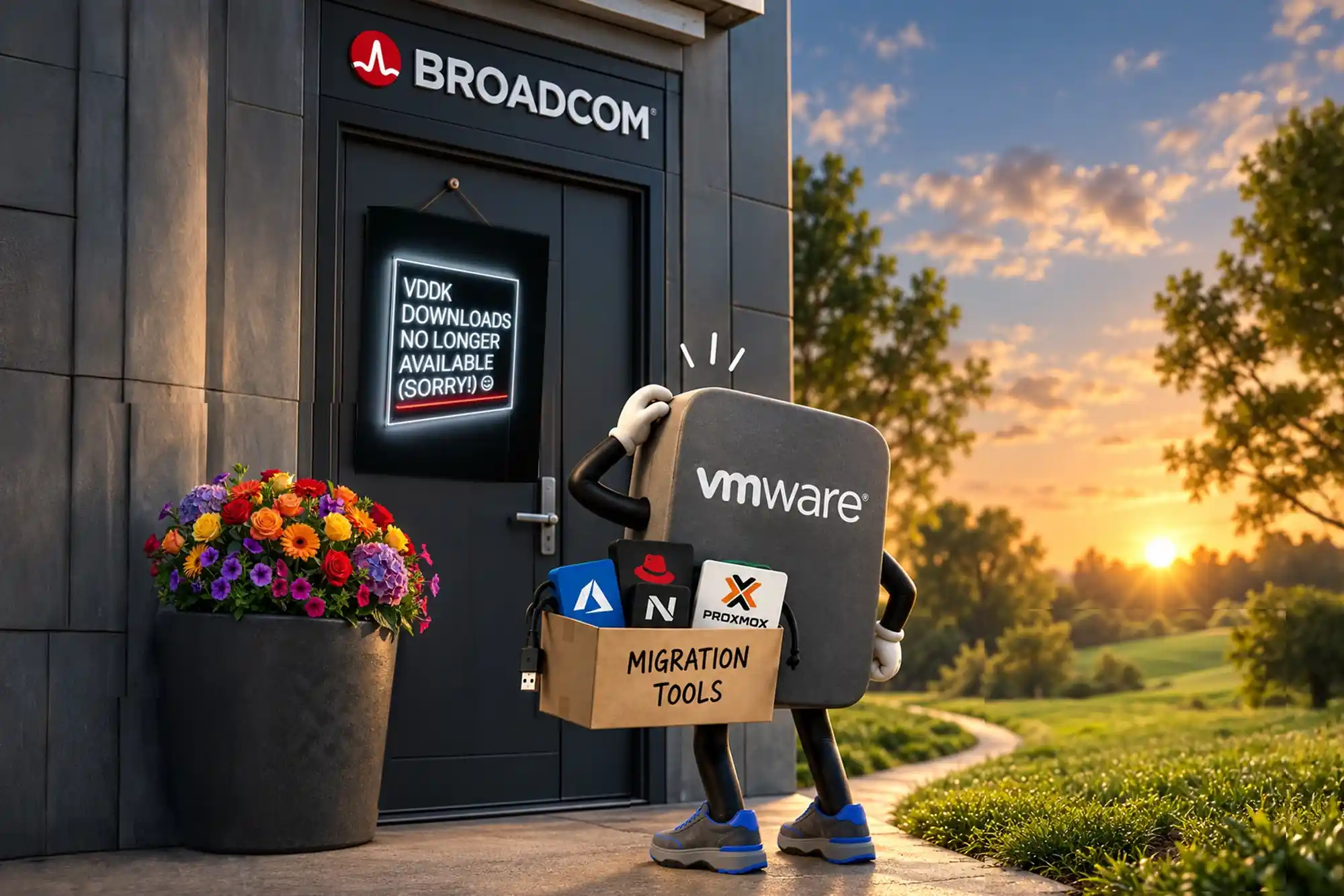
A big part of that comes from the transition to subscription-based licensing models in enterprise virtualization platforms. VMware’s move under Broadcom toward bundled subscriptions and the removal of perpetual licenses has introduced a different cost structure. It ties pricing more directly to core counts and packaged features instead of usage. In practice, higher-density CPUs can drive licensing costs up quickly, even if they reduce the physical hardware you need. The efficiency gains at the hardware level don’t always translate into savings at the software level anymore.
The Value of Predictable Economics
We can see a similar pattern in web hosting environments. cPanel, for example, has continued to increase pricing, with current tiers charging a base monthly fee plus a per-account cost. At scale, the licensing expense can approach or even match the cost of the underlying hardware. This is especially true on servers hosting hundreds or thousands of accounts.
This is pushing many teams to reevaluate how much value the virtualization layer actually adds in its current form. In some cases, dedicated servers running open-source stacks like KVM or Proxmox help you regain control over cost and performance. It’s one of the reasons why we’re seeing a dedicated server comeback as organizations look for more predictable infrastructure economics.
Cloud Repatriation and the Dedicated Server Comeback
However, cloud repatriation and the dedicated server comeback shouldn’t be viewed as a reversal of cloud adoption. What’s happening in fact is emerging as a response to how infrastructure behaves and what it needs under pressure. When costs become less predictable and workloads expose inefficiencies, teams must reassess where certain systems belong.
The dedicated server comeback appears to be linked to repatriation. Still, this doesn’t mean stepping away from the cloud completely. It means improving where and how certain workloads operate under these new conditions.
When Cost Predictability Starts to Break Down
For years, cloud pricing corresponded reasonably well with usage patterns, which made it easier to justify even for long-running systems. However, this is becoming harder to maintain. The underlying components of compute, power, and licensing now vary considerably in price as you scale. What looks predictable at a small scale can behave very differently when data volumes grow. Cost doesn’t always track cleanly with usage, and forecasting can also become less reliable. Repatriation, in this context, is also about regaining control over the evolution of those costs over time.
Workload Fit and Data Gravity
Some of the pressure comes from data movement issues. Large datasets anchor workloads in place, and moving them across environments comes with latency issues and higher costs. Egress pricing makes that clearly visible. At roughly $0.09 per GB, moving 1 petabyte out of a public cloud can cost $90,000 to $120,000. The exact figure depends on the region and structure. For AI training pipelines, media platforms, or backup-heavy environments, this turns data movement into a recurring expense. In those scenarios, keeping compute close to the data, on infrastructure with predictable network costs, makes much more sense.
Operational Overhead at Scale
As environments expand, complexity builds in ways that are impossible to see at the start. Multi-cloud deployments, orchestration layers, or platform-specific tooling can all introduce operational overhead that grows with the infrastructure itself. Overhead extends into engineering effort, coordination challenges, and unexpected additional costs on top of the infrastructure bill. What’s conveniently flexible in the beginning, can become hard to manage as time passes. And the problems multiply when several environments have to stay in sync. The dedicated server comeback trend appeared as an alternative for teams that want to simplify their environments. It also means fewer moving parts to maintain.
Rebalancing Infrastructure Placement
Taken together, these factors point toward broader adjustments that are currently taking place. The cloud remains an option where elasticity and rapid provisioning are needed, but it no longer fits any workload. Teams increasingly deploy steady-state systems, data-intensive applications, and performance-sensitive environments on infrastructure. That infrastructure offers more granular control over cost and behavior.
A Practical Playbook for Infrastructure Decisions in 2026
Behind the dedicated server comeback, there’s also a need to be more intentional about how you source and deploy infrastructure. Passive procurement no longer works the way it used to. Supply constraints and pricing volatility now shape the market. Availability, timing, and workload placement have a much more direct impact on cost and performance.
Securing Capacity Early
In a saturated environment, having access to infrastructure exactly when you need it is no longer guaranteed. Pre-provisioned, ready-to-deploy servers allow teams to avoid long lead times and fluctuating component pricing. Instead of waiting on build cycles, capacity is readily available, with pricing locked in. This approach brings deployment speed closer to cloud-like agility, but without exposing workloads to variable billing.
Consolidating with High-Density Hardware
Modern high-core CPUs are changing how infrastructure can be structured. Platforms like AMD EPYC allow significant workload consolidation, where a single server can replace several older systems. This can significantly reduce rack footprint, and, as a result, lower power requirements and simplify management. Fewer systems mean fewer points of failure and less operational overhead, which becomes increasingly valuable as density keeps rising.
Designing with a Hybrid Baseline
Working with a balanced, hybrid baseline is what increasingly characterizes many enterprises today. Steady workloads are placed on dedicated infrastructure, where cost and performance remain predictable over time. More variable demand stays in the cloud, where elasticity still has value. This separation turns infrastructure into something actively manageable, with stable workloads anchored in environments that won’t create surprises in cost or performance, and burst capacity handled in a way that doesn’t bleed into long-term spend.
Back to the Good Old Dedicated Server Solution
The infrastructure landscape in 2026 is pushing organizations back toward clarity, control, and measurable performance. What used to feel like an advantage (abstracting everything behind layers of cloud services) now presents tradeoffs that are hard to ignore as workloads scale and costs accumulate. In this situation, the dedicated server comeback is not just a theory anymore as organizations increasingly return to the trustworthiness of dedicated solutions.
At Volico Data Centers, we focus on giving control back without adding operational burden. Our dedicated server solutions are built around fully managed environments, high-performance hardware, and predictable infrastructure behavior, supported by 24/7 expert teams and backed by enterprise-grade facilities.
As infrastructure demands grow more complex, the goal is not chasing every new model, but placing workloads where they run best and keeping them there. We combine dedicated servers, managed services, and a resilient data center foundation to help organizations do exactly that, with infrastructure that scales alongside your business.
Contact us today to find out more.