ityAsk ten data center teams what “high density” means, and you’ll probably hear ten different definitions. The baseline keeps shifting, and by 2026, the conversation around high-density colocation has moved well beyond niche deployments into everyday capacity planning.
The Uptime Institute reported in its 2025 Global Data Center Survey that average rack power densities continue to climb, with many facilities now operating in the 10–30 kW range. Extreme densities above that level are still uncommon, largely because power delivery and cooling requirements become much harder to manage as workloads intensify.
When you look at the underlying cause, it almost always comes back to hardware. AI infrastructure and high-performance computing platforms pack enormous compute capability into relatively small footprints, which means the power draw concentrates into fewer racks and the thermal load rises with it. That pressure changes how operators think about airflow, electrical distribution, and efficiency metrics like PUE much earlier in the design process.
All of this is exactly why choosing a high-density colocation facility requires careful evaluation. The real question is whether a facility can support higher power and heat loads without sacrificing stability, efficiency, or long-term scalability. In the sections ahead, we’ll look at what readiness actually involves and where the most common limitations begin to surface.
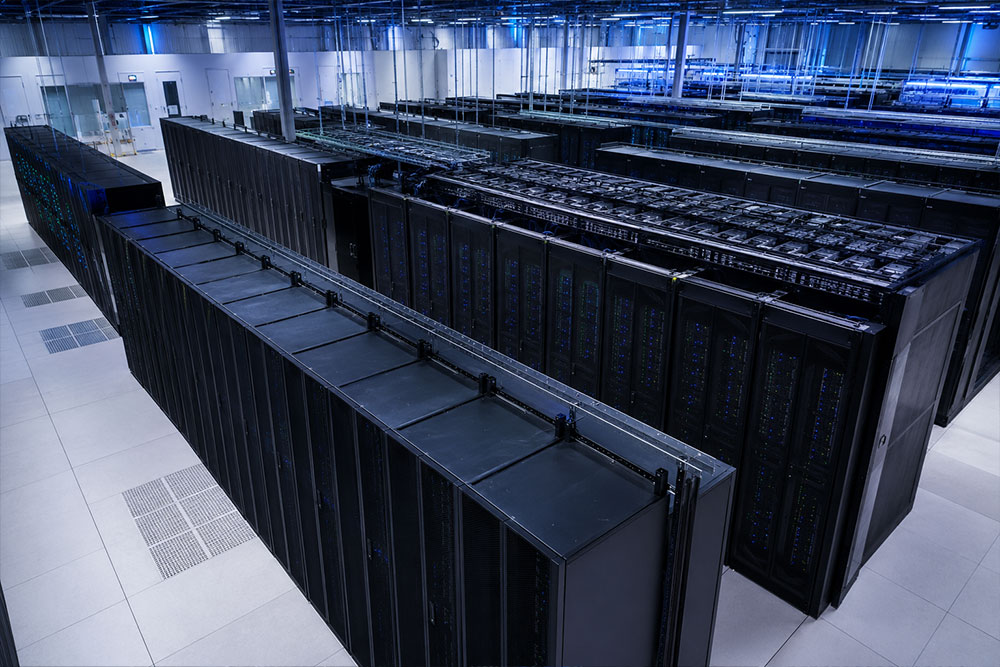
Understanding High-Density Colocation
Let’s start with understanding how it works.
Moving Away From Traditional Racks
Before getting into infrastructure requirements, it helps to ground the conversation in what most facilities still run today. The term high-density colocation can sound like industry shorthand until you compare it with the rack power levels that dominate many production environments.
Data from the Uptime Institute shows that racks in the 4–6 kW range still represent the most common deployment, while 7–9 kW configurations are becoming increasingly common across enterprise and colocation facilities. Higher densities do exist. You’ll find racks operating in the 15–29 kW range in certain environments, though they’re still far from the norm, and deployments above 30 kW tend to appear in more specialized infrastructure.
What becomes clear very quickly is that high-density colocation is not a matter of a single universal threshold. The real shift begins when rack-level power demand starts determining the facility design. Once electricity distribution and cooling architecture have to adapt to sustained double-digit kilowatt loads, the environment has effectively entered high-density territory.
How Multi-Tenant Design Influences Density Limits
In a shared facility, density behaves a little differently than it does in a single-tenant data center. Even when a building has enough overall utility capacity, practical limits can appear in the way power and cooling are distributed across rooms, rows, and cabinets. Within high-density colocation, those distribution layers determine deployment options. Last-mile infrastructure, such as busways, panelboards, containment systems, and airflow management, becomes critical because dense clusters need to operate without affecting neighboring tenants. That calls for careful planning for both electrical delivery and thermal isolation across the floor.
The commercial structure is also important, even if it isn’t always obvious at first. Contracted power, metering arrangements, and reserved capacity don’t necessarily fit perfectly with the physical layout of the data hall. Because of this, providers often offer high-density colocation through purpose-built suites or designated high-density zones inside a larger facility, which allows them to control cooling and electrical distribution more precisely while protecting the stability of the broader environment.
How AI and GPU Infrastructure Changes Expectations
One of the main drivers behind the interest in high-density colocation today is the way modern compute hardware concentrates enormous processing power into very small physical footprints. AI training clusters and GPU-accelerated platforms don’t spread their workload evenly across large numbers of low-power servers. Instead, they pack substantial electrical demand into individual systems. A single NVIDIA DGX H100 or H200 platform can draw more than 10 kW on its own, and it’s uncommon for production environments to deploy just one of these units inside a rack.
When multiple systems like this run side by side, rack-level consumption climbs quickly, and the facility has to support sustained high utilization instead of occasional power spikes. That operating pattern resembles what has long been common in high-performance computing environments, where tightly packed processors run continuously and generate consistent heat. As AI and HPC-style clusters expand inside shared facilities, infrastructure designed for high-density colocation is becoming increasingly relevant for organizations that need to support these demanding compute platforms.
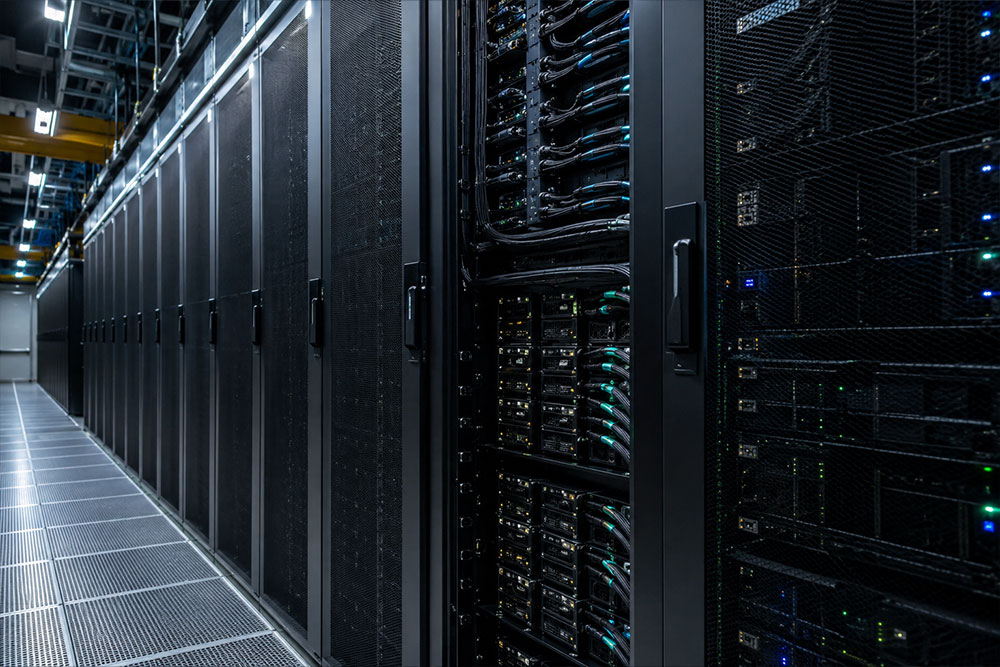
The Benefits of High-Density Colocation
More Compute Per Square Foot
One of the most practical advantages of high-density colocation shows up in how efficiently space can be used inside the data hall. When racks support higher power levels, organizations can run far more compute within the same physical footprint. That means fewer cabinets are necessary to support a given workload, which naturally reduces the amount of floor space needed to deploy and operate the infrastructure.
When you look at it from an operational perspective, the efficiency stretches beyond the racks themselves. Fewer cabinets means fewer network drops, less containment infrastructure, and less overall floor allocation dedicated to a single deployment. For companies operating in space-constrained metro markets, or for organizations expanding AI and performance-focused environments inside existing contracts, high-density colocation allows capacity to grow vertically within the same footprint while maintaining a compact infrastructure layout.
Built for AI/ML and HPC Workloads
Workloads built around AI, machine learning, and high-performance computing place a very different kind of demand on infrastructure, which is exactly where high-density colocation starts to make sense. GPU clusters and HPC platforms typically run at sustained utilization, with substantial power draw and producing significant amounts of heat. When that kind of load is placed in facilities designed for moderate rack densities, operators end up having to work around power limits or cooling constraints. Environments designed for high-density colocation approach the problem differently by supporting elevated electrical and thermal loads from the start, allowing GPU clusters and AI training systems to run the way they were intended. As AI infrastructure becomes a long-term component of enterprise IT strategy, this alignment between workload behavior and facility capability is becoming increasingly important.
Reduced Rack Sprawl and Cleaner Cluster Design
When servers have to stay within traditional rack power limits, operators often end up spreading hardware across more cabinets than the workload really needs. Over time, that can introduce unnecessary complexity. Cables stretch across multiple rows, network layouts become harder to manage, and airflow patterns can grow less predictable. High-density colocation helps avoid that kind of rack sprawl by allowing compute clusters to remain compact and logically organized. With more processing power concentrated in fewer racks, topology design tends to stay cleaner and easier to manage. This kind of concentrated deployment also makes it easier to maintain balanced airflow and stable electrical delivery within a defined area, which ultimately supports more predictable performance in high-density colocation environments.
Faster Access to Density-Ready Infrastructure
Deploying high-power workloads can take far longer than expected when existing facilities were never designed to support elevated rack densities. Increasing capacity triggers a chain of upgrades that include changes to the electrical distribution, cooling infrastructure, and sometimes even utility provisioning, which can significantly delay new deployments. Industry research from the Uptime Institute continues to highlight how power availability and capacity planning are becoming central challenges for data center teams. High-density colocation addresses this issue by providing environments where the electrical and thermal infrastructure is already built to sustain higher rack loads, allowing organizations to deploy demanding systems much faster without waiting for facility retrofits or complex infrastructure upgrades.
Efficiency and Operating Cost Potential
Efficiency gains often come from designing infrastructure that operates steadily at more intense utilization levels. Facilities built for high-density colocation usually size their electrical and cooling systems to support sustained rack power, which allows those systems to run within a more stable and predictable range. Analysis referenced by Gartner suggests that advanced cooling technologies and density-oriented design can lower operating costs when applied thoughtfully. Higher rack density alone doesn’t automatically improve PUE, yet environments engineered for dense compute frequently achieve better mechanical and electrical efficiency because the infrastructure is built to support that level of demand from the outset.

When Should You Choose High-Density Colocation?
When Your Workloads Need Sustained High Power
A sign that high-density colocation makes sense is when workloads start operating at consistently high utilization, and standard rack limits are starting to get in the way. AI infrastructure, machine learning pipelines, and high-performance computing clusters rarely idle. These systems run constantly and draw large amounts of power, and expel significant amounts of heat. When hardware has to spread across multiple cabinets simply to stay within traditional rack power ceilings, the facility itself will determine deployment options. At that point, environments specifically designed for high-density colocation become a far more natural fit, because the electrical delivery and cooling architecture are already built to support compute-heavy workloads.
When Scaling Is Constrained by Physical Footprint
Not every expansion project begins with the search for more floor space. In many cases, the real limitation is how much power a single rack can support. Increasing square footage can lead to contract changes and revisions to the network design. Scaling upward within the same footprint can become the practical path forward for organizations already operating in dense metro markets where real estate is limited, and utility approvals can slow down the expansion. High-density colocation can be particularly useful in these cases. By allowing more compute to live within each cabinet, companies can increase capacity without expanding their physical footprint or reorganizing the entire deployment layout.
When Efficiency and Sustainability Shape Infrastructure Strategy
Infrastructure planning today encompasses more than aiming for the best possible performance. Efficiency and sustainability goals increasingly influence how facilities are selected and how compute environments are designed. Higher rack density on its own doesn’t guarantee better PUE metrics, but facilities engineered specifically for high-density colocation operate mechanical and electrical systems closer to their intended load. When cooling infrastructure, power distribution, and backup systems run within stable operating ranges, efficiency improves naturally. Legacy environments can carry unused capacity that still consumes energy but delivers little value. Denser deployments, especially those built with energy management in mind, can provide more predictable resource usage and help support broader sustainability objectives.
When Low Latency and Cloud Access Matter
Modern workloads rely on low-latency, fast data movement between storage platforms, compute clusters, and public cloud services, and in these situations, physical proximity to network hubs can influence performance just as much as the hardware itself. High-density colocation facilities are often located within carrier-neutral environments that provide access to multiple network providers and direct cloud on-ramps. This kind of connectivity is especially important for AI and machine learning workloads that move large datasets across distributed systems.
When Your On-Premises Infrastructure Reaches Its Structural Limits
Most on-premises environments weren’t designed to support the rack densities required by AI clusters or HPC platforms. Over time, electrical distribution constraints, cooling limitations, or available headroom begin to restrict what can be deployed inside the facility. Expanding those environments involves major redesign projects and substantial investment. Purpose-built, high-density colocation facilities, on the other hand, can support dense compute infrastructure while still allowing organizations to maintain integration with existing on-premises systems. This way, density-ready colocation can be a practical extension of the core environment for companies gradually extending internal infrastructure into hybrid models.
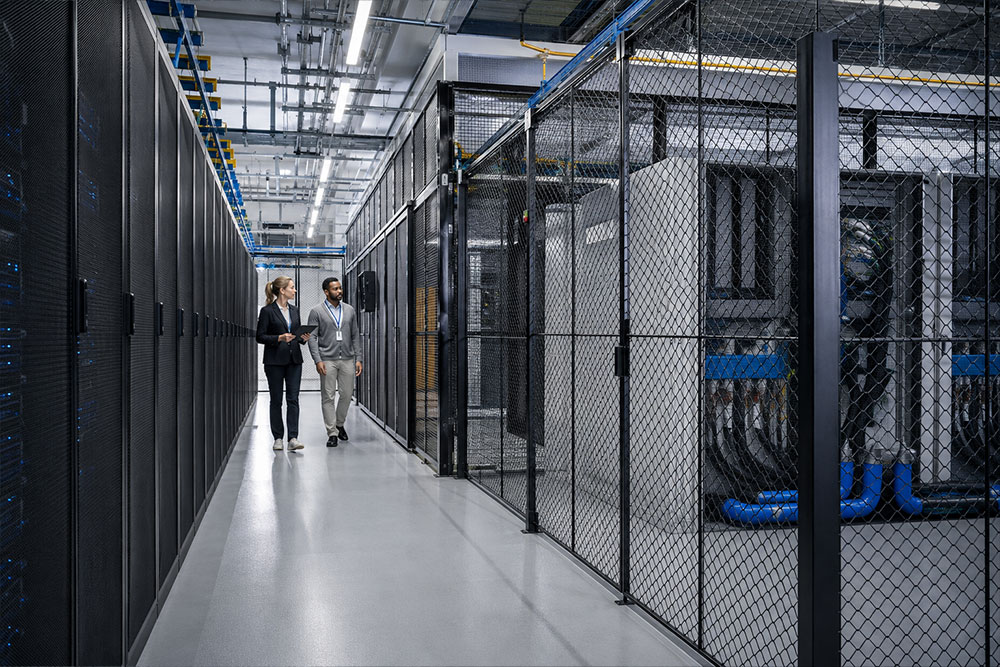
How to Choose the Right High-Density Colocation Provider
Selecting a high-density colocation partner involves more careful examination than comparing rack pricing or square footage. Once workloads move into sustained high-power territory, infrastructure decisions affect performance, reliability, and long-term scalability. Organizations evaluating providers usually need to look beyond headline density numbers and focus on how the facility actually operates. Power delivery, cooling architecture, network connectivity, sustainability practices, and operational expertise all contribute to whether dense compute environments can run consistently without friction.
Rack Density Capability and Power Architecture
Power delivery is the most important factor when evaluating a high-density colocation environment. A provider should be able to support rack densities well beyond traditional limits , and also be transparent about the distribution of that capacity across the facility. The conversation shouldn’t stop at a maximum kilowatt figure. It’s equally important to understand whether those densities are available across the floor or only inside specific zones. Reliable deployments depend on strong upstream capacity, balanced electrical phases, and expansion pathways that allow clusters to grow without running into hidden constraints later.
Cooling Strategy and Liquid Readiness
Once rack densities climb, thermal management becomes just as important as electrical delivery. Any serious high-density colocation provider should be able to explain how heat is removed from dense clusters and what cooling options are available as workloads evolve. Facilities increasingly support technologies such as direct-to-chip liquid cooling, rear-door heat exchangers, and immersion platforms for specialized deployments. Even when liquid cooling is not immediately necessary, it helps to know that the facility can support it later. Integration of liquid loops, redundancy planning, and monitoring for leaks all become part of the operational conversation.
Carrier-Neutral Connectivity and Cloud Adjacency
Dense compute clusters move enormous amounts of data, so network architecture deserves just as much attention as power and cooling. A strong high-density colocation provider typically operates inside a carrier-neutral ecosystem where multiple telecom networks are available. Direct access to major cloud platforms also plays an important role. When AI and machine learning workloads move datasets between storage systems, training clusters, and cloud services, proximity to interconnection hubs helps reduce latency and maintain consistent throughput across the environment.
Scalability of Power, Cooling, and Space
High-density environments undergo a lot of change: clusters expand, new hardware generations appear, and workloads gradually increase utilization levels. Because of this, a provider should demonstrate how they can facilitate adding extra power, cooling capacity, and physical space without major disruptions. High-density colocation works best when the infrastructure is modular enough to grow alongside the deployment. Clear communication around available headroom and expansion options helps prevent surprises when workloads begin scaling.
Sustainability and Efficiency Commitments
Energy considerations are becoming a larger part of infrastructure strategy, especially when dense compute clusters draw substantial power over long periods. Facilities supporting high-density colocation should show measurable efforts toward efficient operations. That may include renewable energy sourcing, transparent PUE targets, or investments in advanced cooling technologies that reduce overall energy consumption. Some providers are also exploring waste heat recovery and other approaches that make large compute environments more sustainable over time.
Physical Security and Regulatory Compliance
Many dense deployments support workloads that are either business-critical or subject to strict regulatory requirements. For that reason, evaluating physical security is just as important as reviewing electrical infrastructure. Providers offering high-density colocation should implement layered safeguards such as biometric access controls, continuous surveillance, and segmented access zones within the data hall. Beyond the physical layer, organizations also need to review cybersecurity posture and compliance certifications to confirm that the facility aligns with industry standards relevant to their workloads.
Operational Expertise and Hands-On Support
Running dense compute clusters requires more than simply providing rack space. Engineering teams need to understand installation planning, power balancing, airflow management, and troubleshooting in environments where utilization remains consistently high. A capable high-density colocation provider usually offers experienced on-site staff, remote hands and smart hands services, and structured operational procedures that keep deployments stable over time. Infrastructure alone is only part of the equation. Reliable operations often depend just as much on the expertise of the teams supporting the environment.
High-Density Colocation Built for Performance and Growth
Organizations expanding AI and high-performance computing environments need infrastructure that can keep up with sustained power and thermal demands. Volico Data Centers supports this shift with high-density colocation environments designed for modern workloads. Facilities are built to sustain elevated rack densities through strong electrical distribution, advanced cooling capabilities, and clear pathways for scaling infrastructure over time.
Volico operates in strategically connected metro markets within a carrier-neutral ecosystem, giving customers direct access to major network providers and cloud platforms. This connectivity helps maintain low-latency data exchange across hybrid and distributed environments. For organizations moving deeper into AI-driven infrastructure, high-density colocation at Volico provides the stability and flexibility needed to support continued growth.
Contact us today to learn more.