
Managed Load Balancing Services
Load balancing keeps your website, application, or database online when traffic spikes or a server fails. Volico engineers design, run, and monitor it so your team does not have to.
- Healthy, 50% of traffic
- Healthy, 50% of traffic
- Down, skipped
When a server fails a health check, the balancer stops sending it requests. Your visitors never notice.
Home › Data Center Services › Managed Hosting › Load Balancing
One Front Door For Every Server Behind It
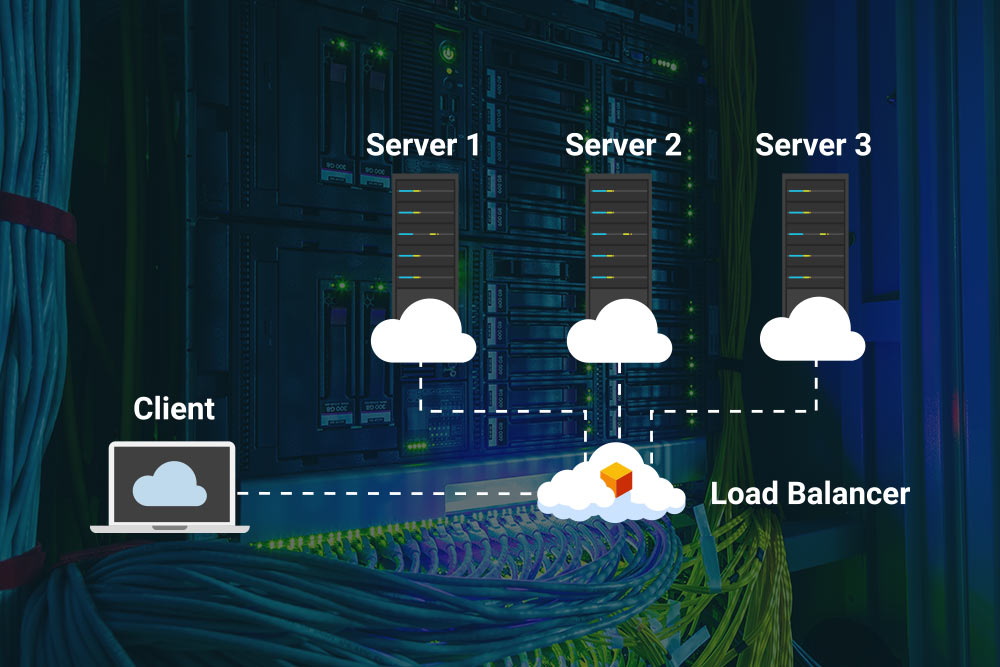
- Automatic failover when a server goes down
- Traffic moved away from overloaded servers
- Servers added or removed without taking the site offline
- Health checks that run all day, every day
What Managed Load Balancing Does For Your Business
High Availability
If a server fails or needs work, the balancer routes around it. Visitors keep getting answers, so your application stays up.
Faster Response Times
Requests go to the servers best able to answer them, so no single machine falls behind. Wait times drop, so pages stay quick even under heavy load.
Room To Grow
Add servers to the pool as demand rises. You do not have to reconfigure your application or take it offline, because the balancer absorbs the new capacity.
Traffic Spike Protection
A promotion, a launch, or a viral post can send far more visitors than usual. The load gets shared instead of crashing one machine.
Added Security
Visitors see one public IP address, so your individual servers stay hidden. The balancer also acts as a chokepoint where suspicious traffic can be spotted and isolated.
Maintenance Without Downtime
Patch, update, or replace one server while the others carry the load. Planned work no longer needs a maintenance window, because the other servers keep serving visitors.
Our Engineers Run The Balancers So Your Team Does Not Have To

- Design and configuration of the balancer
- Round the clock monitoring and alerting
- Health check and algorithm tuning
- Capacity reviews as your traffic grows
- Support when something looks wrong
Load Balancing Methods We Configure
Requests go to each server in turn. It is simple and predictable, and it works well when your servers are similar and requests take about the same effort. Weighted round robin does the same but sends more traffic to your larger servers.
Each new request goes to the server with the fewest active connections. It suits applications with long sessions or requests that vary a lot in size. The weighted version accounts for servers with different capacity.
The visitor IP address decides which server answers. The same user keeps landing on the same server, so applications that store session data locally keep working.
Traffic goes to the servers that answer fastest or have the most free CPU and memory. These dynamic methods react to live conditions instead of fixed rules.
Hardware balancers are dedicated devices built for high throughput, while software balancers run as virtual machines, containers, or cloud services. Software costs less and scales more easily, so we help you choose based on traffic volume, budget, and growth plans.
How We Set It Up
Review
Design
Deploy
Monitor And Tune
Applications That Cannot Afford To Go Down
Ecommerce And Payments
Checkout has to work during a sale, so run a balanced pool on our PCI compliant hosting and keep orders moving.

Healthcare Applications
Patient portals and records systems that handle data covered by HIPAA need to be reachable at all hours. Balance them across HIPAA compliant colocation servers.

Campaigns And Media Sites
Email sends, product launches, and press mentions all cause sudden surges. A balanced pool absorbs them, so the site does not crash.

Databases And App Tiers
Share read traffic across database replicas, or spread requests across application servers so no single machine becomes the bottleneck.
Works With The Rest Of Volico Managed Services
Managed Hosting
Our team handles servers, operating systems, and monitoring, so you can focus on your application. Learn more
Managed Security Services
Threat monitoring and protection for the pool behind your balancer, so the servers behind it stay covered. Learn more
Managed Firewall Services
Filter traffic before it ever reaches the load balancer. Learn more
Business Continuity
Recovery planning for the day a whole site goes offline, since a balancer cannot help when the whole site is down. Learn more

Still Have Questions?
Load Balancing Questions, Answered
What Is Managed Load Balancing?
It means Volico designs, configures, monitors, and maintains the load balancer for you. You do not need in-house network specialists, because you never handle failures on your own at 3 a.m.
What Happens If One Of My Servers Fails?
Health checks catch the failure and the balancer stops sending that server traffic. The remaining servers keep answering visitors until the failed one is repaired or replaced. The balancer itself can also become a single point of failure, so we design for redundancy where your uptime goals call for it.
How Many Servers Do I Need?
You need two or more. A load balancer works with any number of servers, so you can add more later without reconfiguring the rest of your setup.
What Is The Difference Between Hardware And Software Load Balancers?
Hardware balancers are dedicated physical devices, so they deliver high performance at a higher price. Software balancers run on virtual machines, containers, or cloud platforms, so they cost less and scale more easily. We recommend one based on your traffic and budget.
Can You Balance Servers That I Already Run With Volico?
In most cases, yes. Tell us about your dedicated servers, colocated equipment, or cloud servers so we can confirm the best design for them.
How Much Does Managed Load Balancing Cost?
Pricing depends on your traffic, the number of servers, and whether you need hardware or software. Contact us with your requirements and we will send a quote.
Talk To A Load Balancing Engineer
Tell us about your application, your servers, and your traffic. We will recommend a design and send you a quote.
Prefer to talk it through? Call (305) 735-8098 any time.