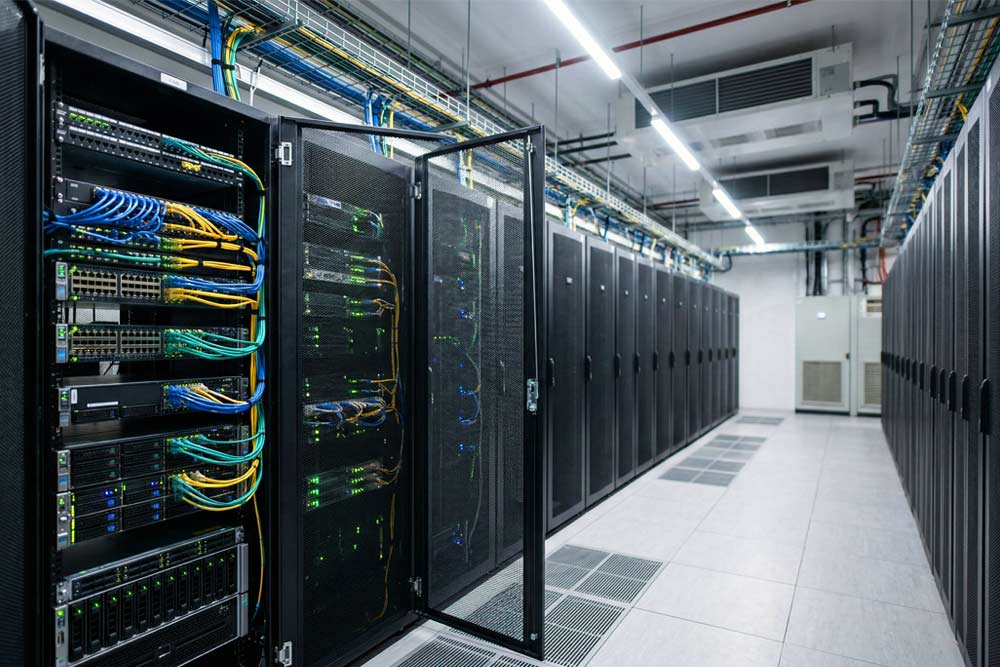
Data rot is very pernicious because it is silent.
Unlike with more dramatic system failures, data degradation tends to go unnoticed until someone tries to access, analyze, or restore data, sometimes years later, at which point recovery may already be impossible or partial at best. This is a significant concern across scientific research, finance, healthcare, cultural preservation, and practically any domain that relies on long-term data integrity.
Data Degradation exposes an important issue of the digital age, namely, that information durability is not guaranteed by digitization alone. Without ongoing maintenance, even the most perfectly copied data can decay, and not just physically, but intellectually, as well, into something that can no longer reliably represent what it used to.
This blog digs into the challenges of data integrity and offers insight into protecting against data rot and the role of data centers in the fight to protect valuable data assets.
What is Data Degradation?
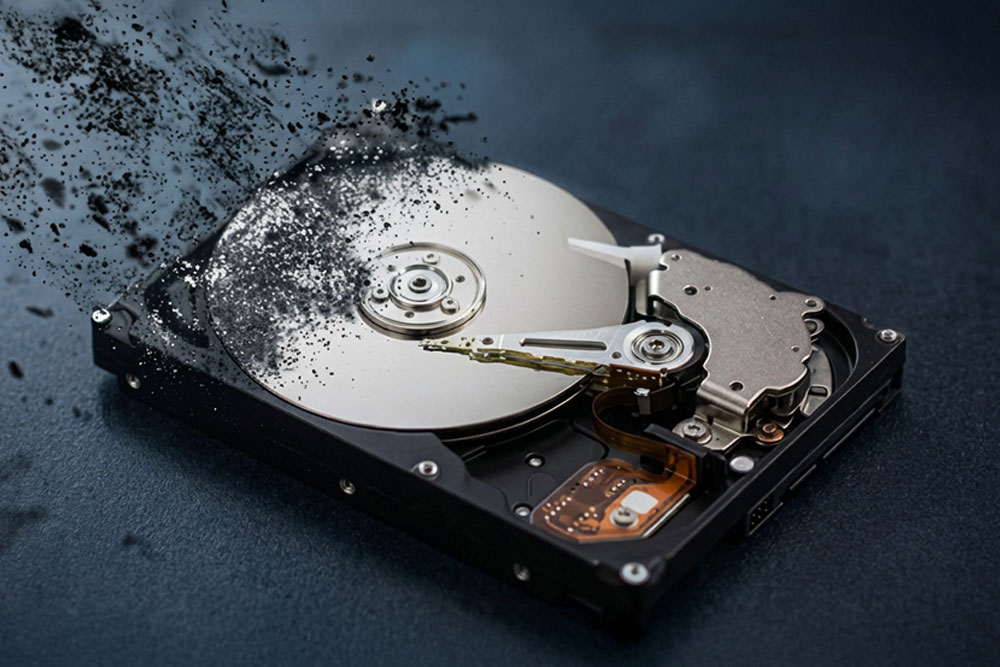
Data rot (also called bit rot, digital decay, or data degradation) is the gradual deterioration of digital information over time, rendering it corrupted or unreadable despite being stored “unchanged.” Digital information is not immaterial, and neither is it eternal; it lives on physical media, it is interpreted by software, and it depends on the surrounding context, which can drift out of alignment.
At the most literal level, bit rot means the corruption of bits. Storage media like hard drives, SSDs, magnetic tape, and optical discs are physical systems subject to wear-and-tear, radiation, manufacturing flaws, and entropy. Degradation can look very different: over time, individual bits can flip, sectors can fail, and error-correction thresholds can be exceeded, which results in files that technically exist but can no longer represent their original state.
Beyond physical corruption, another aspect of data degradation is that the data can remain perfectly intact at the binary level while losing its meaning or usefulness if the file formats become obsolete over time: software dependencies disappear, metadata is stripped, or forgotten. Implicit assumptions like schemas, encodings, units, or coordinate systems are often not preserved. In these cases, it’s not the data itself that has changed, but the possibility to interpret it correctly.
For systems that need data to hold up over time, data rot is a reminder that keeping the bits around isn’t the same thing as keeping the information itself usable. You can store data flawlessly and still lose the context that makes it meaningful. Without ongoing checks and a way to carry that context forward, the data may survive just fine, but in the meantime, it becomes impossible to retrieve.
Types and Causes of Data Degradation
When we talk about data degradation, we’re really talking about a family of related failure modes that all lead to the same outcome: corrupted data. It’s sometimes called data decay, data fade, bit rot, silent corruption – the names vary, but they all describe different types of data degradation.
Media and Hardware-related Degradation
Digital storage relies on hardware that has to be actively maintained, like electric charges, magnetic orientations, and the unavoidable aging of components also has to be taken into consideration. Environmental factors like heat, moisture, and humidity also accelerate the degradation process. Even when systems appear healthy, these low-level effects can accumulate until data crosses a threshold where error correction becomes impossible. The result is unreadable blocks, or data that only looks valid, but upon access, it quickly becomes obvious that it isn’t.
Obsolescence-driven Degradation
Technology moves faster than we can keep pace, and storage formats sometimes don’t take the challenge gracefully. Data written to once-standard media like floppy disks, tape cartridges, or other early optical formats can become effectively lost even if the media itself survives. Even if the data is not damaged, the ecosystem needed to read it no longer exists. The data might still be there, but it’s trapped behind the thick layers of incompatibility.
Link Rot
In online and networked systems, data often degrades through link rot, where nothing is wrong with the data itself, but the problem is that you can no longer access it. The connections that used to provide access to the information have disappeared, and over time, those links stop working. Photos, videos, documents, and entire threads can still exist somewhere, but without a working path to them, they might as well be gone. In reality, it’s another dependency problem: the information relied on systems and services that eventually moved on or have been shut down.
The Effects and Risks of Data Degradation
Data degradation represents one of the more underestimated risks facing modern organizations, largely because it tends to go unnoticed. Industry research shows that the cumulative financial impact can reach into the tens of millions of dollars per year for large organizations, but the deeper cost is operational: systems can become fragile, and confidence in data integrity unreliable.
The most serious consequence of data degradation is, of course, permanent data loss. Files and records can become damaged beyond recovery when corruption goes unnoticed and spreads through replication and backups. Even when data is not completely lost, its reliability can be compromised. Inconsistent or partially corrupted data can trigger application errors, reporting discrepancies, and failed integrations. This sometimes means teams have to spend weeks troubleshooting what appears to be a software or infrastructure issue, only to discover that the root cause is, in fact, degraded data.
Consequences and Recovery
Recovering from data degradation is quite complex. Once the corruption is detected, organizations need specialized tools and expertise to assess the damage and determine what can be restored. Forensic analysis, reconstruction from partial backups, or validation against external sources is typically part of the process. In most cases, though, recovery remains incomplete, forcing teams to accept gaps in historical data and rebuild datasets from scratch, which is an expensive and time-consuming effort for any company.
With very data-driven organizations, the broader consequences can be severe. Clients expect accuracy and accountability in financial services, and if trust is lost, it’s very difficult to regain. In research environments, degraded data can invalidate results or, in the worst-case scenario, require years of work to be repeated, slowing progress that is already slow and undermining credibility.
What makes data degradation particularly challenging is that it doesn’t respect organizational boundaries. Its effects ripple across departments, systems, and workflows, and addressing the problem requires more than ad hoc fixes.
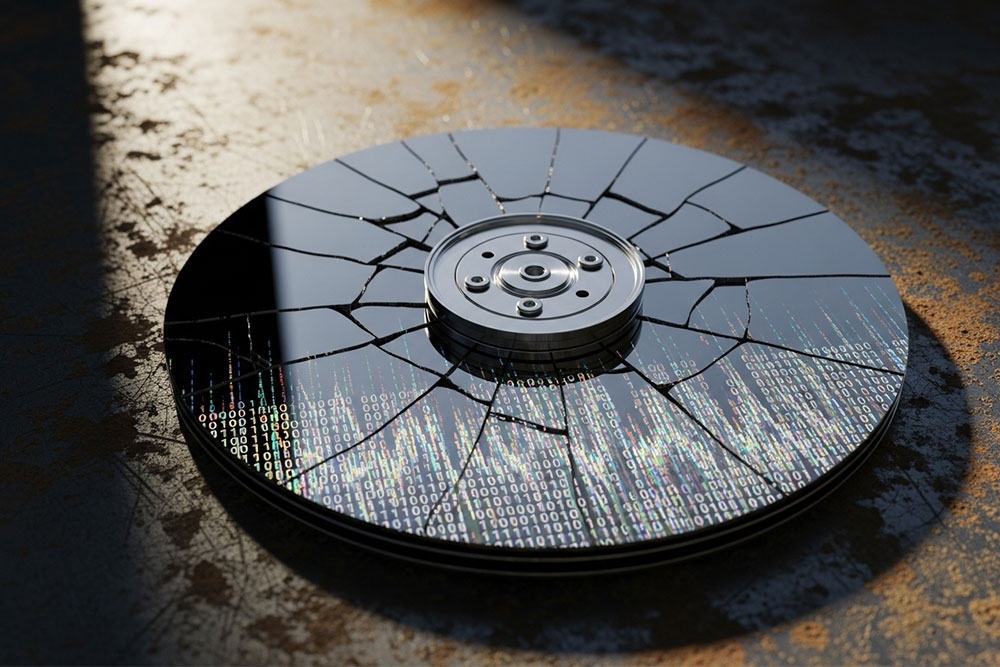
How to Protect Your Data From Silent Corruption?
Silent data degradation is particularly difficult to manage because it doesn’t appear as an obvious failure. The apparent health can be tricky, because the underlying data may already be in the process of diverging from its original state under the cover of invisibility. Addressing this kind of gradual, invisible degradation is difficult and cannot be solved by deploying some magic fix. It requires a layered approach to data protection, one that assumes faults will occur over time and is designed from the beginning to detect, contain, and recover.
Start with Reliable Storage (But Don’t Stop There)
Using high-quality storage hardware reduces your exposure to early failures, manufacturing defects, and premature wear. Modern SSDs and HDDs include error correction and internal health monitoring, which can be useful tools for catching problems early. That said, no storage device is immune to entropy. Good hardware lowers risk, but it doesn’t eliminate it. Silent corruption can still slip past even well-designed systems, which is why storage quality should be treated as a solid baseline, but not as a solution in itself.
Backups Are Non-Negotiable
Frequent backups are probably the most effective way to limit damage from data corruption. There should be two types of backups: local and off-site. Local backups protect against immediate failures, and off-site or cloud backups add resilience against bigger incidents. The key detail here is versioning. If corrupted data overwrites clean backups, you’ve just preserved the problem instead of the solution. Maintaining multiple historical versions allows you to roll back to a known-good state once corruption is discovered, even if it took weeks or months to notice.
Verify Data, Don’t Just Store It
Silent corruption thrives when data is assumed to be correct simply because it exists. Regular integrity checks by using checksums, hashes, or filesystem-level scrubbing help to detect problems in time. Many modern systems can periodically read and verify stored data and identify mismatches before spreading. When corruption is caught in the bud, recovery is usually straightforward. When it’s caught late, it most likely isn’t.
Keep Software and Formats from Aging Out
Physical corruption is not the only type of data degradation. Data can degrade when the software needed to interpret it falls behind. Keeping operating systems, storage software, as well as applications up to date is important to reduce the risk of bugs that can introduce or hide corruption. It also helps to migrate older file formats to current, well-supported ones. It’s good to keep in mind that even perfectly intact data becomes useless if nothing can reliably read it anymore.
Use Replication Wisely
Replicating data across multiple systems adds another layer of protection, especially when replicas are independently verified. This ensures that if one copy deteriorates, another one is still available and intact. Replication must be paired with integrity checks, however. Blindly copying corrupted data just spreads the problem faster. The goal is redundancy with validation.
New Tools Against Data Rot
Emerging approaches such as smarter storage systems, improved error detection, and AI-assisted monitoring are becoming better and better at spotting subtle anomalies before data degradation becomes irreversible. At the same time, compliance with data protection standards and regulations helps with enforcing discipline around integrity, security, and long-term stewardship.
Ensuring data protection against silent corruption requires recognizing that storage alone doesn’t guarantee safety. Longevity comes from a combination of good hardware, ongoing verification, redundancy, and a constant reevaluation of how data is interpreted over time.
Data Centers in the Fight Against Data Degradation
Data centers play a critical role in limiting data degradation, especially in environments where data has to remain reliable over long periods of time. There’s no system that can completely eliminate data rot, however, professionally operated data centers are consciously built around the expectation that failures will occur at some point. The difference is in how facilities can detect, contain, and recover from these failures before they affect the integrity of the data.
Infrastructure Designed for Handling Failure
Today’s data center infrastructures are engineered knowing that all hardware will eventually fail at some point. Because of this, storage systems are designed with redundancy, so that individual component failures don’t immediately mean corrupted or lost data. This approach reduces the blast radius of errors and makes it possible to isolate failing components before they get a chance to compromise the larger system. These architectures prioritize consistency and controlled recovery over uptime as the only goal.
Environmental Control and Media Longevity
Physical conditions, of course, also have a direct impact on data integrity. Data centers tightly regulate temperature, humidity, airflow, and power quality to keep storage media operating within safe limits. These controls reduce error rates and slow the physical processes that contribute to data rot. Stable power delivery is particularly important because voltage fluctuations and abrupt outages can interrupt writes or leave data in partially committed states.
Another advantage of data centers is that hardware health is continuously monitored. Drives and storage nodes are tracked for early warning signs like abnormal latency. When degradation patterns appear, flawed components can be replaced before the error correction mechanisms become overwhelmed. This proactive approach is one of the most effective ways to prevent silent corruption from taking hold.
Operational Discipline and Data Integrity
Beyond hardware, data centers rely heavily on disciplined operational practices for preserving data integrity. Routine integrity checks are invaluable for surfacing corruption that might otherwise go undetected. Further, change management processes reduce the risk of introducing logical errors during upgrades, migrations, or configuration changes. These practices are crucially important in large environments where data is frequently moved and replicated.
Data centers also act as custodians of long-lived data. Information can sit untouched for years, which makes periodic verification even more important. Without it, corruption can accumulate unnoticed until the data is suddenly needed, only to find it inaccessible.
Physical Security as Part of Integrity Protection
Preventing data degradation depends on access control just as much as it does on hardware reliability. Data centers enforce strict physical and digital security to prevent unauthorized access. Accidental modification and deletion, and malicious tampering can all be sources of threats to data integrity. Surveillance systems, controlled entry points, authentication mechanisms, and network security all contribute to keeping the data safe. Providers emphasize a layered security strategy and audited procedures to reduce operational and security-related risks to stored data.
Continuity Through Power and Network Redundancy
Power and network disruptions are common sources of data rot. Mitigating these risks requires redundant power feeds, battery systems, and backup generators in the data center, with a resilient and up-to-date cooling system being just as important. Additionally, network teams continuously work on monitoring traffic and responding to anomalies that could destabilize systems.
Conclusion
Data degradation is a real, long-term risk that gets underestimated because it doesn’t show up immediately and obviously. For organizations that heavily rely on the availability and health of data, loss of integrity can create a serious downstream impact.
Data centers play a key role in preventing this: a professional facility provides stable environmental conditions, resilient power and cooling, redundant network paths, and enterprise storage architectures designed for durability. Data centers bring disciplined monitoring and operational processes that help detect issues early and support recovery. All these actions help keep data available and trustworthy, making data centers indispensable partners in ensuring professional, long-term data preservation.