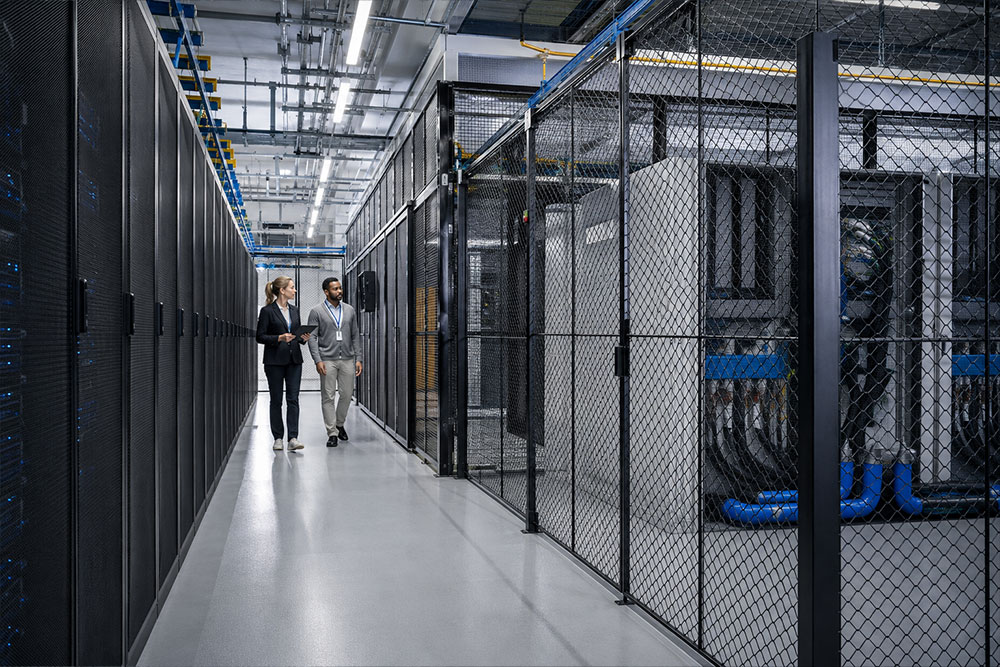
More enterprises are going multinational every year, and the need for reliable data center connectivity is growing with them. Because of that, data center interconnection has become a rapidly growing trend in telecommunications.
A carrier-neutral data center refers to data centers that allow for interconnection between multiple carriers and colocation providers. Most of these are operated by a third party that plays only a limited role in providing Internet service to the user. These centers are entirely free from the companies they allow to utilize the center. They do not compete with these businesses and rarely offer service packages.
By using a cross connect service within a carrier-neutral data center, enterprises can massively expand their reach without increasing cost. Carrier-neutral data centers also let enterprises contract directly with the providers they choose. That means no need to sign up for a preset package deal with a single provider or carrier.
Understanding Cross Connect Services in Telecommunications
Cross connects are the physical cables that connect users directly to two different termination locations within a single data center. Large enterprises generally use cross connect services to reduce latency and improve traffic flow management and network reliability. This ensures the highest possible level of performance.
Cross connect services in data centers have four primary benefits:
- Traffic Flow Management. Cross connect services enable companies to better monitor and manage traffic exchange between data centers.
- Disaster Recovery. Cross connect services offer increased network reliability, since disaster recovery improves significantly with cross connection. Using multiple servers and providers creates a more secure data set. It also lowers the risk of losing everything in a disaster.
- Latency Reduction. Cross connect services cut latency by routing traffic to the servers and ISPs serving a company’s end-users on-site.
- Global Networking. Cross connect services offer advantages in redundancy and pricing through connections with multiple global networks.
What Is Data Center Interconnection?
A data center interconnection refers to the practice of using at least two data centers to achieve IT goals — what NIST’s glossary formally defines as a system interconnection. These data centers share connectivity and can work together to share resources and exchange workloads. This is most commonly achieved by connecting data centers through a shared VPN. Once connected, these data centers can use any or all IT resources within the network.
How Is Data Center Interconnection Used?
Data center interconnection serves five primary purposes. Each one shares the same end goal: increasing efficiency and performance while reducing cost.
- Multiple User Connection. Connecting multiple data centers within one organization.
- Shared Resources. Connecting partner and customer data centers with shared resources.
- Shared Workloads. Allowing shared workloads by enabling most of the processes to be executed at the interconnected data center.
- Scalability. Enabling enterprises to meet scalability needs by pooling data center resources.
- Disaster Recovery. Using the interconnected data center as a disaster recovery site.
Finding carrier-neutral data centers with cross connect services
Businesses looking to increase efficiency and reach while decreasing costs should call Volico at (305) 735-8098. Speak with a data center representative about the cross connect services we provide. To learn more about Volico’s packages, services and how these will help you better meet your company’s IT needs.