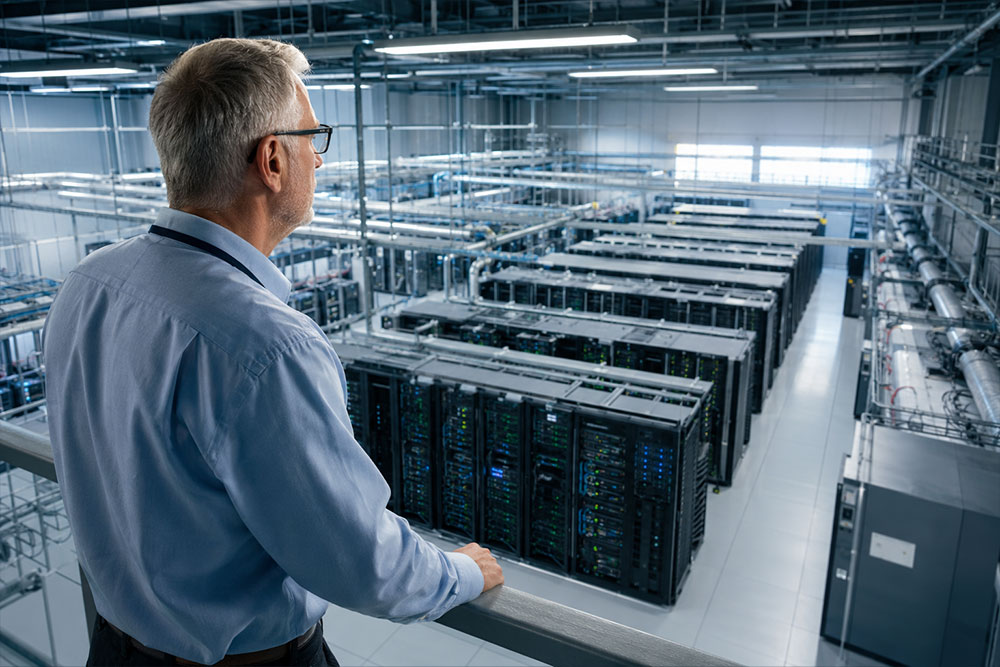
Selecting a data center is no easy task, considering all the conditions that have to be examined for a lasting and well-functioning decision. With data volumes growing at an extraordinary rate, processing and storage needs are the most important aspects determining the pace of growth. Flexible and easily scalable colocation solutions are popular today, however, choosing a provider that is a perfect fit can be challenging. There are lots of requirements to consider and match, like security, location, network, and connectivity, but colocation power requirements and the systems that ensure operational continuity are at the top of the checklist.
Colocation power requirements are influenced by the increasing rack densities driven by digital transformation and AI. Because hardware configurations are never uniform, power consumption patterns can differ widely from rack to rack. A few years ago, typical racks operated in the single-digit kilowatt range (around 8 kW was common), but many facilities are now preparing for densities that approach or even exceed 20 kW.
The shift toward high-capacity server designs also pushes overall consumption upward, and this rise can influence operational expenses for colocation customers. For this reason, calculating expected colocation power requirements early in the planning process is more than crucial.
In this blog, we will examine colocation power requirements in detail and look at the power-related implications of choosing a long-lasting and scalable colocation solution. Let’s begin.

What Determines Colocation Power Pricing
Colocation power requirements play a central role in overall operating expenses, which is why understanding the drivers behind power pricing matters so much for long-term planning. Many technical and environmental variables determine how a facility ultimately charges for power, and each influences efficiency and reliability, as well as sustainability outcomes.
Evaluating the following elements helps businesses develop realistic budgets and choose colocation infrastructure strategies that can support their current workloads and future growth.
The Energy Market
The energy market shapes the baseline cost of electricity, which becomes a core component of colocation power pricing. As wholesale rates shift with demand, fuel mix, and regional tariffs, operators use fixed-price contracts to keep expenses predictable. These fluctuations matter when evaluating long-term budgets, since power costs ultimately influence how businesses handle their colocation power requirements.
HPC Power Needs
High-performance computing workloads like AI training or scientific modeling rank among the most power-intensive systems in a colocation environment. These deployments depend on dense clusters of CPUs and GPUs, but also on large storage arrays and high-speed networking gear, all of which increase electricity draw and ultimately raise operational costs. Growth in HPC environments brings higher power density, expanding demand, and influencing overall colocation power requirements.
Another thing to consider is that higher-density servers place additional pressure on cooling infrastructure, which increases the total watts consumed by the rack, adding to the effective cost per kilowatt-hour. Careful calculations and predictions help businesses prepare for the long-term impact of HPC hosting.
Cooling System Efficiency
Cooling is one of the biggest factors behind a data center’s power profile, simply because equipment has to run within a safe temperature range at all times. When a facility supports higher-density servers, the cooling load grows, and any inefficiency shows up quickly on the energy bill.
Most modern colocation sites use a mix of precision cooling, efficient chillers, coupled with airflow management best practices to keep temperatures stable without wasting energy. Liquid cooling is also gaining traction, especially for AI and other power-intensive workloads, because it moves heat far more effectively than air. In the long term, strong cooling performance helps stabilize operating costs and gives businesses a clearer picture of their colocation power requirements. When cooling demand stays predictable, it becomes much easier to understand the total load a deployment will draw over time, including both the IT equipment and the overhead needed to keep it running safely.
Power Usage Effectiveness (PUE)
Power Usage Effectiveness is a simple way to understand how efficiently a facility uses its energy resources. It compares the total power consumed to the portion that actually reaches IT equipment. A lower score means the site runs more efficiently and keeps operating costs under control. PUE is heavily influenced by cooling design, local climate, and facility layout, all of which influence long-term colocation power requirements.
Design and Infrastructure
Design and infrastructure decisions have a direct impact on how a data center handles power.
A facility that manages airflow well places less stress on its cooling systems, which keeps energy use steady even as workloads change. Containment methods paired with thoughtful hardware placement support lower operating costs and more predictable colocation power requirements. Modern sites reinforce this with better insulation and smart rack layouts that guide air the right way. Real-time monitoring helps operators keep power loads balanced so no part of the environment is overworked or overburdened. Many providers also use modular building blocks, giving them a practical path to add capacity and fine-tune cooling without disruptive construction.
Renewable Energy Availability and Storage
Renewable energy plays an increasingly important role in how colocation providers manage long-term power costs. Facilities located near strong renewable sources can blend grid electricity with self-generated power, which brings more stability to their operating budgets.
Of course, effective use of renewables also depends on storage. Battery energy storage systems and similar technologies hold excess energy and supply it back during peak demand periods or outages. Since renewable availability varies by region, some colocation data center facilities can better leverage this option than others.
Power Redundancy
Power redundancy sits at the center of any serious colocation design because uptime depends on more than the local grid. Facilities typically run with dual power feeds and automatic transfer systems, giving them the ability to shift the load instantly if one source drops. Regions that experience frequent brownouts or full outages create additional pressures on operators, since fuel management, maintenance, and regulatory checks become more demanding. These realities can raise operating costs and power draw patterns.
Power Grid Reliability
Power grid reliability plays a major role in how a colocation facility plans its power strategy. A stable grid keeps day-to-day operations predictable, while regions with frequent voltage dips or outages push operators to build stronger backup systems and better monitoring. Many providers balance this risk by securing long-term renewable power agreements or adding more on-site generators. These projects support sustainability goals and help steady long-term costs, yet they require meaningful upfront investment, which ultimately influences colocation power requirements and the pricing structure that follows.
Location and Environmental Factors
Location has a clear impact on how a data center manages its power profile over the years. Cooler climates ease the cooling load and create steadier energy use, while hot or humid conditions push cooling systems much harder. Extremely cold weather introduces its own operational needs, since facilities must protect critical equipment and maintain reliable backup heat. These shifts influence day-to-day consumption and shape long-term colocation power requirements, especially when higher-density deployments depend on predictable thermal conditions.
Regional Energy Tariffs
Energy pricing is one of the largest variables behind colocation power planning, and regional tariffs make a significant difference. Sites located near low-cost renewable energy or utility incentives gain more predictable operating expenses and a stronger long-term cost profile. Regions with stable grid performance also reduce the need for heavy backup systems, which lowers ongoing overhead. Colder climates offer an additional advantage by easing the cooling load for most of the year.
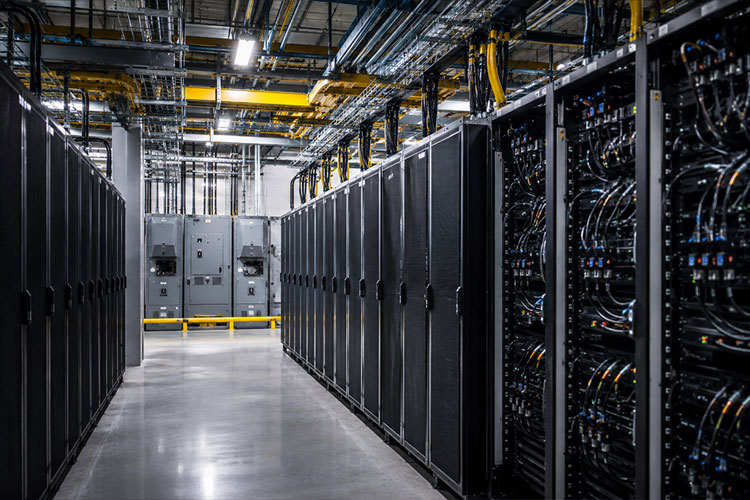
Estimating Colocation Power Requirements
Estimates give businesses a clearer view of expected energy use and long-term costs. This overview highlights the core methods professionals use to size deployments accurately and maintain a stable, efficient operating environment.
Calculating Power Density Needs
Power density is one of the most important factors behind colocation power requirements, and tracking it early makes budgeting and long-term planning much easier. Rack density has risen steadily as businesses deploy higher-performance servers. A few years ago, most environments averaged around 8 kW per rack, yet many data centers now support densities approaching 20 kW. Higher-density racks draw more power and place more demand on cooling systems, which directly affects operating costs and overall colocation power planning.
According to the Uptime Institute Global Data Center Survey 2025: “Average server rack power densities continue to rise slowly, driven by greater adoption of racks in the 10 kW to 30kW range.” NVIDIA’s latest GPU servers require even more, and looking into the future, next-generation models are estimated to draw above 100 kW of power per rack.
Planning For Expansion
Scalability plays a major role in long-term colocation strategy because power needs grow as the infrastructure grows. A provider with flexible capacity options makes it easier to adjust energy availability without disruption. Estimating future colocation power requirements should always include additional headroom, since underestimating the load leads to avoidable shortages and costly upgrades. This type of forward planning helps maintain stability and keeps expansion predictable.
How to Precisely Measure Power Draw
Accurately measuring power draw is one of the most reliable ways to understand your colocation power requirements and create a realistic energy plan for your deployments. The basic calculation is straightforward: amps x volts = watts. This formula applies to a single device or an entire rack, and it forms the foundation for most colocation power needs assessments.
To clarify the terminology, amperage refers to the amount of electrical current moving through the circuit, voltage represents the force that pushes that current from the source, and wattage reflects the actual power a device consumes. Once these values are known, estimating total power needs becomes much easier.
Methods
A precise measurement starts with a full inventory of active hardware. Each device has to undergo a review for its expected load, and there are several ways to approach the calculation. Some teams add the estimated draw of each server, switch, or appliance to build a cumulative total. Others rely on real-time readouts from smart power distribution units, which capture live usage per device. A third approach measures the consumption of the entire room and traces the load back to individual equipment groups. All three methods help create a more accurate picture of the watts per rack and the overall power density needed for a stable environment.
Modern servers often include built-in power meters or clearly labeled faceplates listing voltage and amperage. When that information is missing, manufacturer specifications or data sheets usually provide the maximum power draw.
Consider a simple example: a server pulling 8 amps on a 208-volt circuit costs 1,664 watts. The same server on a 120-volt circuit uses 960 watts. Applying this calculation across all equipment gives you a clear view of the total power draw for the space and ensures your colocation power requirements are sized correctly for both current needs and future growth.
Calculate Cooling Needs
Cooling has to be part of the conversation when you estimate colocation power requirements because heat output rises every time power density goes up. The cooling system keeps hardware in a safe operating range, and without enough capacity, the risk of failures grows quickly. Most colocation providers design their power and cooling setups to work together so the environment stays stable as workloads change. When racks run hotter, cooling demand increases, and that shift affects both infrastructure planning and long-term operating costs.
Account for Backup and Redundancy
Backup and redundancy need to be factored into your colocation power requirements from the start. The environment has to stay online during a grid issue or equipment failure, and that means the backup layer has to be sized to support every critical device. Most colocation facilities use a combination of UPS systems and generators to keep workloads running through any disruption. Including these systems in the power plan helps prevent unexpected downtime and gives your deployment a reliable safety net when the primary source drops.
How Data Center Power Billing Works
Power distribution in a data center follows a carefully engineered path long before even reaching the customer’s rack.
Electricity comes in from the regional grid, gets stepped down through facility transformers, and moves into large UPS frameworks that stabilize the current and clean up any irregularities. From there, the power is fed into distribution panels and routed to individual circuits, ensuring every rack receives consistent, conditioned electricity. This entire chain is built to keep workloads running through voltage dips or momentary grid disruptions.
When companies relocate infrastructure into a colocation facility, power and space become the two primary elements on the monthly bill. Some deployments fit into a single circuit, while others span several racks or dedicated rooms. Because colocation power requirements vary widely between tenants, providers use a few billing models to match different operating patterns:
- A flat-rate option offers businesses a predictable monthly fee tied to the circuit capacity they reserve. It works well for steady workloads with little fluctuation.
- Allocated power is a middle-ground approach, giving customers a defined consumption limit each month based on their expected load.
- Metered billing ensures actual usage and charges accordingly, which appeals to environments that scale up and down or dynamic workloads.
Choosing between these models comes down to understanding how your equipment behaves over time, and how much headroom you want. A provider can help model typical load, peak demand, and watts per rack, making it easier to align billing with real consumption patterns. As modern developments push higher densities and rising energy costs continue to influence the market, selecting the right billing structure becomes a critical part of managing long-term data center colocation power expenses.
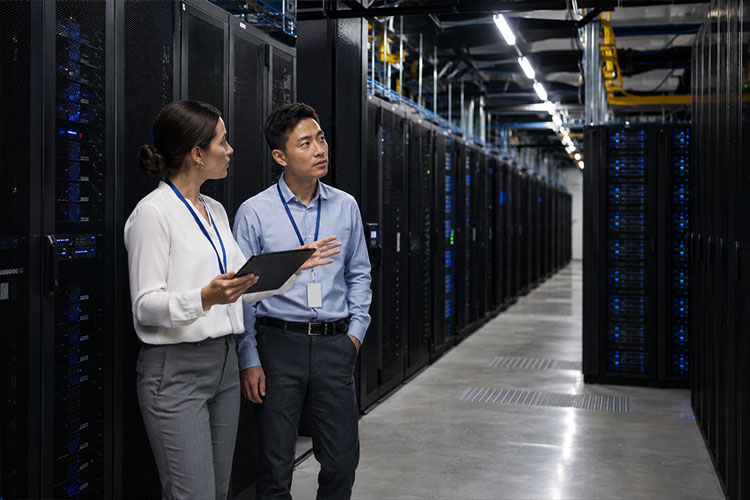
The Bottom Line: Compare Your On-Premises Power Costs With Volico’s Power Costs
Power planning is easier when you work with a collocation partner that treats transparency and long-term reliability as priorities. Volico Data Centers gives businesses clear visibility into their energy use patterns, plans for growth, and avoids unexpected power issues. Beyond basic colocation, Volico supports customers with a wide range of managed services, helping organizations design the right mix of infrastructure, applications, and performance tuning.
Our 3rd generation facility architecture is built for resilience, backed by a 2N+X SmarGrid power and cooling platform that keeps critical workloads online even during grid instability. This design offers the kind of redundancy that modern deployments expect, especially as power densities are increasing, and uptime is reaching a whole new level of importance.
Explore the environment for yourself through Volico’s 360 virtual tour, or reach out to learn how our team can help support your long-term power strategy and IT infrastructure goals.