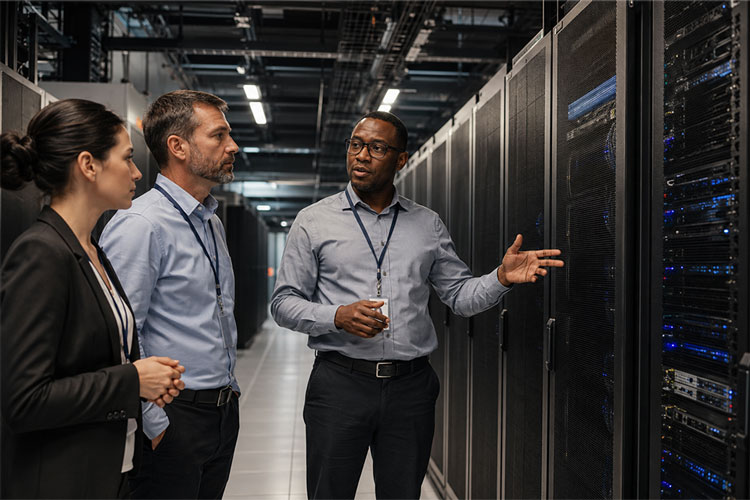
Data center physical security became a frontline concern when COVID-19 pushed most teams to work remotely. Colocation providers had to prove that customers could still trust their facilities.
The pandemic forced many companies to change how they do business. Some industries felt it more than others. Still, every service provider had to find a safe way to keep working with little human contact. Companies had to rethink their work environment, operations, and internal controls.
The consequences of Covid-19 continue to unfold. Many businesses moved to remote work to keep employees safe and reduce virus transmission. But as more companies go virtual, reliable applications, data storage, and access matter more than ever. What if your employees don’t have good internet access? What if your servers shut down and your coworkers’ platform stops working? How big of an impact would that have on your business?
More companies now entrust their servers to a data center. It is clear that the IT infrastructure behind our products and services is crucial for business continuity. Data centers hold the world together, so keeping them running at their best is a top priority for every organization.
However, technicians usually have to tackle data center issues manually on site. Because data centers need physical security and manual control, many companies struggle to offer these services during the pandemic. Why is data center physical security such an essential service during Covid-19? And how can we solve these problems? Let’s find out!
Why Colocate With A Data Center?
With the ongoing pandemic, we can clearly see that the mindset in business is slowly evolving. Many companies believed all data had to stay on-premise, but that is no longer the case. Colocating your IT infrastructure with a data center is getting more popular. It relieves you of providing security, power, or storage for your servers yourself. Data center providers take care of all these aspects for you.
Colocation helps your business in many ways. It reduces the upfront investment and resources you need for cooling, storage, and security in your on-premise data center. Colocating also makes it easier to scale your IT infrastructure. Your provider gives you a team of highly trained professionals who can help with any server issue. With 100% SLA uptime, your data center stays up and running, and your servers keep performing at their best.
Data Centers And Physical Security During A Pandemic
We all know companies hold sensitive data they cannot afford to lose or expose. With colocation providers, you entrust your IT infrastructure to a third party, so security concerns emerge. However, many companies realized that providers use a series of tools and practices. These protect the physical infrastructure from internal and external threats. Controlling access is an essential part of data center security. Colocation providers have implemented some of the best physical security practices, so safety stays intact.
Lately, data center security has become more important because the Covid-19 pandemic raised many concerns about physical security. Unfortunately, some people see this time of crisis as an opportunity to capitalize on the pandemic. Statistics show a big jump in cyberattacks. In today’s climate of home working, it is essential to ensure physical safety for IT equipment.
Because of this, more companies colocate their servers with a data center provider. Aside from cost, scalability, and reliability, colocation providers offer top physical security. Designers build data centers from the ground up with the best security practices in mind. Every element of a data center’s physical security works with the others, so each security measure enhances the next.
The strength of a data center’s physical security depends on the security policies in place. These procedures give data center staff clear guidelines on how to carry out operations.
Data Center Physical Security Standards
Here are some of the security standards that explain how data centers handle physical security. We have laid out the most critical data center physical security technologies and standards that colocation providers use. Here is what you, as a customer, should look for when searching for a data center provider.
Round-The-Clock Data Center Physical Security
No one can deny the need for on-site security staff who respond to threats and unauthorized activity. The physical security of data centers is at risk, even more so during the pandemic, because many companies restrict staff numbers and access. If your office doors are shut, your company has one more concern to worry about. You still need a reliable way to protect your on-premise data center.
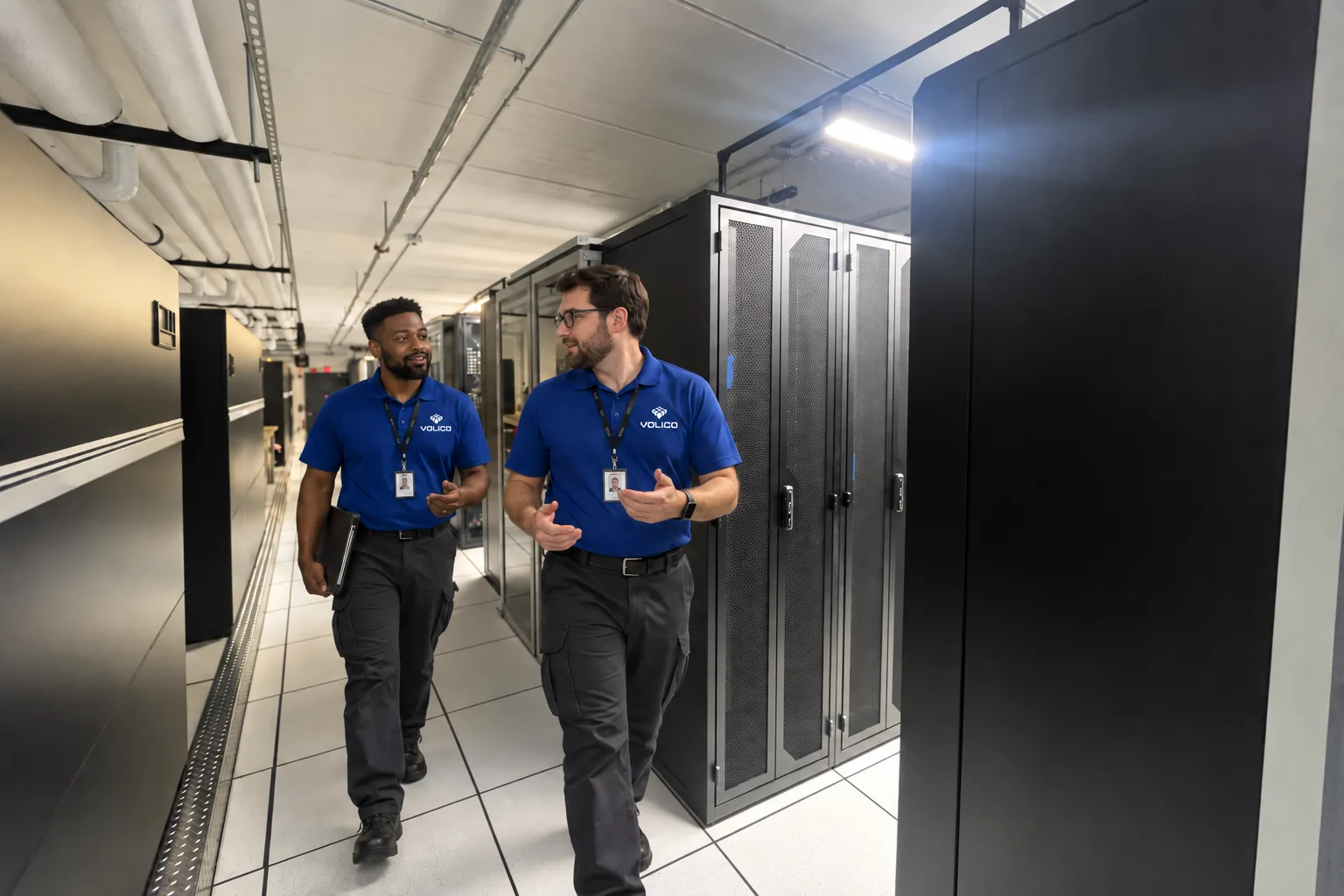
With colocation data centers, your provider has it all figured out, so you have one less thing to worry about. They provide 24x7x365 security, and security staff patrol the data center zone often. Staff watch for threats, and they can react quickly to any security issue that comes up.
Layered Security Measures
Data center providers that use a layered security model greatly boost the physical security of their facilities. Security measures should work together as part of a layered system for maximum protection. With a layered system, an intruder must break through multiple layers to reach the valuable data or hardware inside.
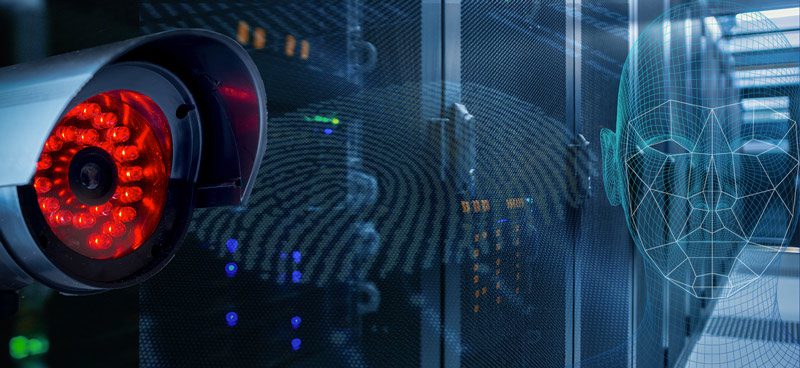
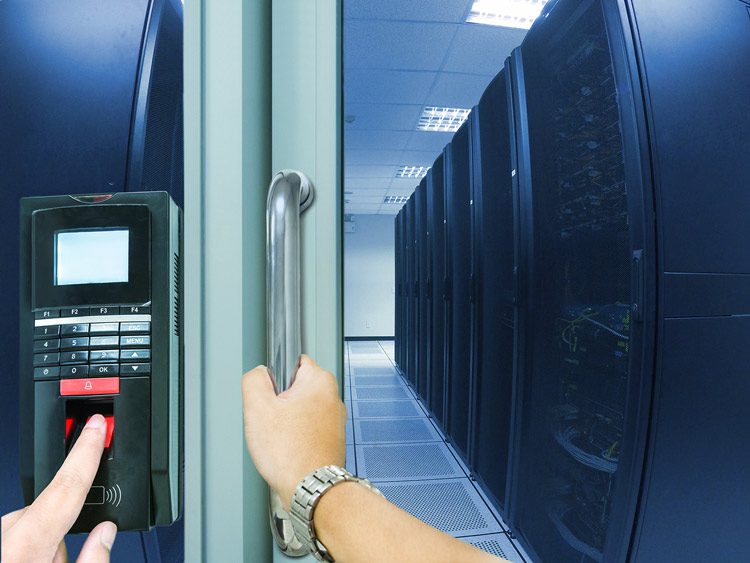
If one layer proves weak, several other layers prevent an intrusion that could compromise the entire system. Industry-standard access control includes 7-point military-grade security protocols. These feature multiple Man-Traps, Fingerprint Biometrics (97+ Point fingerprint biometric access), and a Facial Recognition biometric scanner.
Improved Security With Biometric Technology
Technology has helped many data centers improve their physical security even further. Since we talked about layered security, biometric technology could be an additional layer. We use biometric technology in our day to day lives without even noticing it. You probably have a phone that unlocks with face recognition, a thumbprint, or a voice pattern.
Biometric technology can greatly improve the physical security of data centers and give colocation customers more peace of mind. By adding a biometric system, you can limit access to the facility, because it scans unique physical traits before granting entry.
Exit Procedures
Data center operators must prevent unauthorized access at all costs to protect colocation customer property. The methods we have presented so far do just that, but security issues can also come from authorized staff. Staff or colocation customers have access to sensitive data inside the data center. While they are authorized, their privileges don’t go with them.
Data center security systems should have procedures that remove authorized staff’s privileges as soon as they leave the facility. We call these exit procedures. Some come in the form of an access list that accounts for everyone who came in and left. An exit procedure can also mean that staff collect keys or delete biometrics. That way, the same person cannot pass through security in the future.
Conclusion
As the world recovers from the pandemic, companies worry about having a reliable IT setup that keeps business running. The spike in remote workers shows that more companies are closing their offices. Many are adopting work-from-home policies for their staff’s safety. With these changes happening worldwide, data center strategies are crucial to keeping businesses up and running.
As the consequences of the pandemic unfold, many companies have serious concerns about the physical security of their data. However, colocation, one of the best solutions for managing and storing IT infrastructure, has quickly answered many of them. Colocation providers are growing in popularity for their reliability, scalability, and access, and also for the best possible physical security. With a data center provider, your business gains a smart, scalable asset in a secure environment.