Fort Lauderdale has become a practical place to run business-critical infrastructure. Companies get the reliability of a private data center without the cost and operational burden of building one. Across Broward County and the wider South Florida market, Fort Lauderdale colocation gives companies a middle ground between an office server room and the public cloud. The hardware stays under their control. The environment around it is purpose-built for uptime, security, cooling, connectivity, and growth.
That makes Fort Lauderdale colocation especially relevant in 2026. Infrastructure requirements are getting harder to satisfy inside ordinary commercial buildings. Many businesses still have workloads that need dedicated hardware, predictable performance, private connectivity, or a specific compliance posture. A professional Fort Lauderdale data center takes the facilities problem off the IT team’s plate. The company still owns its servers.
Location adds another advantage. Fort Lauderdale colocation sits inside the broader South Florida data center ecosystem. It’s close enough to Miami’s major connectivity market to benefit from regional network density, while giving businesses another deployment point in Broward County. Companies serving South Florida, Latin America, the Caribbean, or distributed users across the region get local access plus strong regional connectivity.
This 2026 buyer’s guide looks at what actually matters when comparing providers: why companies move out of on-site server rooms, how Fort Lauderdale compares with Miami, and what drives pricing. It also covers which facilities operate in the market and what to inspect before signing a contract.
Why Fort Lauderdale Colocation Makes Sense for South Florida Businesses
The case for Fort Lauderdale colocation starts with geography. Broward County sits between Miami-Dade and Palm Beach County. That puts local infrastructure within reach of a large concentration of businesses, without requiring every deployment to sit in downtown Miami. That works well for companies with offices, customers, or technical teams spread across the South Florida corridor.
Miami remains the region’s dominant interconnection hub, particularly for international traffic and routes toward Latin America and the Caribbean. Fort Lauderdale doesn’t replace that ecosystem, but it can connect into it through regional fiber and carrier networks. Businesses can place core compute, storage, backup, or private infrastructure in Broward. They still keep links to Miami network hubs, cloud environments, branch offices, and end users.
So don’t treat Fort Lauderdale colocation as a generic “cheaper Miami” proposition. It is a different deployment point within the same regional market. Some workloads need the densest possible carrier ecosystem. Others need reliable power, strong connectivity, physical access, room to grow, and a professionally operated facility. That second group often gets better value from Broward County colocation. A downtown location’s interconnection density mostly goes unused, so paying for it adds cost without benefit.
Why Businesses Move Servers Out of the Office
Small server rooms usually work until the surrounding building becomes the problem. Office electrical systems aren’t designed around continuous IT loads. Cooling may share infrastructure with comfort HVAC, and generator coverage can be limited. Maintenance on building systems can create downtime the IT team has little power to prevent.
Growth exposes those weaknesses quickly. Adding another rack may require new circuits, more UPS capacity, and additional cooling. Security can also become harder to control, especially when the server room sits inside a general office environment. A single cooling or electrical failure can affect every system in the room at once.
Fort Lauderdale colocation moves those servers into an environment designed around the equipment. The business still owns and configures the hardware. Power delivery, cooling, physical security, fire protection, connectivity, and facility monitoring become part of the data center service. Companies keep infrastructure control without continuing to operate a miniature data center inside an office building.
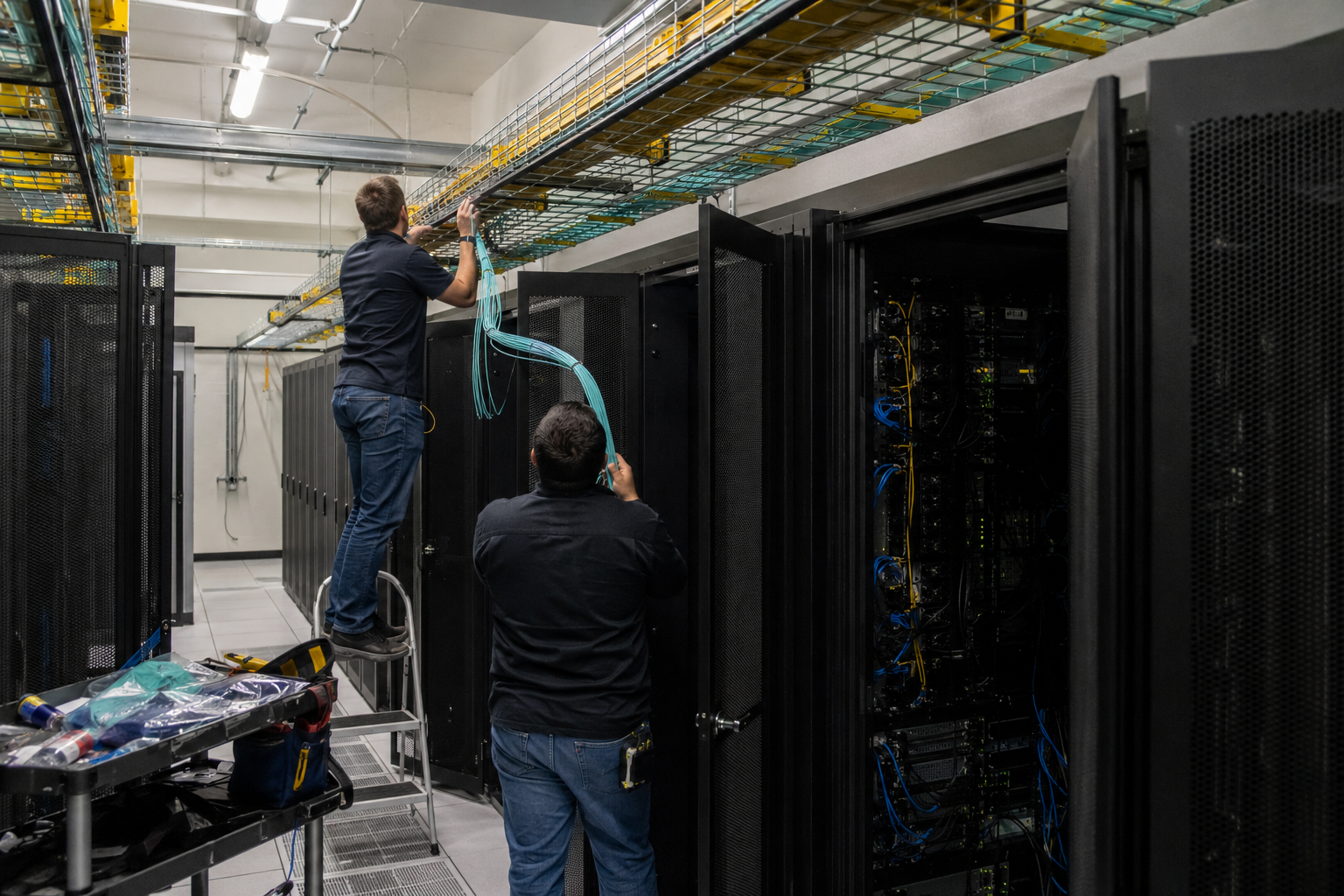
There is a staffing benefit too. With qualified remote hands on site, routine tasks such as visual checks, reboots, cable changes, or basic hardware help happen under the customer’s direction. Lean IT teams don’t need to send an engineer across town every time a physical task comes up.
Fort Lauderdale Colocation vs. Miami: What Changes for the Buyer?
One of the most common questions is whether Fort Lauderdale colocation is cheaper than Miami. Sometimes it can be, but the answer depends on what the deployment actually needs.
Miami carries a premium in parts of the market. It has South Florida’s deepest concentration of carriers, interconnection options, and international network routes. If a workload depends heavily on direct peering, subsea connectivity, or dense access to network providers, that premium may be justified. If the deployment is mostly private compute, storage, backups, virtualization, or enterprise apps on standard carrier connectivity, a Broward location often fits better commercially.
The useful comparison is total deployment cost, not the opening cabinet price. Power commitment, redundancy, bandwidth, cross-connects, remote-hands rates, installation charges, contract length, and future expansion all affect the real cost. A cheap cabinet can become expensive if power is constrained, or if the provider bills every additional service separately.
Distance also matters. If the technical team sits in Broward County or northern South Florida, a nearby facility makes migrations, scheduled maintenance, emergency access, and equipment deliveries easier. That operational convenience has value even when it doesn’t appear on a quote.

What to Look for in a Fort Lauderdale Colocation Provider
Choosing a provider should begin with the workload, not the package list. Define the equipment’s cabinet footprint, power draw, cooling profile, network requirements, compliance needs, physical-access expectations, and likely growth path. Then compare facilities against those requirements.
Power and Cooling Redundancy
Power is one of the main reasons to leave an office server room. It should be one of the first things you investigate. Ask how utility power enters the facility, what UPS architecture backs it up, and how the provider sizes generator capacity. Also ask how maintenance happens without exposing customer equipment to a single point of failure.
Cooling deserves the same scrutiny. A site may have plenty of floor space while lacking the cooling capacity for a dense rack. Ask about current heat-load limits, cooling redundancy, and airflow management. Also ask whether higher-density equipment can stay in the same footprint later.
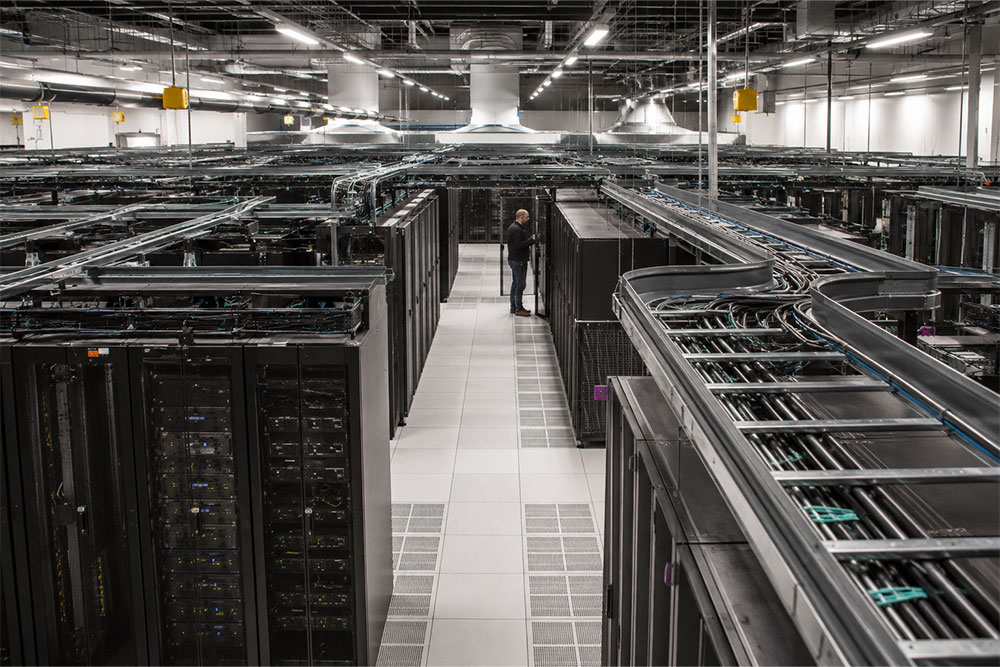
Volico’s FLL1 facility lists 2 MW of current utility and generator power, with expansion capacity up to 48 MW. It also runs 2N+X Smart-Grid generator and UPS infrastructure, plus 600 tons of current 2N CRAC/HVAC capacity.
Hurricane Resilience and Physical Security
South Florida changes the resilience conversation. Hurricane exposure, flooding, extended utility interruptions, and staying operational during severe weather all deserve real technical answers.
A Fort Lauderdale colocation provider should explain its building design, backup-power strategy, fuel planning, staffing procedures, and customer-access policy for major weather events. The discussion should distinguish physical hardening from operational redundancy rather than treating “hurricane ready” as a single feature.
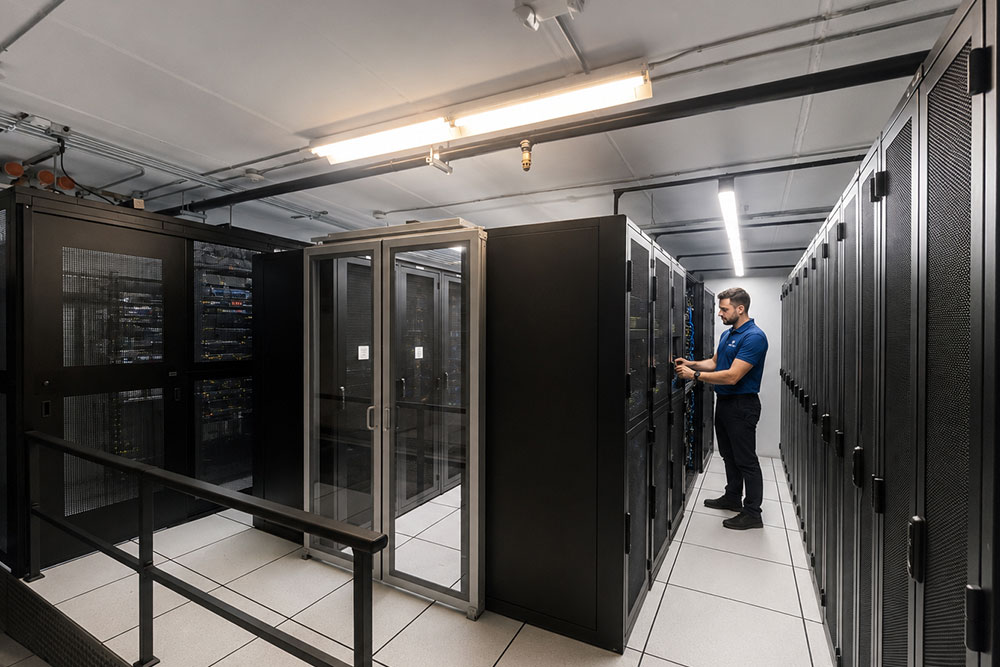
Security should also be layered. Look for perimeter restrictions, staffed access, surveillance, mantraps, identity verification, biometric or proximity controls, plus separately secured cabinets or cages. Volico’s FLL1 is Category 5 hurricane-resistant. It has on-site security, gated entry, mantraps, proximity authentication, biometric controls, and individually secured cabinets and cages.
Connectivity and Carrier Choice
Network quality isn’t measured by the number of logos on a brochure. The real question is whether the facility offers enough carrier choice and route diversity. The network shouldn’t be the weak point.
Carrier-neutral Fort Lauderdale colocation lets customers choose connectivity around the workload rather than around one mandatory provider. Ask how fiber enters the building, whether routes are physically diverse, and which carriers are available. Also ask how cross-connects get provisioned and what happens if the primary path fails.
Volico’s FLL1 is carrier-neutral with multi-homed BGP routing and 100M, 1G, and 10G uplink options. The practical value is flexibility: the provider can design connectivity around the deployment and change it as requirements evolve.
Space, Density, and the Growth Path
Scalability is easy to promise when a customer installs the first few servers. The harder question is what happens when that customer needs another cabinet or significantly more power.
Ask what expansion capacity exists near the proposed footprint, whether adjacent cabinets can be reserved, and whether the facility supports higher-density loads. A facility may have open space somewhere in the building. That doesn’t help if there’s no clean expansion path from the row where your equipment actually sits.
FLL1 offers quarter-rack, half-rack, full-rack, and private-cage options, plus a wide range of current and future capacity. That’s useful for businesses that need professional infrastructure but don’t want to commit to a full cage on day one.
Support and Managed Services
Some companies only need space, power, cooling, and network access. Others want local engineers who can take on selected operational work, especially when sending internal staff to the facility makes little sense.
Ask what remote hands and smart hands cover, who does the work, whether technicians work 24/7, and how the provider prioritizes emergency requests. Managed services such as backup, monitoring, security, migration support, firewall management, or network assistance may be useful later. Check whether they can be added without changing providers.
Around FLL1, Volico Data Centers offers monitoring, managed security, managed backups, remote and smart hands, software installation, hardware support, network design, and load-balancing assistance.
Which Data Centers Are in Fort Lauderdale?
The answer to “which data centers are in Fort Lauderdale?” is shorter than some directory pages suggest. The Broward market has several established facilities, including Volico’s FLL1 site.
The smaller market isn’t necessarily a drawback. A business shopping for Fort Lauderdale colocation is usually making a targeted infrastructure decision. The important questions are whether a provider can deliver the required resilience, network access, support, and growth capacity. It also matters whether the location works operationally for the team.
FLL1 sits in Deerfield Beach in northern Broward County. That places the facility within the wider Fort Lauderdale market. It’s also practical for organizations with staff or operations extending toward Boca Raton and Palm Beach County.
How Far Is FLL1 From Downtown Fort Lauderdale?
FLL1 is roughly 20 miles north of downtown Fort Lauderdale, a typical drive of about half an hour depending on traffic. The facility itself is at 500 Green Road in Deerfield Beach.
That distinction matters when buyers search for Fort Lauderdale colocation and assume every result is located downtown. Data center markets are metropolitan rather than strictly municipal.
Access to major roads, customer offices, carrier routes, airports, and business centers often matters more than a downtown postal address.
Teams working across Fort Lauderdale, Deerfield Beach, Boca Raton, and West Palm Beach can reach FLL1 without pushing infrastructure south into Miami-Dade.
What Determines Fort Lauderdale Colocation Pricing?
Pricing becomes meaningful only after the provider understands the equipment. Two customers can occupy the same cabinet size and receive very different quotes. One might use 2 kW while the other uses 10 kW, or one needs a basic internet connection while the other needs diverse carriers and multiple cross-connects.
The main cost drivers are space, committed power, redundancy, cooling, connectivity, cross-connects, security or compliance needs, support, and contract structure. Higher-density environments are often priced primarily around power rather than cabinet space.
Right-sized Fort Lauderdale colocation can be especially useful for smaller deployments.
Fractional-rack options let a business leave an office server room without paying for an entire cabinet it doesn’t use yet. Power should follow the same logic. The commitment should reflect the actual load with sensible headroom, not an oversized theoretical maximum.
Compare what each quote includes. Cross-connect fees, remote hands, after-hours support, bandwidth overages, installation work, and future power upgrades can materially change the monthly cost. A lower rate on a long contract only helps if the environment can grow without forcing an expensive redesign. Also ask how pricing changes at renewal, whether unused power commitments can be adjusted, and what costs apply if you need to move or expand.

Questions to Ask During a Data Center Tour
A tour is where the sales description meets the physical facility. Whether you visit in person or take a detailed virtual tour, focus on what happens during maintenance, equipment failure, and severe weather.
Useful questions include:
- How are utility, UPS, and generator systems made redundant?
- What happens during maintenance on critical power or cooling systems?
- How much power and cooling capacity is available for expansion?
- Are carrier entrances and network paths physically diverse?
- What access controls sit between the building entrance and the cabinet?
- How does the site handle hurricanes, fuel supply, and prolonged utility outages?
- What does the SLA guarantee, and what does it exclude?
- Which remote-hands tasks are available around the clock?
- Can a partial rack expand into a cabinet or cage without relocating equipment?
Listen to how the technical team answers. A strong Fort Lauderdale colocation provider explains failure scenarios in operational terms. It doesn’t just repeat words such as “redundant” or “enterprise-grade.” If the facility can’t show how maintenance and component failures are isolated, the brochure isn’t enough.
Why Volico FLL1 Is a Strong Fort Lauderdale Colocation Option
FLL1 is built around the problems that usually push businesses toward professional infrastructure in the first place. That means office power limitations, cooling constraints, physical-security concerns, limited expansion room, and the difficulty of supporting servers around the clock.
Volico positions FLL1 as a Tier IV data center with Category 5 hurricane-resistant design and 2N+X Smart-Grid power infrastructure. It also runs redundant cooling, 24/7 on-site security, layered biometric and physical access controls, and carrier-neutral connectivity. It supports quarter racks, half racks, full cabinets, and private cages. Customers can enter at a practical size and expand as their environment grows.
The value extends beyond the rack. Customers can add monitoring, managed security, backup, remote hands, connectivity, migration assistance, and other services when the internal team needs them. That lets businesses keep ownership and architectural control of their hardware. Facility work and selected operational tasks go to engineers already on site.
Fort Lauderdale colocation works best when the provider fits the deployment rather than forcing the deployment into a fixed package. Maybe your servers have outgrown an office environment. Maybe you need a Broward County disaster-recovery site, or South Florida infrastructure without defaulting to downtown Miami. Either way, FLL1 gives you a strong local option.
A buyer’s guide can narrow the field, but the final decision should happen at the facility. Review the power design, walk through the security layers, discuss the network routes, and see where your equipment would actually sit. Volico offers both in-person and virtual tours of FLL1, a practical way to see whether it matches your requirements. Contact us to build a local colocation plan around the infrastructure you actually need today.