Most Miami data center quotes look alike at first glance. You get a price per cabinet, a power allocation, a bandwidth line, and a contract term. The real differences show up months later. Cross connect invoices, remote hands hours, and idle reserved power add up. So do the software licenses on the servers you just moved. Learning how to choose a Miami data center means reading past the rack price. What matters is the full cost of running your environment for the next three to five years.
Miami gives infrastructure buyers real advantages. Downtown Miami is the main interconnection point between the United States and Latin America, and South Florida’s carrier density keeps transit pricing competitive. The market also brings hurricane season, expensive real estate, and providers who know most buyers never compare contracts line by line.
This guide shows where colocation costs hide. You will see how to size power and connectivity so you pay for what you use. You will also see what hurricane readiness should look like on paper and in person. It also covers a cost most site selection checklists skip: the VMware licensing running inside your racks. Volico Data Centers helps teams leave that lock in by moving workloads to Proxmox VE.
In This Article:
- Why Miami is its own data center market
- Where Miami data center bills outgrow the quote
- Size power and cooling for your Miami data center
- Miami data center connectivity that cuts cost and latency
- Hurricane readiness and the Miami plus Fort Lauderdale strategy
- Miami data center security, compliance, and support you can verify
- The cost inside the rack: VMware licensing
- Broadcom pulls VDDK: what it means for your exit
- How Volico moves VMware workloads to Proxmox VE
Why Miami is its own data center market
Miami sits where domestic fiber routes meet the subsea systems that land on the South Florida coast. Those systems run to the Caribbean, Central America, and South America. That makes the metro the natural place to host anything serving Latin American users, banks, logistics firms, and media companies that move traffic between the hemispheres. It also explains why downtown buildings have so many carriers. Transit from a well connected Miami facility can cost less than the same capacity in many inland markets.
The flip side is that Miami pricing reflects demand. Floor space in the urban core is limited, power upgrades take time, and the best connected buildings know their value. Buyers who pick a facility only because it sits in a famous carrier hotel often pay a premium for connectivity they never use.
Before you choose a Miami data center, write down what actually needs to be in Miami. Latency sensitive applications for Latin American customers, trading systems, and anything that peers heavily with regional carriers belong in the core. Backup targets, development clusters, and internal applications can often run 30 miles north in Broward County at lower cost. The same carriers are a cross connect or a metro wave away. Volico runs facilities in both places: Miami colocation in downtown buildings and a Fort Lauderdale data center in Broward County. Customers can split workloads by need instead of paying downtown rates for everything.
Where Miami data center bills outgrow the quote
Anyone researching how to choose a Miami data center learns quickly that everyone compares the cabinet price. It is rarely the number that hurts. Four line items cause most of the gap between the quote you approved and the invoice your finance team receives.
Power commitments you never use
Many providers sell power as a fixed circuit commitment. You sign for two 30 amp circuits per cabinet and pay for that capacity whether your servers draw 40% of it or 90%. Teams that size circuits for the worst case on day one often pay for idle capacity for the entire term. Ask whether the provider offers metered power, or a smaller commitment with the right to add circuits later at a locked rate.
Cross connects and recurring network fees
Every physical connection between your cabinet and a carrier, cloud on ramp, or partner is usually billed as a monthly recurring charge. A design that needs eight cross connects across two cabinets can add more to the monthly bill than the space itself. Get the cross connect price in writing, along with installation fees and any charge for moving or removing a connection.
Remote hands billed by the quarter hour
Remote hands look cheap until your team depends on them. Reboots, cable swaps, drive replacements, and visual checks add up when they are billed in 15 or 30 minute increments with after hours multipliers. Find out what the base contract includes and what response time is guaranteed. Also ask whether the technicians can handle more than a power cycle.
Escalators, auto renewals, and exit terms
Annual price escalators of a few percent sound minor, yet they compound over a five year term. Auto renewal clauses with long notice windows can lock you in for another full term if nobody tracks the date. Read the termination, relocation, and decommissioning language before you sign, because leaving a facility is when hidden costs surface.
Size power and cooling for your Miami data center
Power is the largest operating cost in colocation. Accurate planning saves the most money when you choose a Miami data center. Start with measured data. Pull actual draw from your current PDUs over at least a month, including peaks during backups and batch jobs. Do not add up nameplate ratings from server spec sheets. Nameplate numbers routinely overstate real consumption by a wide margin.
Next, match redundancy to the workload. A dual corded server on A and B feeds from independent power paths protects you against a single UPS or distribution failure. For production systems, ask how the facility’s design handles maintenance. A concurrently maintainable or fault tolerant design lets the operator service equipment without taking your racks down. The Uptime Institute Tier classification system describes both. Volico designs its South Florida facilities with 2N+X power and cooling. It built the Fort Lauderdale facility to Tier IV design standards.
Density matters too. Packing more kilowatts into fewer cabinets can reduce space charges, though only if the facility can cool that density without forcing you into a premium tier. Ask for the supported kilowatts per cabinet, how hot and cold aisles are contained, and whether high density zones cost more per kilowatt than standard ones.
Miami data center connectivity that cuts cost and latency
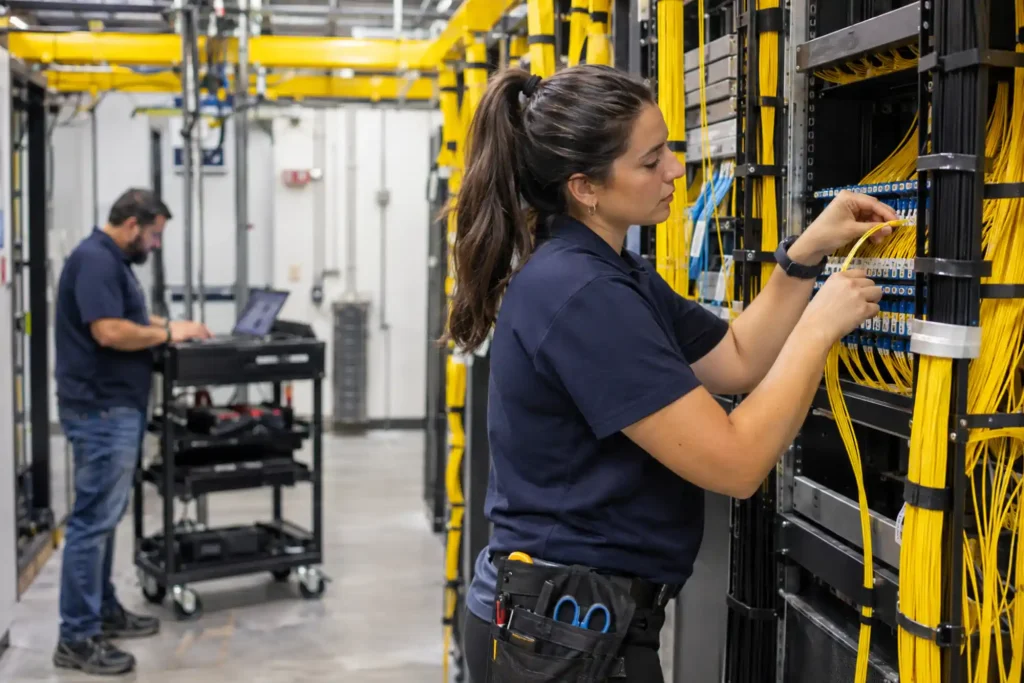
When you choose a Miami data center, connectivity often decides more of your total cost than space does. A carrier neutral facility lets you buy transit, private lines, and cloud connections from competing providers instead of one house network. Competition is the simplest way to keep bandwidth prices honest. It also gives you bargaining power at renewal time, because switching carriers does not mean moving your equipment.
Billing models deserve a close look. Flat rate commits work for steady traffic. 95th percentile billing suits workloads with short spikes, since the top 5% of samples in the month are discarded before the bill is calculated. Choosing the wrong model can cost more than the difference between two carriers.
Ask every provider for the list of carriers already on net. Then ask what a cross connect to each costs and what round trip latency to your markets looks like. If Latin America matters to your business, ask specifically about routes to São Paulo, Bogotá, and Mexico City. For hybrid environments, confirm how you would reach AWS, Azure, or Google Cloud. Also check whether Volico’s carrier interconnect options let you avoid internet transit on traffic that should travel privately.
Hurricane readiness and the Miami plus Fort Lauderdale strategy
Every Miami provider says its building can handle storms. Your job is to find out how. Start with the structure. Miami-Dade and Broward counties fall under the High Velocity Hurricane Zone provisions of the Florida Building Code. That code sets a high bar for wind resistance, but the details still vary by building. Ask what wind rating the facility was designed for on the Saffir-Simpson hurricane wind scale. Then ask how far the data floor sits above the flood zone. Ask where generators and fuel tanks stand.
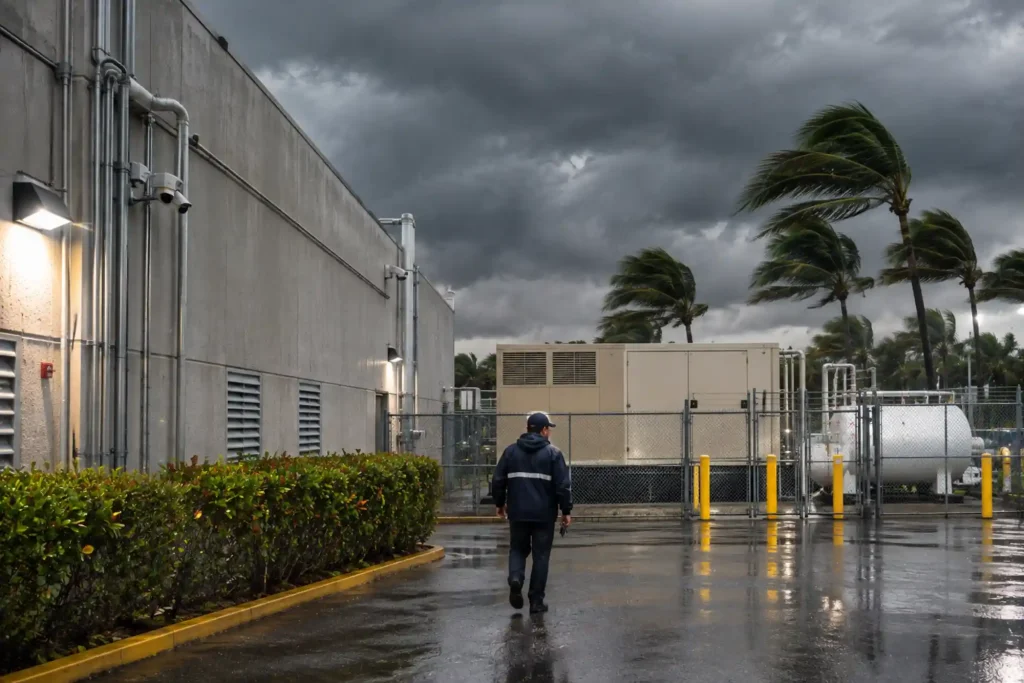
Fuel is where storm plans succeed or fail. Ask how many hours of generator runtime the facility stores on site at full load. Find out how many fuel suppliers hold contracts with it, and whether those contracts include priority delivery during declared emergencies. Ask who stays on site during a storm and how long that team can shelter in place.
Geography is the other half of the answer. Placing primary systems in Miami and a secondary environment in Fort Lauderdale protects you against building level failures, local flooding, and utility problems in one county. A large hurricane can still affect all of South Florida, so critical recovery copies should also live outside the region. Volico designs its facilities to withstand Category 5 hurricanes. Customers can pair South Florida colocation with disaster recovery in Volico’s Atlanta data center for out of region protection.
Miami data center security, compliance, and support you can verify
Certifications only help if you read the reports behind them. Ask for the provider’s current SOC 2 Type II report under NDA. Then check the audit period, the scope, and any exceptions the auditor noted. If you process card payments or patient records, confirm how the facility supports PCI DSS and HIPAA requirements and which controls remain your responsibility. Volico’s facilities are SOC 2 Type II audited, and its certifications and compliance page lists what the company supports.
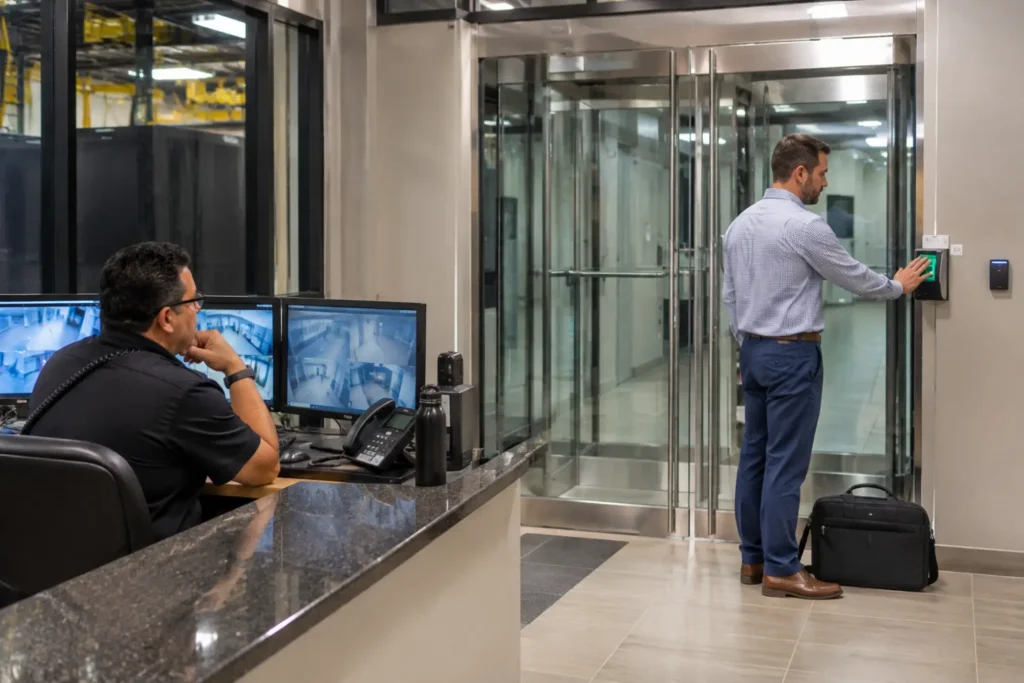
Good physical security has layers. Look for perimeter controls, staffed entry points, badge and biometric access, mantraps, and locked cabinets. Camera retention should be long enough to support an investigation. Walk the path from the parking lot to your cabinet during a tour and count the checkpoints yourself.
Support quality matters when you choose a Miami data center, because it separates a facility from a partner. A team that can rack equipment, trace cables, swap drives, and work your runbook at 3 a.m. saves money. It costs less than flying an engineer down from another city. Volico offers smart hands support, managed colocation, and DDoS mitigation for teams that want help above the physical layer.
Questions to ask before you choose a Miami data center
- What will my monthly invoice look like in month 13, including power, cross connects, and remote hands?
- Can I start with a smaller power commitment and add circuits later at the same rate?
- Which carriers and cloud on ramps are already in the building, and what does each cross connect cost?
- How many hours of fuel are on site, and who delivers more during a declared emergency?
- Can I review your current SOC 2 Type II report and your last three incident reports?
- What are the escalator, renewal notice, and termination terms?
- Who can help us modernize the virtualization stack we are moving into your racks?
The cost inside the rack: VMware licensing
Many organizations that choose a Miami data center spend weeks negotiating a few dollars per kilowatt. Then they move a VMware estate whose renewal costs more than the colocation contract. That last question on the checklist above matters more every quarter.
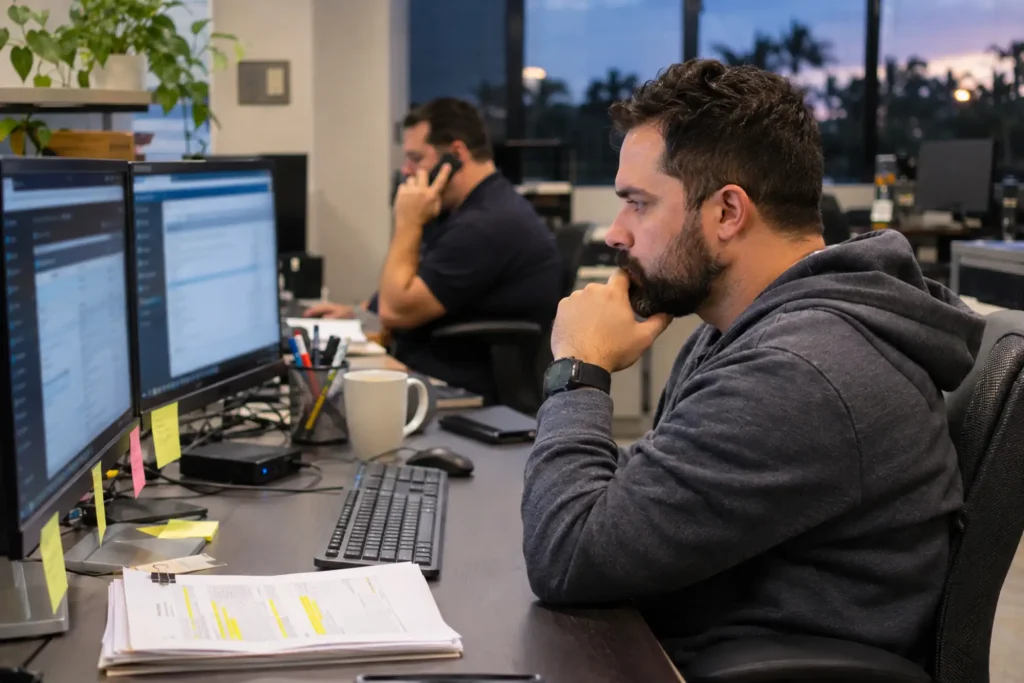
Broadcom closed its acquisition of VMware in November 2023. Since then, customers have lost perpetual licenses and moved to subscription only bundles. Pricing now runs per core with minimums, and the partner network is smaller. Teams running a modest cluster that only needs vSphere and basic high availability can end up paying for a full private cloud suite they never deploy.
How much have VMware renewals increased?
Reported renewal increases range from roughly 300% to 1,500%. The jump depends on core counts, the bundle a customer lands in, and how much of it gets used. AT&T publicly cited a quoted increase above 1,000% during its legal dispute with Broadcom. Broadcom’s own results show why the model persists: In September 2026, CEO Hock Tan put Broadcom Infrastructure Software ARR growth at about 15% a year, per DCD’s earnings coverage. That segment includes VMware.
Which companies are leaving VMware?
The exits now include well known names. Tottenham Hotspur replaced the VMware environment at its London stadium with virtualization from Hewlett Packard Enterprise, as SDxCentral reported. Trade press later reported an 85% cut in the club’s virtualization licensing costs. The Buffalo Bills moved the technology building behind their new Highmark Stadium to Nutanix after years on VMware. Smaller companies are making the same call with less publicity, often during a hardware refresh or a data center move. That timing is the point for anyone choosing a Miami facility. A colocation move is the cheapest moment to change hypervisors, because you are already touching every server.
Broadcom pulls VDDK: what it means for your exit
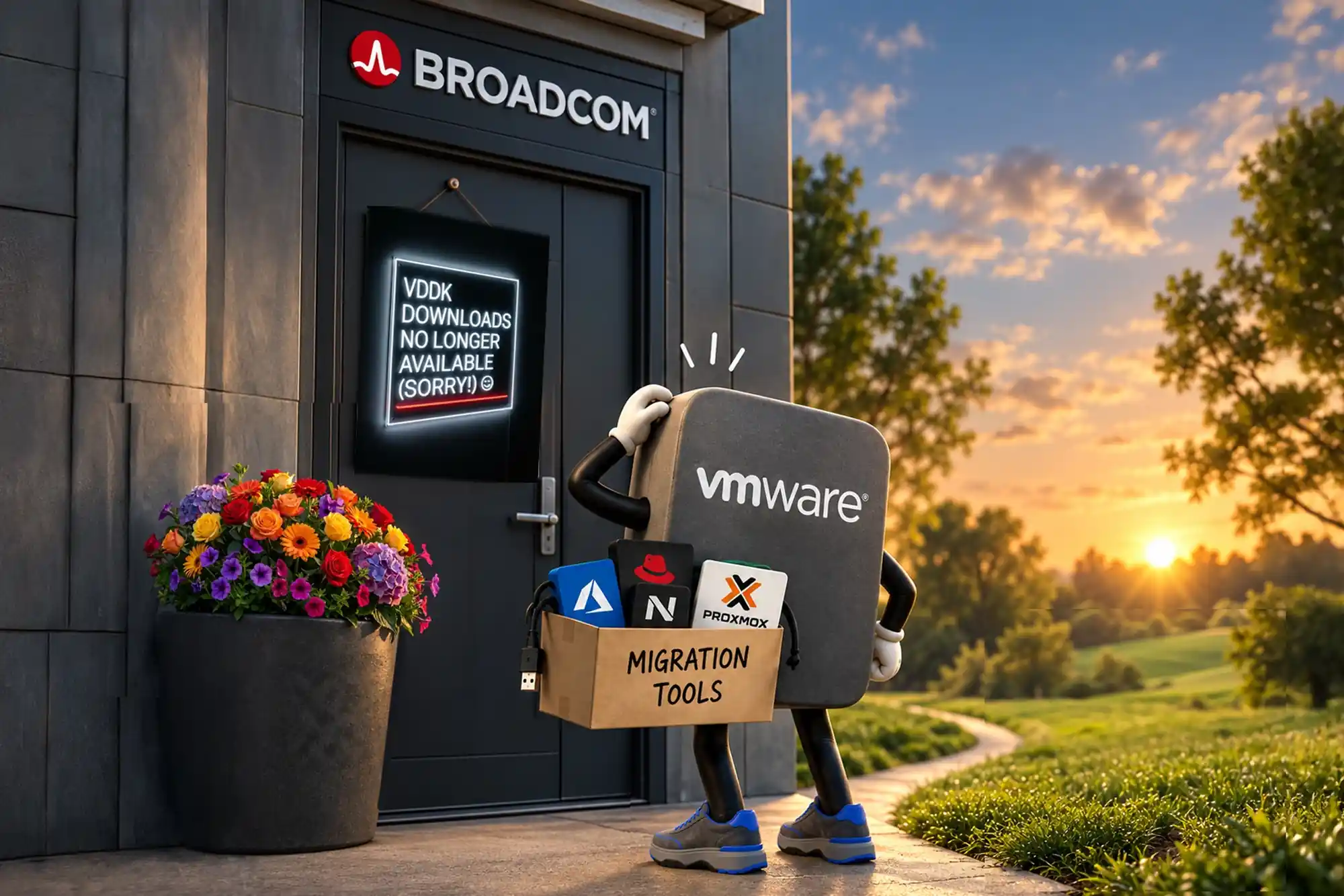
In late August 2026, Broadcom removed public downloads of the Virtual Disk Development Kit, the library most third party tools use to read virtual disks from ESXi. ShapeBlue documented the VDDK removal from Broadcom’s developer portal on August 25. Platform9 reported that customers without an existing copy could no longer use the standard VDDK transfer path. For many teams, VDDK was the de facto Broadcom VMware migration tool, so the change stalled projects already in progress. We cover the full story in our article on the Broadcom VMware migration tool and its alternatives.
Why did Broadcom remove VDDK?
Broadcom’s position, as reported by The Register, is that VDDK was never a customer entitlement. The company describes it as a developer kit under its own license, meant for backup and recovery, and available through approved technology alliance partners. Migration to a competing hypervisor is not part of that stated purpose, and vendors on the other side of the move noticed.
Can you still migrate off VMware without VDDK?
Yes. VDDK handles one step, copying disk data out of vSphere. Planning, conversion, network mapping, testing, and cutover never depended on it, and several transfer methods work without the kit:
- Agent based replication from inside each guest operating system, which reads data at the file system level instead of through ESXi.
- OVF or OVA export and import, which is simple and reliable but requires more downtime per VM.
- Storage assisted copies that read virtual disks directly from NFS or block storage. ShapeBlue added a direct NFS read path to its migration tool. Platform9 made accelerated copy modes the default in vJailbreak. Nutanix introduced a DirectPath method in Move.
- Native import tools such as the ESXi import wizard built into Proxmox VE, which pulls guests from an ESXi host through the web interface.
The right method depends on downtime tolerance, storage type, and VM count. A virtual machine (VM) migration plan usually mixes several of them.
VMware alternatives worth comparing
Nutanix AHV suits teams that want hyperconverged infrastructure with a commercial vendor behind it. HPE VM Essentials fits organizations already standardized on HPE hardware. Apache CloudStack, backed commercially by ShapeBlue, works well for providers and teams building multi tenant clouds. Platform9 offers a managed private cloud built on open source components. Proxmox VE combines KVM virtualization, containers, clustering, high availability, and backup integration in one open source platform. Enterprise support is optional. For many small and midsize environments, it covers what vSphere did at a fraction of the cost.
How Volico moves VMware workloads to Proxmox VE
Volico Data Centers followed the VMware licensing changes from the start. Our engineers concluded early that customers would need a way out that did not depend on Broadcom. So we built one. Well before the VDDK change made headlines, our team developed internal migration tools. They move VMware virtual machines to Proxmox VE without routing disk transfers through VDDK. When the public downloads disappeared, our migration projects kept running.
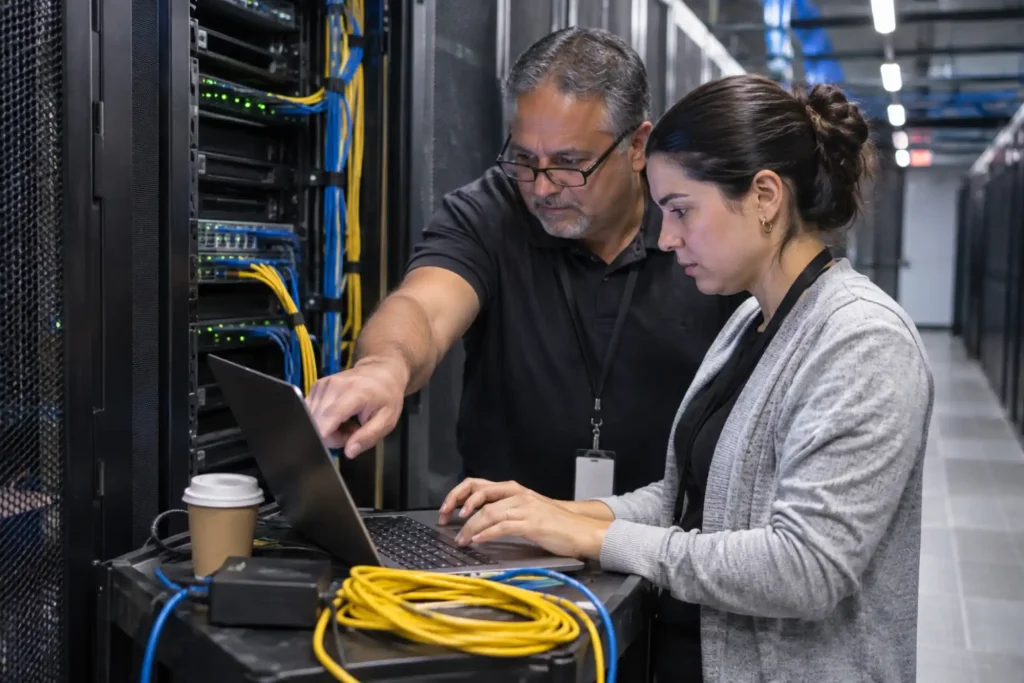
The tools handle the steps that usually cause trouble, and our engineers stay involved at each one:
- Discovery: we inventory hosts, VMs, disks, snapshots, networks, VLANs, and application dependencies, then group workloads into waves by business priority and risk.
- Conversion and transfer: disk data is copied, converted to Proxmox native formats, and mapped to new VM configurations. Windows guests get VirtIO drivers ahead of time so they boot cleanly on the first attempt.
- Cutover and validation: each wave gets a rehearsal, a scheduled window, and a rollback plan. We confirm services start, networking matches, and applications respond before moving to the next group.
Your new Proxmox cluster can run on your own hardware in Volico colocation, on dedicated servers we provide, or as a managed private cloud our team operates. Combining the facility move with the hypervisor change means one project, one cutover plan, and a lower monthly run rate on both the space and the software.
Get a Miami data center quote you can defend
Knowing how to choose a Miami data center without overpaying comes down to a few disciplined habits. Measure real power draw before you commit to circuits. Price cross connects, remote hands, and escalators alongside the cabinet rate. Choose a carrier neutral facility so bandwidth stays competitive. Check hurricane readiness down to fuel contracts, and spread critical systems between Miami, Fort Lauderdale, and an out of region site. Then look inside the rack, because VMware licensing may be the largest cost you are moving.
Volico Data Centers gives South Florida organizations colocation, connectivity, managed infrastructure, and a proven path from VMware to Proxmox VE in one partnership. Our Miami and Fort Lauderdale facilities are SOC 2 Type II audited. Our smart hands team and in house migration tools are built for business critical environments that cannot afford surprises.
See the facilities for yourself. Schedule a data center tour, request a colocation quote, or call (305) 735-8098 to talk with an engineer about your move and your VMware exit.