Data center redundancy keeps a facility online when hardware fails. The level you choose (N+1, 2N, or 2N+1) determines how much protection you pay for. Data centers have long been the foundation of modern computing and networking. Data centers are responsible for storing, collecting, processing, and distributing data. They are the backbone of any company that relies on applications, networking services, or data to serve customers.
We don’t live in a perfect world, so the unexpected can happen. When it hits the data center, it could cause irreversible damage to your business. Power outages can cripple your IT infrastructure and potentially lead to massive revenue losses because of server downtime. That is why redundancy is your data center’s best friend when the unexpected happens.
Redundancy works as a backup system for the facility’s infrastructure. It keeps everything running when a disaster occurs. Redundancy can target multiple data center components such as infrastructure, power, network, or UPS systems. Specific terminology such as N+1 or 2N describes a facility’s redundancy systems. Before we explain the terms, it is essential to understand the importance of data center redundancy.
Importance Of Data Center Redundancy
Redundancy is a concept or a practice used within systems to prevent them from shutting down in case of failure. A redundant system can include a backup component or an entire backup system. It takes over if the primary system goes down because of equipment failure, human error, maintenance, or upgrades. For many data centers, it is one of the most critical components of an IT infrastructure.
For example, redundant power is a backup power module. It supplies the power a data center needs if the primary supply fails. A power outage can be the result of powerline damage, severe weather, or equipment failure. Redundant power helps avoid downtime, making their facility more reliable by increasing their advertised SLA uptime.
For data centers, power and cooling redundancy are two of the most crucial components. Both of them ensure healthy, reliable, and accessible systems for all colocation customers. That is why some of the best data center providers, such as Volico, offer redundant systems. They keep your IT infrastructure running day and night.
N+1 Data Center Redundancy
Now that we have covered why redundancy matters, it helps to understand the different types. Often you would hear about data centers that follow an N+1 redundancy model. The symbol “N” represents the baseline capacity of a facility. N usually represents the power and cooling required to support the facility at full load. A data center with N capacity meets the infrastructure requirements to run the facility at full IT load. It has no spare capacity for maintenance or equipment failure.
However, data centers with N+1 redundancy can run the infrastructure at full load. They also have an extra component for disaster situations or maintenance. This setup allows room for a single failure or required maintenance of a single component. The standard for data centers usually calls for one extra unit for every four units needed. If a facility needs 12 cooling units for full capacity, N+1 redundancy means 15 units in place.
2N Data Center Redundancy
The 2N redundancy model features two identical systems. They run independently and are not connected in any way. When the first system fails, the second one can take over. It provides the capacity needed to support the infrastructure at full IT load. A significant failure might force you to power down an entire system, not just one component. Even then, the mirrored systems should supply the power and cooling for the full facility load.
N+N redundancy is another name for this model. 2N redundancy counts as fault-tolerant and easy to maintain. If one system requires repairs or updates, you can shut it down at any time. The mirrored system takes over and covers the facility’s needs. This model prevents downtime in case one side is lost or becomes nonfunctional for any given reason.
2N+1 Data Center Redundancy
Now that you know what N+1 and 2N mean, combine them and you get 2N+1 data center redundancy. This is the highest redundancy level in a facility, and the principle is simple. You have two fully operational mirrored systems. Each one has extra modules to account for maintenance and failure. The 2N+1 model offers outstanding versatility and fault tolerance.
For example, take a 2N+1 power setup. You have double the power equipment, plus an extra UPS module on each side to cover single failures. The same applies to cooling redundancy in facilities that follow the same model or other IT infrastructure components.
2N vs. N+1 redundancy: Key Differences
From a practical perspective, there are some key differences between 2N and N+1 redundancy data centers. One company might colocate its IT infrastructure with a provider that offers 2N redundancy. Another might migrate to a data center with N+1 redundancy.
The main concern with N+1 is that the infrastructure allows only a single failure. If the system experiences multiple failures simultaneously, the infrastructure would not have enough components to supplement the defective ones. This results in server shut down, and many organizations cannot tolerate even the shortest amount of downtime.
2N redundancy handles multiple failures within a single system better. A mirrored system can take over at any time. In a facility with 2N redundancy, a failure triggers a move to the other system. But what happens if the secondary system fails as well? The systems are symmetrical and work independently. Still, if both experience a component failure, the system stops functioning and leads to downtime again.
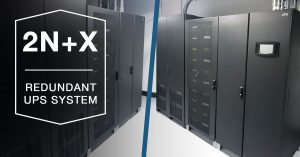
Why is the 2N+1 the highest redundancy level for a data center?
Both 2N and N+1 redundancies are better than no redundancy at all. However, the 2N+1 model offers the highest versatility and tolerance to failure, and it is easy to understand why. You have a secondary system that can sustain the facility at full capacity. If something fails within a system, extra modules or components back it up. You basically add another layer of protection against single or multiple failures, making it even more reliable.
Shutting down an entire facility with 2N+1 redundancy would take a catastrophic event. Data centers solve most common issues without even transferring to the secondary system. If your business has a zero-tolerance policy for downtime, the 2N+1 model provides 100% SLA uptime. It might be the right choice for you.
Which type of data center redundancy is right for you?
It might seem tempting to opt for the highest redundancy possible. Even so, it is not always the best option for your business. Choosing the right type of data center redundancy for your organization is not as simple as it seems. There are a lot of factors that come into play.
A 2N+1 redundancy provides the most reliable environment for your IT infrastructure. But not all industries call for the same uptime and availability standards. Keep in mind that higher redundancy also costs more. That might not be sustainable for a small business that is slowly growing. Making the right decision means balancing the required redundancy level against your budget.
Most companies find that N+1 redundancy offers a solid base for a reliable infrastructure with affordable colocation costs. A 2N redundancy might prove to be quite expensive to install and maintain. It offers a higher level of redundancy that is often an overestimation of what the company actually needs.
The 2N+1 redundancy is the most costly option out of all. Mostly multi-million dollar businesses with 100% uptime requirements need it. They can’t afford a system crash because of the high financial losses that can follow.
Conclusion
Datacenter redundancy is a vital aspect to consider when choosing a colocation provider. Understanding how a data center implements and assesses redundancy is a good starting point. It indicates the facility’s potential to sustain your company’s IT infrastructure. Given the high risk associated with server downtime, you should not overlook the facility’s redundant systems.
With Volico, you get data centers that are category five hurricane resistant. They come with gas-based inert fire suppression and some of the most advanced redundant systems. Volico engineers its data centers from the ground up for reliability and survivability. It incorporates a 2N+X Smart-Grid redundant power infrastructure and a 2N+X Smart-Grid redundant cooling infrastructure. Get in touch with Volico to find out more about their redundant systems and data center services.
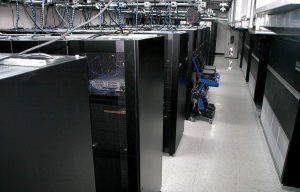
Volico Takes Data Center Redundancy to the Next Level
Volico puts its emphasis on delivering the highest level of redundancy, backed by continual testing and maintenance. Learn how that can benefit your business.
Have one of our friendly experts contact you to begin the conversation. They can explain redundancy, N+1, 2N, 2N+1, and the Tier levels data centers offer worldwide.