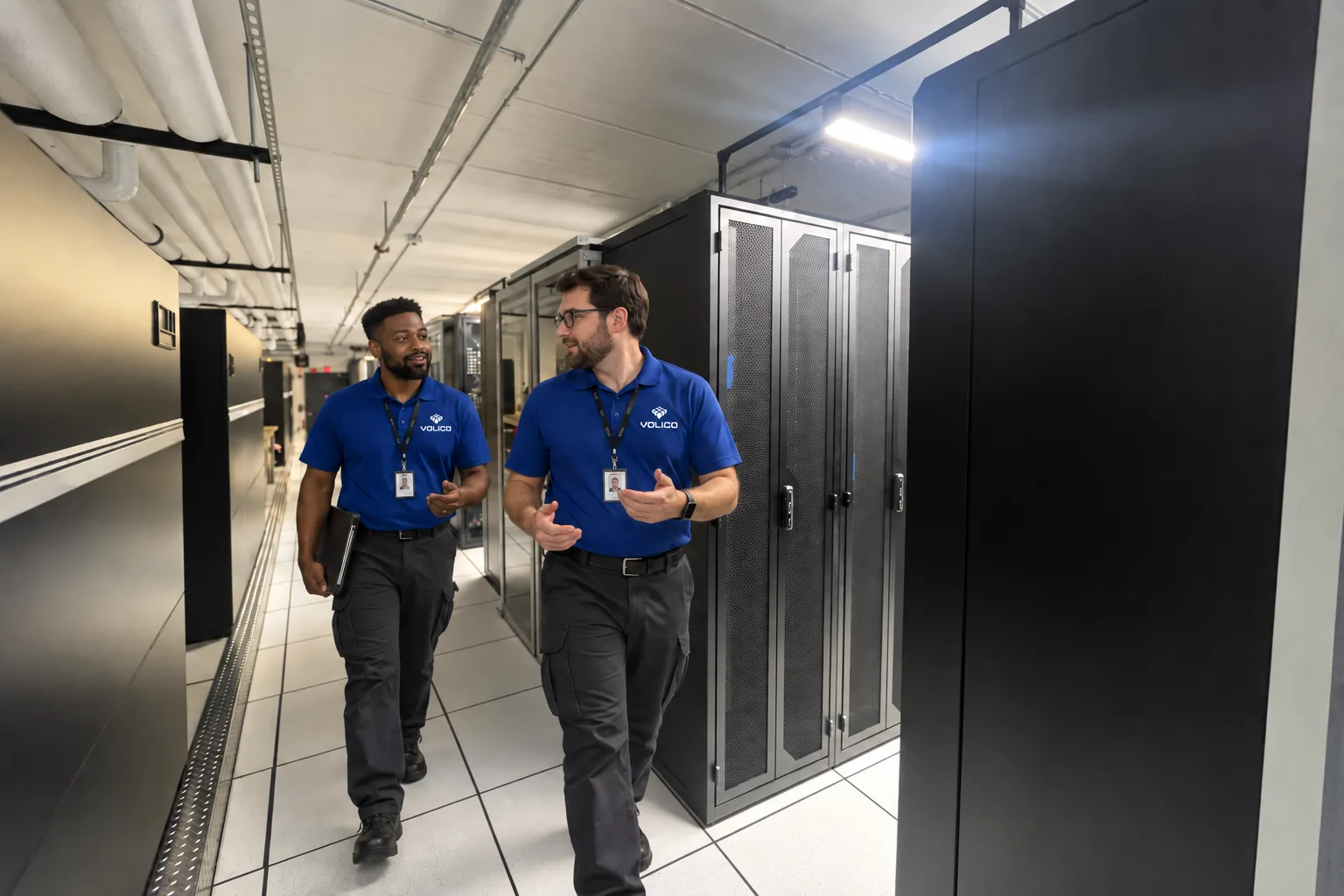
Space is only one part of what colocation data centers offer today. Some of these facilities also provide a wide range of colocation managed services, which round out the base offer. These services can assist customers with taking care of nearly all aspects of their workloads at one or more locations.
Some providers stick to a classic approach and skip extra services on top of their base offers. However, others do and have good reasons to take this path.
So, which is best? Colocation with or without managed services?
This article compares colocation vs. colocation managed services. You will see the differences and learn which one suits you best.
What are Managed Services?
Before diving into the implications of colocation, let’s talk a little bit about managed services on the whole. The term can mean a lot of different things, which can be confusing. In order to make an informed decision, it is important to learn the subtleties and differences.
In a more general sense, managed services are IT services offered as a package for clients who choose dedicated plans. Managed service providers, or MSPs, offer them. These are typically third-party companies that manage a client’s IT infrastructure and end-user systems remotely. MSPs can offer network management and security services, as well as support and monitoring.
What do Managed Services Include?
Typically, those cater to all the technical aspects of running and maintaining IT infrastructures.
- Setting up servers
- Installing the operating system
- Migrating data
- Installing necessary software
In addition, the provider ensures regular server maintenance and security systems are in place. Managed security services involve routine virus scans to protect your server from threats. Some MSPs can offer specialized support for specific industries like healthcare and financial services, offering compliance. Specialized security services, data storage, or managed firewalls can also be part of an offer.
Managed services serve one core purpose: to relieve organizations of the burden of handling IT infrastructures. This helps companies without an in-house IT team, or without the resources to train staff to handle IT deployments.
It’s important to note, though, that not all managed service providers offer this kind of benefit. As stated earlier, managed services can mean different things, leading to confusion. As an example, sometimes those encompass only IT support services – without actually putting it into action for the customer.

Benefits of Managed Services
Choosing to accept the help of the provider can be a transformative move for your business, offering several benefits, including:
Increased Operational Efficiency
With managed services, your organization can save time and resources on server management. That way, your team can focus on core business operations, increasing productivity and efficiency.
Your provider handles everything from routine maintenance to troubleshooting complex server issues, ensuring smooth and uninterrupted business operations.
Enhanced Security and Compliance
Managed services often offer enhanced security measures, including regular updates, patches, virus scanning, spam filtering, and security audits.
Not only does this safeguard your sensitive information, but it also ensures compliance with various data protection regulations.
Scalability and Flexibility
Managed hosting offers a high degree of scalability and flexibility.
As your business grows, you can easily adjust your server resources to meet the increasing demand without disruption.
The hosting provider can quickly add resources, such as bandwidth, storage, or computing power. That helps your business adapt and grow.
Cost Efficiency
The monthly subscription fees may seem hefty. But consider the cost of hiring, training, and retaining an IT team. Add the cost of downtime and data breaches. In the long run, managed services can end up cheaper than an in-house IT team for server management.
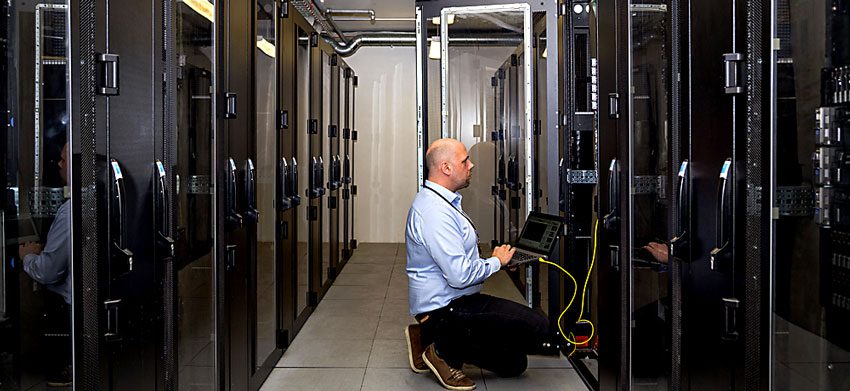
Managed Colocation Services
The term “managed services” causes confusion, so it helps to define our terms. That is not easy, given the subtle differences the term covers. So, before we talk about colocation with or without managed services, let’s take a moment to define colocation.
Colocation is a data center service where a business rents space for servers and other computing hardware. Instead of storing servers in an on-premise data center, the organization chooses to ‘co-locate’ its equipment. It rents space in a colocation facility.
The colocation provider offers the building, cooling, power, bandwidth, and physical security, while the customer provides servers and storage. That way, the client can use expansive IT infrastructure without the capital expense and the difficulty of managing it.
Colocation is great for businesses that must keep servers running 24/7. Most providers offer backup power and redundant internet connections. Colocation is an excellent option for businesses that want the features of a large IT department without incurring high costs.
Benefits of Colocation
The main advantages of colocation include:
Affordable Bandwidth
Colocation facilities offer access to a larger, more cost-effective network bandwidth than a standard office connection.
As a result, the collocated organization gets a fast, reliable server connection. Data moves quicker and latency drops.
You share bandwidth costs with other businesses in the facility. As a result, you get high-grade connectivity at a fraction of the price of buying it alone.
Reliable Power and Cooling
A stable power supply and proper cooling are critical for optimal server operation.
Colocation data centers have redundant power supplies and efficient cooling, so your servers stay online at ideal temperatures.
That way, power outages and overheating do not cause hardware failure or data loss, so your service stays up.
Total Control of Your Hosting Solution
Despite the off-site hardware, colocation still offers complete control over your server configuration.
The facility allows you to manage the hardware and software to suit your needs. In addition, you can tailor your server environment and install, configure, and update systems as your needs change.
Full Ownership of a Dedicated Server
Unlike shared or managed hosting solutions, colocation allows you to own your server fully.
Your business gets a privately owned server without the overhead of running its own data center.
Owning a dedicated service in a colocation facility can benefit organizations requiring high data security and control.
Disaster Recovery and Business Continuity
If disaster strikes, your servers sit in a separate location. Your data stays safe, and applications keep running. This can significantly reduce potential downtime and data loss.

Differences Between Colocation vs. Managed Colocation Services
- Control and Responsibility: The provider handles server maintenance in the case of managed services, including updates and security.
With colocation, the provider supplies the physical space and infrastructure. The customer maintains the server and handles updates, security, and maintenance.
- Cost Structure: Managed services involve an ongoing cost based on what your package covers.
Colocation usually requires a larger upfront investment for server hardware. It can cost less in the long run, because you share bandwidth, cooling, and power costs with other tenants.
- Technical Expertise Requirements: Managed services need less expertise from your team, because the provider manages everything in your plan.
On the other hand, colocation requires more IT knowledge, because you manage and troubleshoot your own hardware and software.
Colocation vs. Managed Colocation Services – Which is More Suitable?
While some colocation providers choose not to offer managed services, others have different approaches. Many companies specifically want colocation without managed services. This lets them make every decision about their deployments. That means more control, but it also brings more responsibility and a need for expertise.
Many consider colocation a better choice than managed hosting, for instance, for the following reasons:
When You Want Greater Control and Customization
Colocation may be a better choice for your business if you need more server, hardware, and software control. With a colocation facility, you own the server hardware and can make changes, including software and hardware upgrades.
When You Have Technical Expertise
Colocation is an excellent choice if your organization has a strong IT team that can manage the servers.
In a colocation arrangement, you handle maintenance and issues such as patches. That lets your IT staff use their expertise on the collocated infrastructure.
When You Want to Expand and Scale Your Business
Colocation is a good choice if your business is growing fast and needs to scale IT infrastructure quickly.
You get the benefits of a dedicated data center without building one from scratch. That is especially useful for smaller enterprises competing with larger businesses.
If you have the expertise, you can manage every part of your IT transformation and track everything that happens.
When You Want Better Data Security and Compliance
Your business may operate in a highly regulated industry where data security and compliance are critical. In that case, extra control over hardware and software helps.
It allows you to implement specific security measures and maintain compliance according to your industry’s standards.
Colocation Managed Services is a Win-Win
Managed services take many forms, so colocation providers deliver very different services.
Some colocation providers offer services only for specific aspects. Those are most often infrastructure automation-related, and the client is still left with having to manage everything else themselves.
Colocation managed services can also include consulting, which helps clients plan IT architectures around colocation.
However, other colocation providers offer extensive services. That is a sweet deal if it fits your goals and needs. They offer data center space and a wide variety of colocation managed services, available for a monthly fee. Clients have the advantage of getting colocation and managed services – both in the same place.

Volico’s Colocation Facilities and Extensive Managed Services
Choosing between colocation and managed hosting services depends on your business needs, resources, and long-term plans.
Managed hosting suits businesses with limited IT resources or those seeking an easy setup with less hands-on management. Colocation emerges as a powerful solution for businesses that value control, scalability, and a favorable long-term financial outlook.
Volico offers flexible, secure, and scalable colocation solutions. You keep control over your hardware and software, while we provide the infrastructure and support you need for growth.
Experience the Benefits of Colocation Managed Services with Volico.
Our team of experts helps you navigate IT infrastructure management. We make sure you have the resources and knowledge you need to succeed.
Whether you are small and growing or well established, Volico’s colocation and managed services give you a robust IT foundation.
You may need extra security, monitoring, firewall, backup, or help with migration or load balancing. Volico Data Center’s managed services cover all of it, so you can run smoothly and worry free.
To get started, call us at (305) 735-8098 or Chat with one of our colocation experts.