Backups and disaster recovery are fundamental parts of a data security strategy. Both keep your data safe and help your business keep going after an incident or disruption. The two work together and complement each other. However, they cover different approaches, methods, and purposes, so you should not use the terms interchangeably.
Backup creates copies of your data. Disaster recovery is a broader set of actions and plans for restoring systems fast after an outage. Backups are essential for keeping your data safe, but they might not be enough to keep your business running.
This article explains the key differences between backups and disaster recovery and how to avoid the confusion.

Backups and Disaster Recovery Explained
People often mistake backups and disaster recovery for each other because their goals are similar. You need backups for disaster recovery, but disaster recovery covers more than copies of your data. Understanding the key differences between these two critical data protection strategies matters. It shows why you need both backups and disaster recovery to keep your business on its feet.
Companies with a backup solution might ask whether they really need disaster recovery on top of it. In some cases, the answer can be no. However, the bigger the company, the higher the stakes. Downtime after an incident without a disaster recovery plan can last days, and that can mean significant financial loss. Many companies go out of business within 12 months after experiencing a data breach, so downtime is a risk few can afford.
Backups
Backup solutions are fundamental to keeping your data safe. Backing up means copying your files and applications at set points in time, on a regular schedule. These copies let you restore your data after a loss. The timing varies with an organization’s needs. Backups are usually automated, and you can schedule them anywhere from once a day to every 30 minutes. You can store backups on-site, in a data center, or in the cloud. They are crucial for preventing data loss from hardware failure, human error, or cyberattacks. If you fall victim to a ransomware attack and refuse to pay the blackmailer, you can restore your files from your last backup. Obviously, you will still lose everything you worked on since that last save.
That’s why you should back up everything, from applications to data, so you don’t lose your work after an incident.
When comparing backups and disaster recovery, remember that restoring data from backups can take time. For time-sensitive applications, being down for days is just not an option.
Disaster Recovery
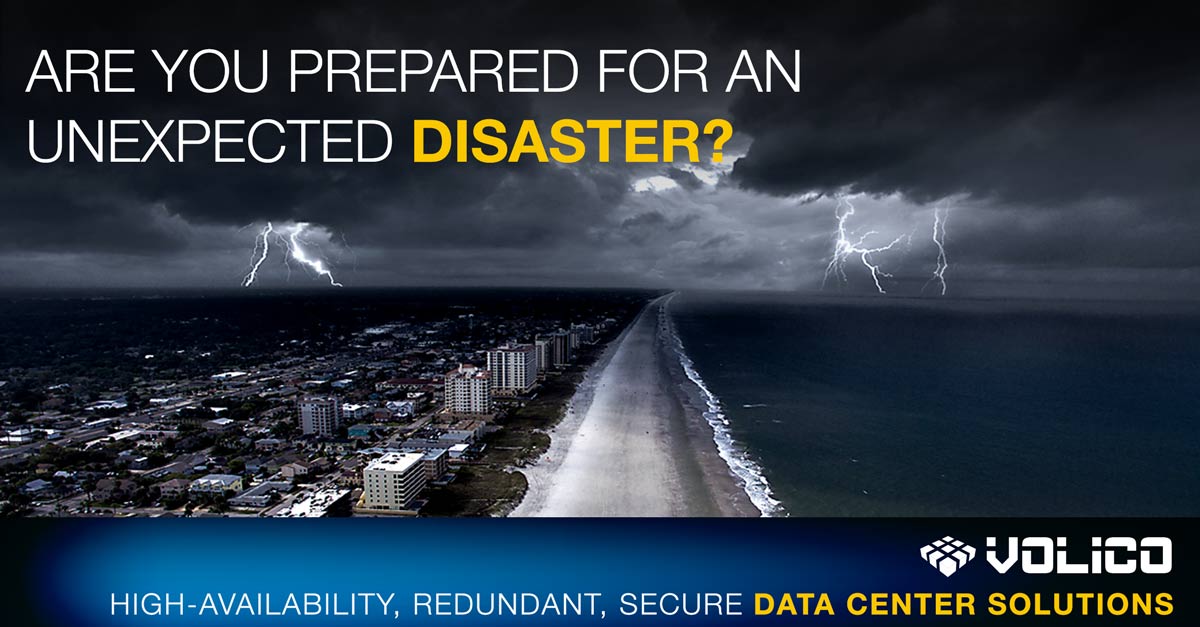
Disaster recovery is a set of predefined procedures that helps you restore your IT infrastructure after an unfortunate event. Backups and disaster recovery go hand in hand, because you need copies of your data to recover in a secondary location after a major catastrophe. Disaster recovery goes into action when large-scale disasters happen. For instance, a natural disaster can affect a whole region. If your production application runs in that zone, it will go down. In this situation, you can switch to your disaster recovery site, if you have one. Colocation data centers can offer significant support with disaster recovery and business continuity. A good provider can keep your business from having to start over after an incident.
Disaster recovery is a more complex approach to handling data loss. It typically includes a detailed plan of action, a framework for the fastest way to recover after a disruption, and a plan to minimize downtime. Restoring from backups alone takes more time, and time is a problem for high-availability applications.
What are the differences?
Their goals may be similar, but backups and disaster recovery are not the same. Yes, backups serve the purpose of disaster recovery. However, they are not enough on their own in a bigger disaster. At the same time, backup frequency makes a huge difference to what you can restore after a data breach.

When the Difference Matters
To define the difference between backups and disaster recovery, look at the risks of not having both. It’s simple: backups step in for smaller risks, like host failures, smaller-scale cyberattacks, hardware failures, and accidental deletion. On the other hand, disaster recovery gets in gear for larger-scale cyberattacks and failures that affect an entire region, like a natural disaster.
If a company experiences significant data loss or corruption, a simple backup solution might not be enough to protect it. Even with a backup solution in place, a weekly backup schedule means you could lose a whole week’s work. Restoring everything from backups can take a lot of time, so downtime will add unavoidable costs, too.
Scaling Up
For comparison, consider a larger-scale disaster that damages your equipment and infrastructure. Even if you took a recent backup, the disaster might destroy it along with the rest of the infrastructure. In this case, you need a secondary disaster recovery site. It holds equipment ready to replace the old one and restore systems and infrastructure quickly.
Backups are essential for creating copies of data you can use to restore after an incident. Disaster recovery includes backups plus a broader set of security strategies and a business continuity plan. These are crucial for getting back into business after a major catastrophic event.
A Data Breach Will Happen at Some Point
As we move a growing slice of our lives into the digital space, hacker attacks are growing as well. Natural disasters cause many disruptions, but they are not the most frequent threat to your data. Ransomware attacks are growing, and it would be naive to hope they only happen to other people. If one does happen to us, recovering from backups can take a long time. Data loss might not be the only loss, either. When clients discover that a company cannot keep their data safe, serious reputational damage and client dissatisfaction can follow quickly.
Conclusion
Backups are a safety net against losing data, and they make it possible to restore a previous point in time. However, backups cannot replace the comprehensive approach of disaster recovery, which includes restoration protocols, business continuity measures, and risk mitigation. Backups and disaster recovery serve similar but different purposes, and both are essential components of a full-scale security strategy.
At Volico Data Centers, we care about your business’s resiliency. We built our data centers for safety, with category-five hurricane-resistant facilities and gas-based inert fire suppression systems. Business continuity with Volico can keep your business up and running through disruptions, natural disasters, and crashes.
To learn how a comprehensive security strategy can give your company resiliency, check out our disaster recovery solutions. To talk to a data center security expert, call (305) 735-8098 or send us a chat message.