If you own a company with IT assets, you have dealt with data storage needs at some point. Smaller companies that grow and expand their IT systems must find ways to store more data. They also need the best solution for their situation. Today, the IT industry lets us adopt more than one solution. Some businesses mix them to meet their IT needs.
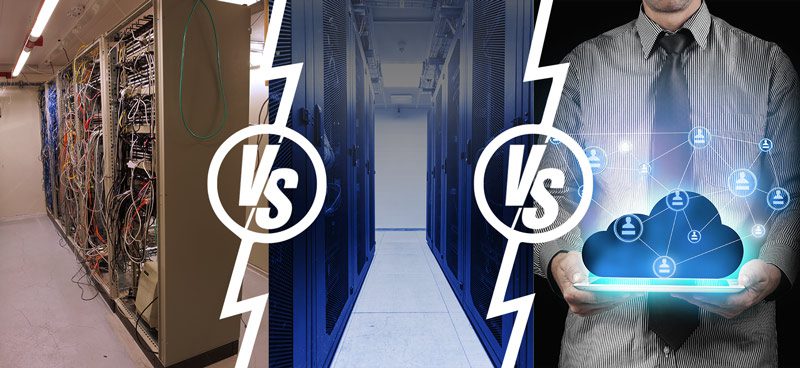
A company can store and process its information in three main ways: on-premise, cloud, or colocation. You are probably wondering which one fits your company now. You may also be asking what to plan for as your business grows and expands.
Below, we compare the differences, advantages, and disadvantages of each solution. Keep reading to learn where to store your data and why one option may suit you better.
On-Premise Data Storage Solution
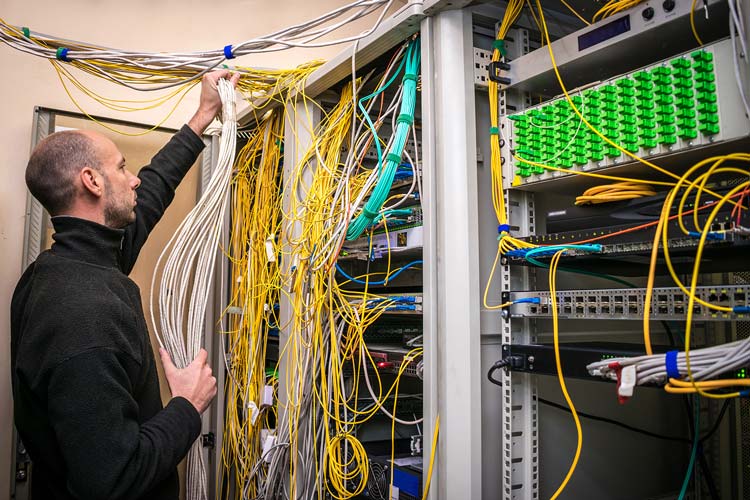
On-premise data storage is the classic private data setup. Your company owns, operates, and uses it on its own premises. Small and medium companies commonly choose it, but the setup varies with data volume.
An in-house data center can be a single server or two in a closet. It can also be a dedicated server room with backup power and cooling. More often, it sits in a dedicated space inside an office building. More rarely, it fills an entire facility built for the company’s servers.
On-Premise Data Storage Pros
On-premise data centers give your company full control over its data and who can access it. That includes control over security. This matters most when you handle valuable property assets or confidential customer information.
If a server has an issue, you can send on-site technical staff right away. An on-premise setup also cuts downtime because your team is already on site.
You can also customize your system. Building your IT systems to your exact needs is a big bonus because it makes growth easier to handle.
On-Premise Data Storage Cons
One disadvantage of an on-premise data center is the high cost of building it. This may push some companies to use dated structures or convert systems meant for other purposes. As a result, you may end up with an inefficient and defective system.
Unexpected problems are another con, because they can happen at any time. This is especially dangerous when no staff is on duty 24x7x365 to handle issues overnight.
Many on-premise data centers also lack strong backup systems and around-the-clock staff. This can cause frequent system downtime, which is detrimental and leads to revenue loss.
Cloud Computing Solution
Cloud computing has become a strong contender against on-premise data storage. About 90% of companies have some sort of cloud application to move their data and systems. Cloud computing is software-based, and companies can use it in two ways.
A public cloud is a pool of many servers that different businesses share. A third party offers it as a service. A private cloud, on the other hand, runs only your data and fits your company’s specific needs. Here are some pros and cons of the cloud computing solution.
Cloud Computing Pros
One of the biggest advantages of cloud computing is that setup has no hardware costs. Small and medium-sized companies find this essential, since the cloud can cost much less than the other two options.
Cloud computing also scales easily to meet capacity demands. A company can grow its IT systems quickly by adding more processing or storage resources.
Cloud software is highly resilient, since providers keep their servers in data centers with strong backups. Businesses that use these services also get a reliable and robust internet connection.
Cost is one of the most attractive aspects of cloud computing, because providers usually charge monthly based on usage. For many companies, this means substantial savings, since they no longer invest capital in physical hardware.
Cloud Computing Cons
Because your data sits on a third party’s servers, you may not know their physical location. This can cause security or compliance issues. You also have no control over server uptime. Even though public cloud providers offer a 99.99% uptime SLA, that still means an hour of downtime a year. That hour could come at the worst moment, and you can do little about it.
Costs might be lower for most cloud solutions than for the other two options, but the monthly bill can fluctuate. Since you pay based on data usage, costs are hard to anticipate, and service rates can change. Public cloud platforms can also make it hard to see how much you use.
Colocation Solution
Last but not least is the colocation solution. In this case, the company provides the equipment. A colocation provider hosts it in their data center and supplies the space. The provider can charge you monthly or annually for hosting your equipment.
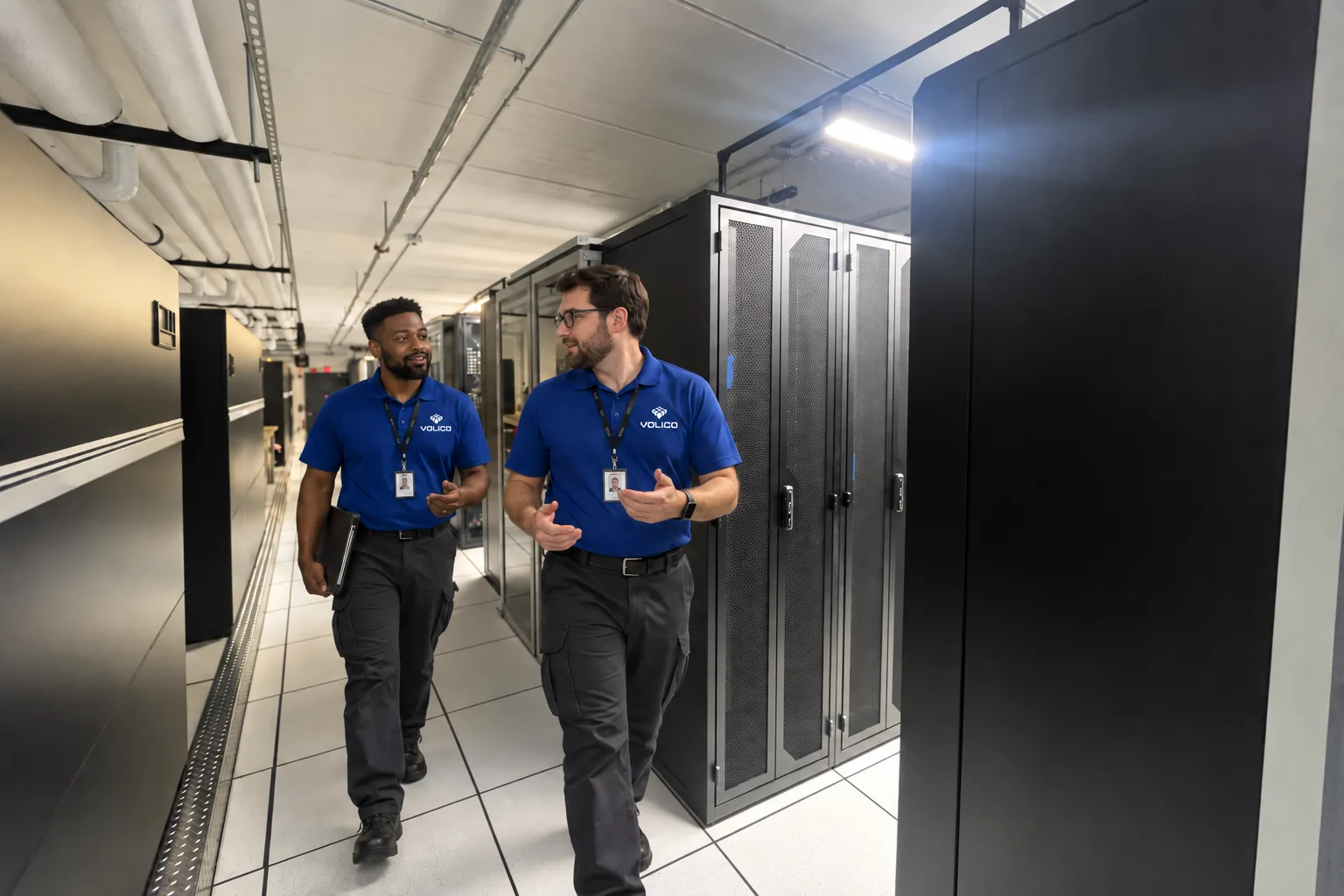
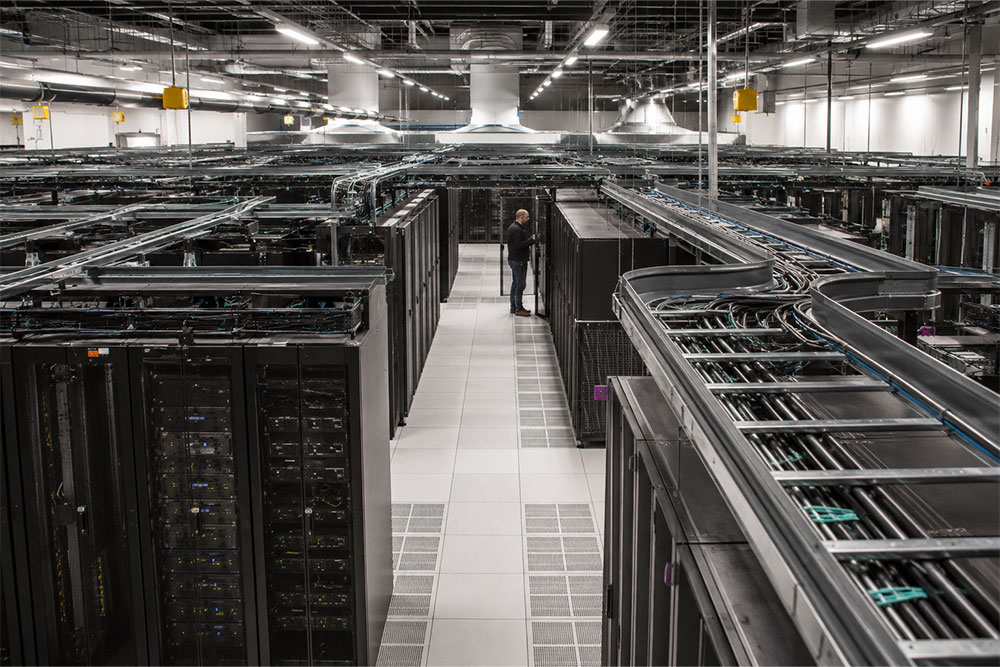
Colocation is growing fast among companies that want to store IT assets in a third-party facility. The company keeps full control over the assets, while the provider handles cooling, power, security, connectivity, and space. Here are the advantages and disadvantages of colocation.

Colocation Pros
Colocation data centers have extensive backups. These keep systems running in almost any conditions, even a natural disaster. The robust facility creates a highly reliable system that guarantees 100% uptime through the provider’s SLA.
As a company, you control which data center you choose and where your data lives. You have full control over the system, so you can update the hardware and customize it to your needs. This is like the on-premise solution, but without the worry about internet connection, power, cooling, or storage space.
Scaling is easy in a colocation data center, because you only add a new server to a rack. The provider takes care of power and cooling, so you do not worry about having enough to support growth. Colocation providers manage the facility, so your IT team can build innovative products and services instead of fixing hardware.
Colocation Cons
An on-premise solution gives you full control over your IT setup. That is not always desirable or cost-efficient. Colocation hands part of that work to a third party, so you must rely on the provider. If a colocation provider manages its data center poorly, it may fail to deliver the results you need. That can hurt your company’s reputation and revenue.
Colocation still needs capital for hardware, which may prove costly for small and medium-sized companies. You still need the technical skills to install the hardware and keep it running.
Some colocation providers offer specialized platforms for real-time data tracking of every aspect of their IT assets. However, not all colocation providers offer many monitoring tools. That can leave companies in the dark, since they do not know how much power or bandwidth they use.
Conclusion
Whether your company is small, medium, or large, you will weigh your storage options as you grow. IT assets expand and become hard to track if you lack the right solutions to build a reliable IT setup. These three solutions give you the support you need to store, monitor, and manage your data.
Ready to Learn More About Volico’s Data Center Colocation Services?
Our data center facilities deliver the network redundancy, security, backup power, and 24/7 support staff your business needs. With Volico’s team on your side, you get greater uptime and lower costs than with an in-house server room. Discover how Volico can help with your data center needs. Speak to an expert about your company’s specific data center requirements.