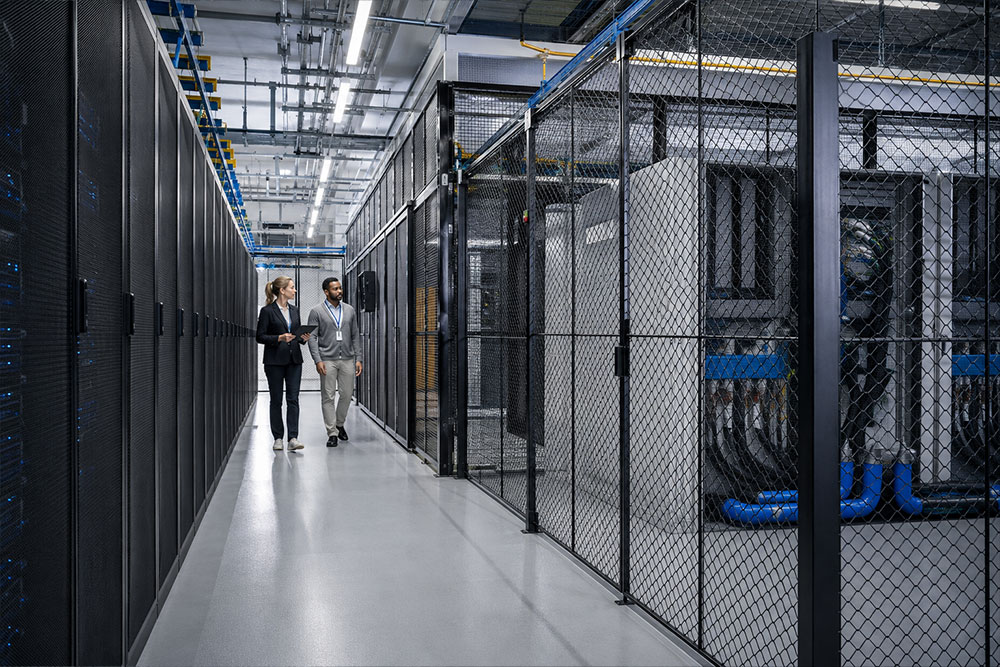
No, data is not floating around in the air like the name of the cloud may abstractly suggest.
Sending emails and making real-time transactions still feels like “magic” for many people. In fact, we live in a world powered by data center infrastructure, and it is as physical as hardware gets.
Data centers are the heart of our digital ecosystem. They house the servers, networking equipment, and power systems that deliver the services we rely on each day. You might be streaming a movie, working with a remote team, or checking your bank balance. You might even be asking a generative AI to summarize a report. Either way, a physical data center somewhere makes it possible.
These vast, high-tech environments are much more than warehouses of servers. In many ways, they form the foundation of the global digital economy. But despite their critical role, few people understand what data centers do, so their work often goes unnoticed.
This article fills that gap. It explores how data centers function and how they bring comfort and convenience to everyday life. It also covers their impact on communities and the environmental challenges they raise. Finally, it looks at the role of colocation in supporting a connected, resilient future. So, let’s dive in.
How Data Centers Provide Everyday Comfort
Let’s start with how data centers work in the background. Since we mentioned the cloud at the beginning, we will also cover what “cloud” actually means.
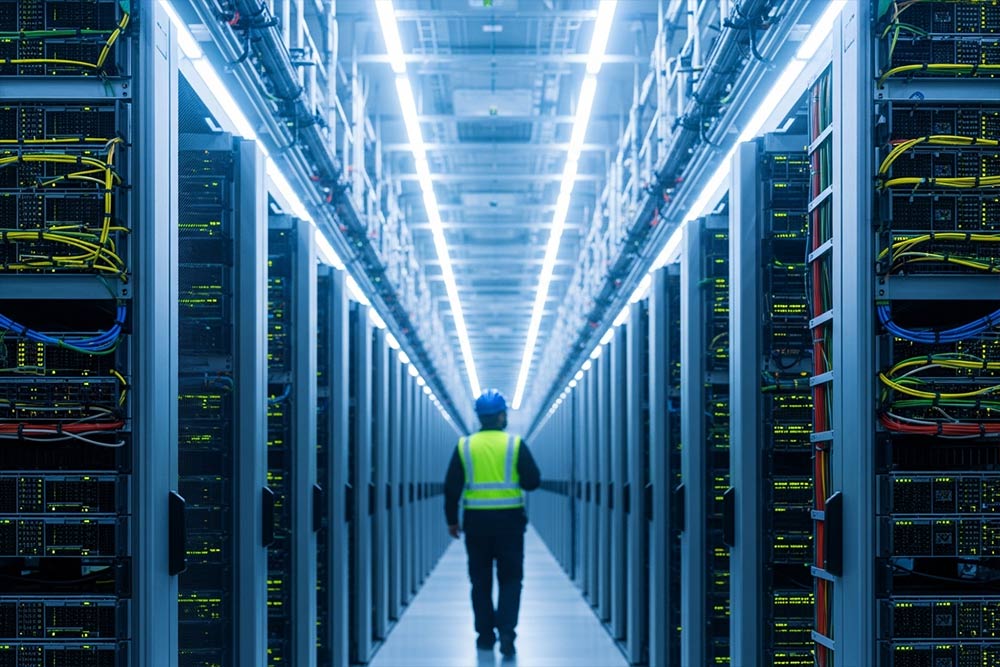
Despite the airiness of the term “cloud,” your data isn’t floating in the sky. All data lives somewhere in physical servers, inside the highly secure and redundant environments of data centers.
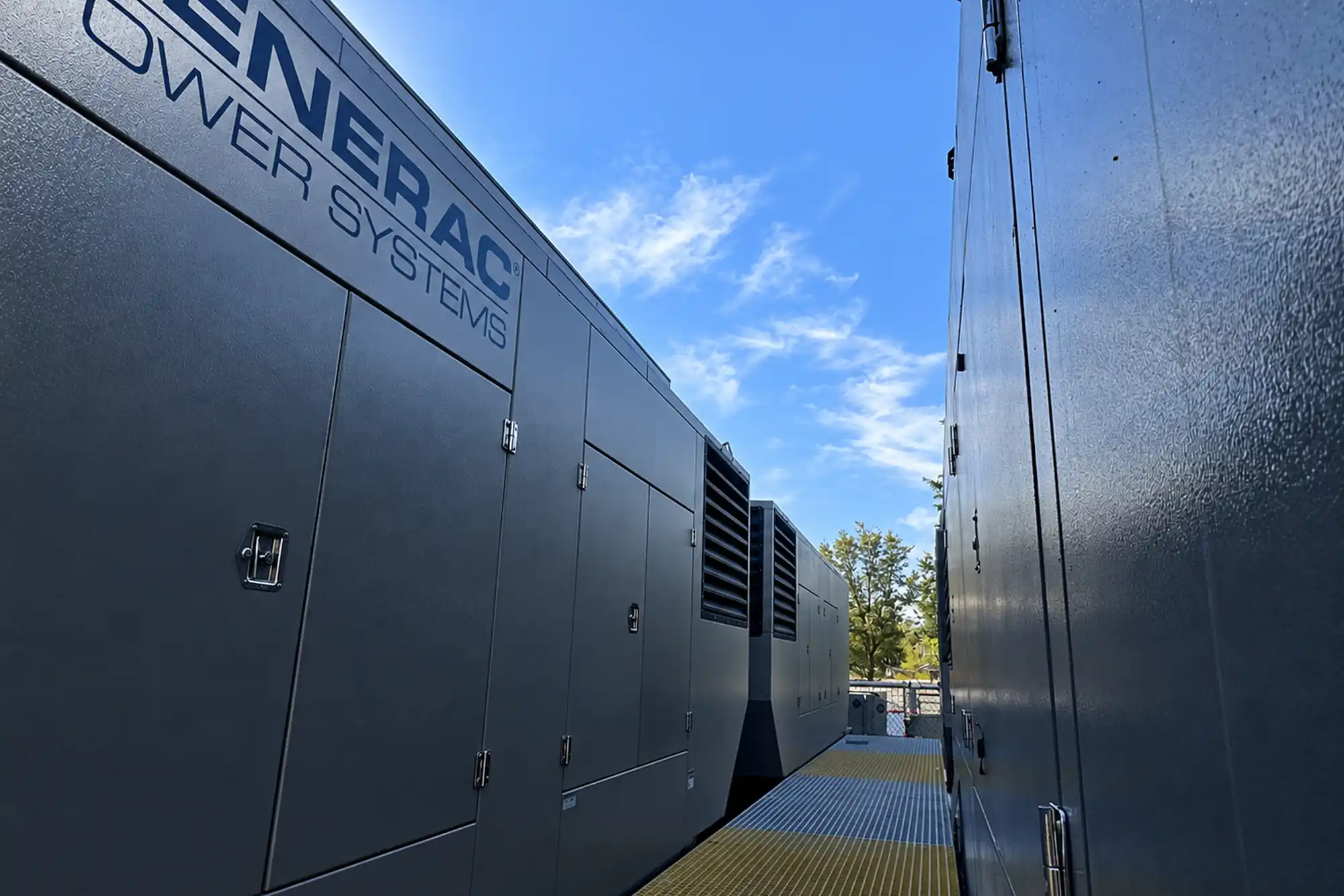
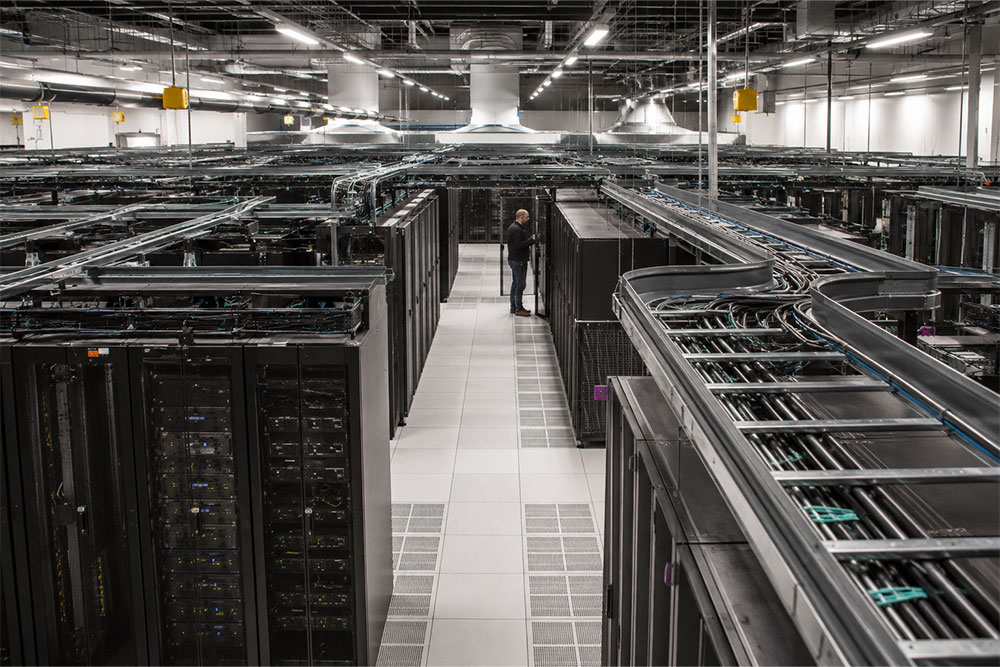
Engineers design data center buildings to keep thousands of servers stable. They add features like raised floors, cooling systems, power backups (UPS and generators), and biometric access controls. When you upload a file to Dropbox or run a query on ChatGPT, your data travels through this infrastructure. The data center computes and stores it inside its walls.
But data centers influence our lives in a far more extended way. In the following, we’ll look into the most important ways data centers support our digital lives day by day.
1. Seamless Communication
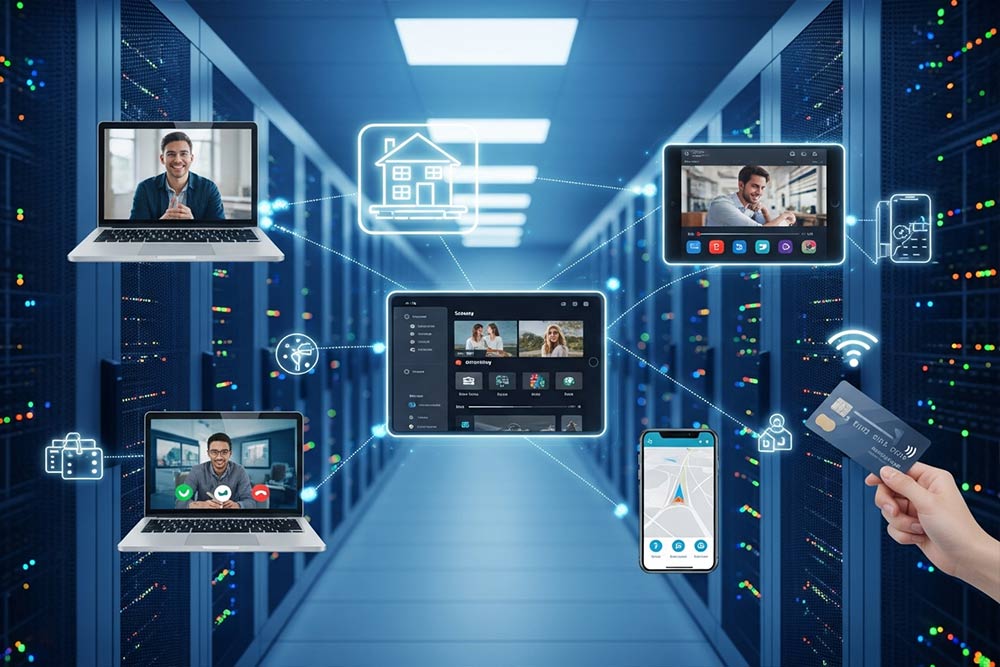
Our daily communication, whether personal or professional, has become almost entirely digital. Whenever we email, text a friend, join a video call, or post online, data centers buzz in the background.
Data center facilities host all of the messaging platforms, collaboration tools, and real-time communication apps that keep us connected. Video calls over Microsoft Teams or Zoom run through servers in geographically dispersed data centers. Operators constantly tune these facilities for speed and redundancy to avoid latency and dropped calls. Instant communication has already become so natural that even the slightest delay causes annoyance. But it wasn’t always like this. Seamless real-time communication is one of today’s biggest commodities. Without it, the world would look very different.
2. Powering Entertainment and Streaming
Similarly, on-demand entertainment is now an integral part of daily life, and data centers make it possible. Netflix, Spotify, Twitch, and other platforms rely on powerful servers to stream high-definition video and audio instantly worldwide.
This wouldn’t be possible without data centers. They continuously process, store, and transmit massive amounts of data across interconnected networks. CDNs (Content Delivery Networks) are essentially distributed systems of edge data centers. They cache high-demand content closer to end users, which minimizes latency.
This architecture keeps access smooth and real-time, even during peak hours. Millions of people can enjoy seamless entertainment at the same time with no perceptible delay.
3. Supporting E-commerce and Digital Payments
Today’s fast-paced e-commerce depends heavily on the reliability of data centers. These make flash sales and next-day grocery deliveries possible.
Servers that process and respond in real time power every interaction. That includes browsing a product catalog, filtering by price, and receiving AI-driven suggestions. It might be a convenience for us, but behind the scenes, e-commerce relies on colocation data centers. They host secure payment systems that manage encryption, fraud detection, and transaction verification. Data center facilities have to work with near-zero latency to avoid failed purchases and maintain a positive customer experience.
4. Smart Homes and IoT Devices
We’re increasingly benefiting from voice assistants, learning thermostats, video doorbells, and a plethora of other smart devices. These may appear self-contained, but their intelligence relies heavily on seamless connectivity to cloud-based infrastructure. Data centers house that infrastructure too, of course.
When a user issues a command, the request travels to data center servers. There, it goes through natural language processing, data retrieval, and finally, response generation. It might sound simple, but Internet of Things (IoT) platforms require much more than just storage and compute power. They need ultra-low latency to respond promptly. For this, reliable edge computing and flexible back-end processing are crucial. The distributed, resilient design of modern data centers meets these operational requirements.
5. Supporting Healthcare and Remote Medicine
Healthcare technologies are evolving quickly. That makes the industry more efficient, but it also depends more on data center performance and security. Telemedicine appointments, electronic health records (EHR), and AI-assisted diagnostics all run on systems that require reliable, high-speed processing. These systems also need strict regulatory compliance to protect patient data and help healthcare institutions avoid cyber attacks.
When a physician retrieves patient history during a virtual consult, HIPAA-compliant data centers store that data securely. Sophisticated diagnostic tools like AI models interpreting MRI or CT scans run on GPU-accelerated servers in purpose-built environments.
Remote care and digital health tools are expanding globally. As a result, resilient, low-latency, regulation-ready data center architecture is becoming essential to healthcare delivery.
6. Sustaining the Remote and Hybrid Workforce
The global shift toward remote and hybrid work is sustainable only because of enterprise-grade data centers.
Cloud-based productivity tools like Microsoft 365, Google Workspace, Zoom, and Slack live in highly redundant colocation and hyperscale facilities. These facilities deliver consistent uptime, data resilience, and security at scale. These platforms depend on massive compute power and low-latency connectivity to serve millions of users simultaneously. Data center networks also support virtual desktop infrastructure (VDI) and secure access protocols like VPNs. They manage authentication, traffic routing, and encryption.
Without these critical back-end data center systems, it would be impossible to scale remote productivity securely.
The Impact of Data Centers on Communities
The community implications of data centers are also essential. Let’s look at the most important aspects.
Strengthening Local Economies
Data centers are often invisible players that rarely get the credit they deserve. Still, they serve as high-value anchors for regional economies.
A new facility creates demand for skilled labor: engineers, technicians, electricians, HVAC specialists, and data center operators. But the real economic benefits reach beyond the facility’s walls. Local firms can benefit directly from its presence.
Construction projects, for example, can boost local contracting firms. Equipment vendors, logistics providers, and utility companies all see increased demand. For every direct job inside a data center, research shows that a community gains multiple indirect or induced jobs. Because data centers require high reliability and security, they also attract long-term investment. That investment helps sustain economic stability in areas that might otherwise have limited access to tech-driven growth.
Contributing to Public Revenue and Infrastructure
Data centers hold valuable equipment and real estate, so they add significantly to local and regional tax bases. Property tax revenue from these massive facilities can amount to millions annually. This sum can indirectly support everything from public schools and emergency services to road maintenance and public transit systems. In many areas, the power-hungry nature of data centers pushed utilities and telecom providers to upgrade their infrastructure. These upgrades are costly and hard to implement, but they often benefit the entire community, not just the facility.
Local governments, in turn, frequently treat data centers as strategic development opportunities. They offer incentives to bring more infrastructure projects and jobs to certain regions.
Supporting Digital Inclusion and Regional Resilience
Data centers also play a big role in bridging the digital divide. This happens when infrastructure sits closer to rural or underserved communities. The result is better internet performance: lower latency, higher bandwidth, and improved access to services. This can make a huge difference for public institutions like schools, libraries, or hospitals. These often lack the capital to deploy advanced IT systems from their own budgets.
Local data centers can also keep services running during crises like natural disasters or cyberattacks. They host government systems and critical applications with high availability. This way, a data center can benefit its clients and, when done right, the neighboring community as well.
Future Responsibilities of Data Centers
It’s no secret that data centers are energy-consuming monsters. And this can become their dystopian-sounding dark side: their enormous environmental impact.
Addressing the Environmental Cost
Since data centers enable all of the above-mentioned commodities in our lives, they have truly become indispensable. However, their growing footprint poses real challenges.
Behind every digital service is a stack of servers drawing power 24/7. Cooling systems then consume nearly as much energy as the compute infrastructure itself. The scale of that impact is becoming harder to ignore. Estimates suggest that data centers may account for more than 10% of global electricity use by the end of the decade if efficiency doesn’t improve. And that’s to say nothing of the associated e-waste and carbon emissions.
Despite this, energy efficiency hasn’t always been a top priority. In recent industry surveys, many operators admitted they didn’t monitor key metrics like Power Usage Effectiveness (PUE). Worse still, legacy facilities often run at suboptimal temperatures, overprovision hardware, and keep idle systems online. All of this compounds energy waste. The industry can no longer afford to treat sustainability as a secondary concern.
Designing for Efficiency and Rethinking Power Sources
Fortunately, engineers are making progress both in theory and in practice. Hyperscale operators are deploying AI to fine-tune cooling systems and reduce overhead. Operators are moving facilities to colder climates. Architectural innovations like disaggregated infrastructure also extend the life of key components and reduce hardware churn. Autoscaling technologies, first introduced by companies like Meta, are helping to cut server power use during off-peak hours.
Still, efficiency gains will only go so far if the energy powering these systems remains carbon-intensive. Renewables are promising but intermittent. That’s why many in the industry now look toward nuclear, especially small modular reactors. They see a stable, low-emissions solution that can meet future demand. It’s a controversial move in some circles, but it may be necessary if we’re serious about sustainable data centers at scale. The conversation has now moved beyond cooling tricks and is focusing more on reengineering the foundation of it all.
Colocation in the Data Center Landscape: Enabling Modern Business
Data centers can be manyfold, and colocation data centers are an option many choose for their convenience. Here’s how.
Making Advanced Infrastructure More Accessible
Colocation facilities offer a practical alternative to building and maintaining an in-house data center. This model continues to reshape the IT strategies of organizations across many sectors.
Instead of investing in physical infrastructure, businesses can lease space, power, cooling, and connectivity in a purpose-built, professionally managed colocation facility. This approach makes enterprise-grade infrastructure accessible to small and mid-sized companies, startups, or public institutions. Thanks to this, the benefits of high-grade infrastructure are no longer the privilege of those with big capital budgets.
Colocation helps bridge the infrastructure divide, especially in regions where building a standalone data center would be overly expensive. Organizations can colocate in these shared environments and gain proximity to cloud providers, telecom carriers, and key service partners. This can speed up digital transformation. Organizations keep control over their hardware and avoid contracts with unpredictable pricing.
Building Resilience for Critical Services
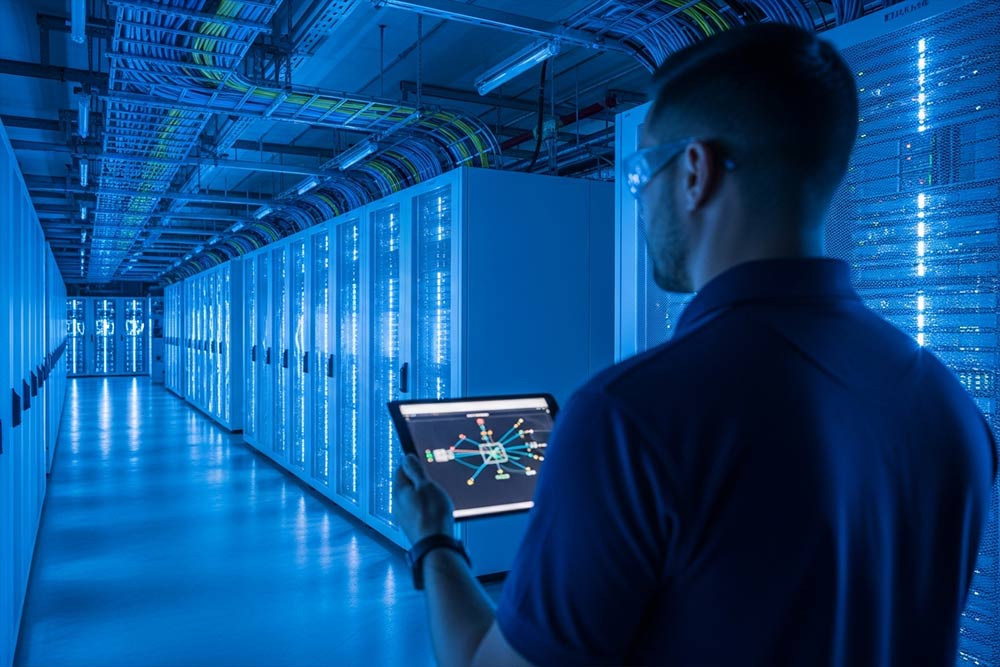
The expectation of zero downtime is becoming the norm. To meet the demand, colocation providers are evolving into highly resilient environments. These offer redundant power systems, advanced physical security, and compliance with the highest regulatory standards. On top of this, many offer managed services like real-time monitoring and other convenient solutions.
Geographic diversity also plays a role. Colocating in multiple locations allows businesses to distribute workloads, facilitate disaster recovery, and guarantee business continuity.
This resilience helps maintain customer trust during emergencies, outages, and increasingly frequent cyber events.
A Sustainable and Interconnected Future
Beyond performance and accessibility, colocation contributes to more sustainable computing. Instead of hundreds of organizations operating inefficient server closets, colocation concentrates compute workloads in centralized and optimized environments. Designers build facilities with energy efficiency in mind, using approaches like hot aisle containment, liquid cooling, and AI-driven energy management systems.
Many colocation data centers are carrier-neutral, which contributes to fostering dense ecosystems of interconnection. Enterprises using these colocation environments benefit from reduced latency, private connections to partners, and faster access to cloud services.
In today’s digital economy, agility, uptime, and efficiency are non-negotiables. Colocation is no longer a secondary strategy, but a core solution used by modern businesses. For many, colocation is at least part of a hybrid solution that helps organizations operate efficiently and stay connected.
Conclusion
Behind the power, cooling, and precision engineering of data centers sits something less visible but just as important: human expertise. As the digital economy grows more complex, the industry faces a pressing challenge: qualified talent is getting harder to find. Infrastructure is becoming more software-defined, and demand for seamless digital experiences keeps rising. It’s clear that success won’t rest on hardware alone. It will depend on how effectively organizations can adapt, collaborate, and embrace new ways of thinking. Meeting today’s challenges, and tomorrow’s, takes careful thought. We need to consider how we build data centers and who will use them.
Want to learn more about how data centers enable every aspect of our daily lives? Or would you like to explore our colocation services here at Volico Data Centers? Don’t hesitate to contact us.