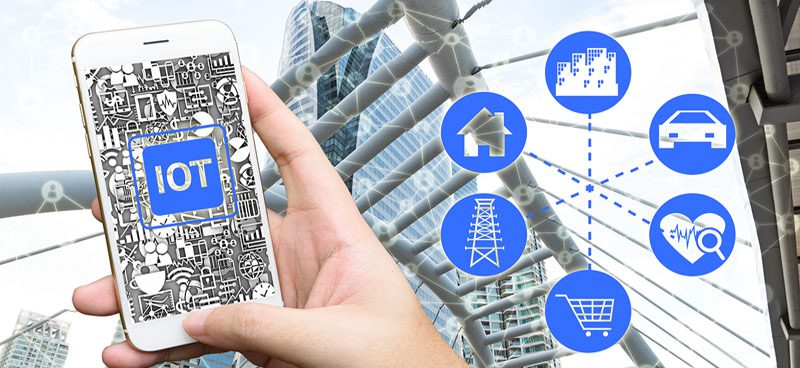
The Internet of Things (IoT) is the network of all devices that connect to the Internet. For example, smartphones, computers, buildings, and vehicles all count. Connections can include software, network connections, modems, sensors, or anything else that lets a user get online. The IoT now includes billions of devices, and that number keeps growing exponentially.
Connected devices have become a core part of modern culture and offer many advantages. Individuals and companies can communicate across neighborhoods and across the world. These connections allow for smart wearables, smart cars, smart homes, smart transportation systems, smart communities, and smart industries. As a result, businesses can design and market their products better and faster. They can also distribute products or provide services to a wider audience.
Security impact on enterprises
Connectivity is convenient, but it also creates dangers, because so many connected devices open so many doors. Many manufacturers are lax in preparing their devices for these security risks. When more devices connect to the Internet, criminals find it easier to launch cyberattacks and to disable your devices. Managing the risks and complications gets harder as the number of devices and connection methods multiply.
The IoT faces other security concerns too, including attacks on operating systems, data, and the underlying systems of devices. Fighting these attacks will take more sophisticated operating systems and computer networks.
IoT Trends
Most new IoT trends respond to the security concerns above and to the growing need for storage. Companies and vendors will need to solve several issues as the IoT continues to expand:
- Companies will need new analytic tools to track the performance of all these devices.
- Networks will grow more complicated, especially as the range of IoT devices expands.
- The industry will need new standards that balance proprietary concerns with expanded access and ease of use.
- Battery life will have to last days or weeks instead of hours.
In response to these concerns, the following trends have already begun to emerge:
- Computer architecture is becoming more sophisticated to handle the wide variety of devices.
- Developers are building more advanced operating systems.
- Distributed stream computing platforms (DSCPs) have begun to address the growing demand for data storage.
- New IoT platforms bundle communication services, data management, and the software needed to run applications and analytics.
Get ready for the next wave of the IoT
As the world gets smarter, companies must follow suit. Proper planning can maximize the advantages of the IoT while minimizing the risks. Most IT departments struggle to keep up with the latest trends, let alone adapt their technology to them. An experienced data center can help companies navigate these complicated waters. Want to understand how the IoT affects your company? Call Volico at (305) 735-8098 and speak with one of our IoT professionals.
As the world gets smarter, companies must follow suit. Proper planning can maximize the advantages of the IoT while minimizing the risks. For most IT departments, it is almost impossible to keep up with the latest trends, let alone prepare their technology to adapt to them. An experienced data center can help companies navigate these complicated waters. To better understand the IoT and its relation to your company, call Volico at (305) 735-8098 and speak with one of our IoT professionals.
Ready to See How Volico Data Center Can Help You?
Got questions? Want to talk specifics? That’s what we’re here for.
Have one of our friendly experts contact you to begin the conversation. Discover how Volico can help you with your IoT needs.
• Call: (305) 735-8098
• Chat with a member of our team to discuss which solution best fits your needs.