Choosing between a bare metal server and a cloud server shapes your performance, cost, and control for years to come. Technology has changed how companies work. Many now rely on computing services, data, and applications to deliver products at a much larger scale than before. To gain a competitive edge, a business needs networking and online services. However, the marketplace offers a variety of data storage, processing, and distribution solutions to consumers.
Nowadays, enterprises must decide between three solutions for their data storage:
- Colocation data centers
- On-premise data centers
- Cloud computing
Choosing a solution that suits your needs is a matter of business size and budget. Each one has its benefits and downsides. However, understanding what each option offers helps you make a better decision for your business.
You have probably heard of the cloud, even outside of business, because many people use it personally. That is the main reason why cloud gained so much popularity around the world. Bare metal is less popular than cloud computing. Still, many companies face a choice: leave their cloud provider for bare metal, or the other way around.
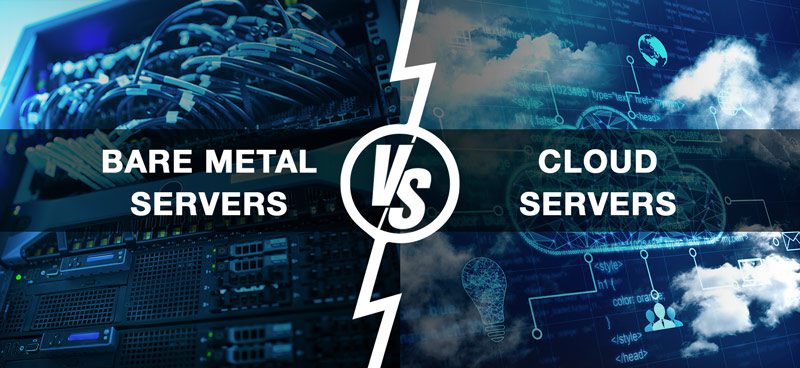
But what is a bare metal server, after all? What is the difference between cloud servers and bare metal servers? After all, both accomplish the same functions. Each type has key features of its own. Below we look at those features and at which one suits your business best.
Pros And Cons Of Bare Metal Servers
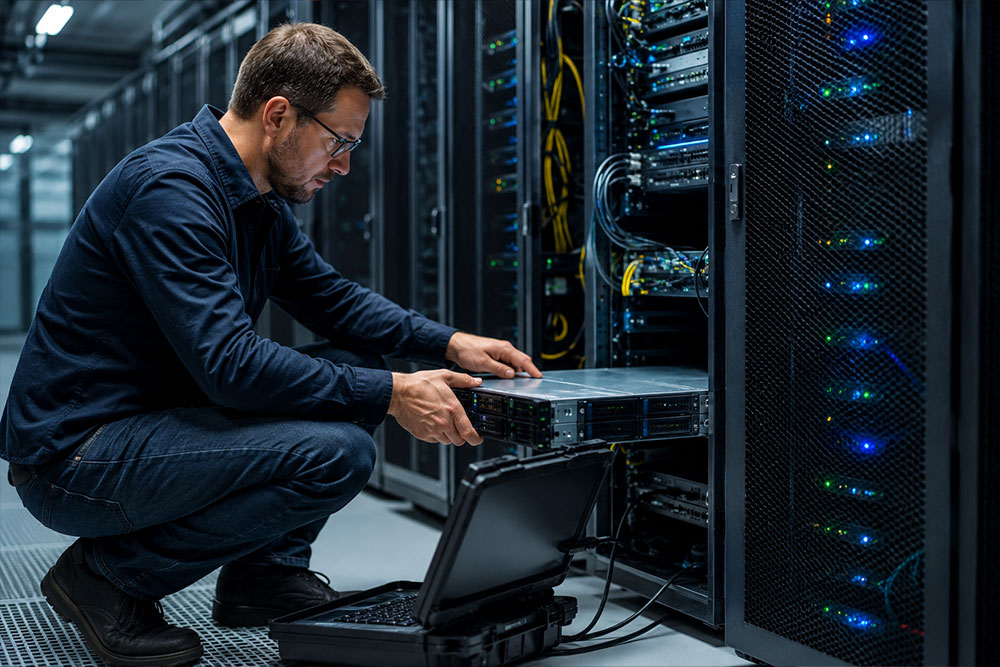
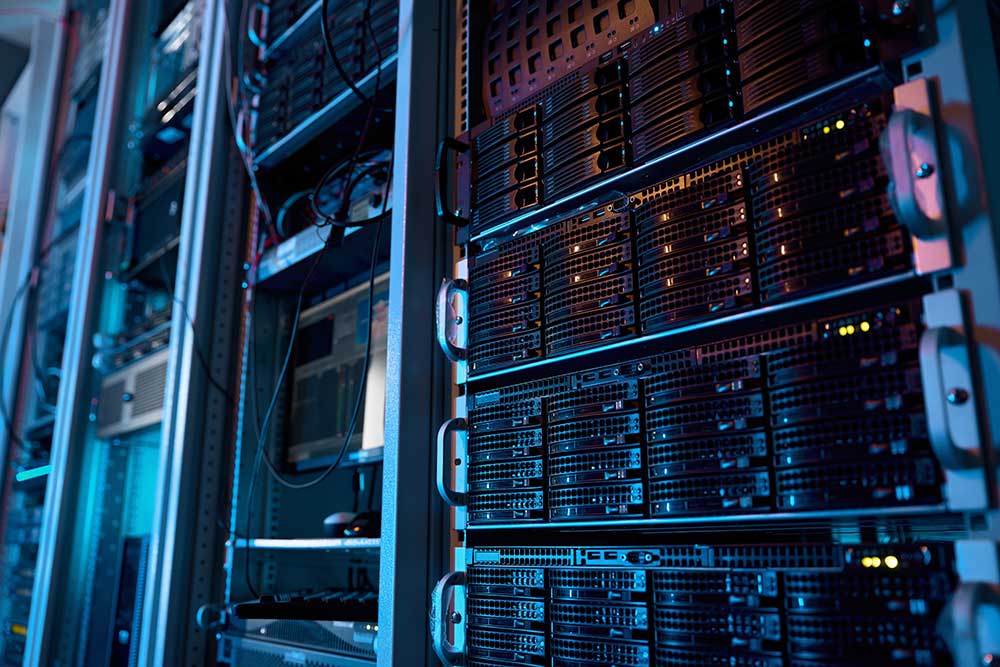
The difference is simple: a cloud server is a virtual machine, and a bare metal server is a physical machine. A bare metal server is a physical machine, and you identify it within a data center. Even if it sounds obvious, in the world of virtualization, this distinction is essential. A bare metal server, also called a dedicated server, sits in a secure, controlled part of a data center.
A bare metal server has dedicated hardware resources (CPU, RAM, storage, and a network port). Many companies choose this setup for performance-sensitive applications. Sometimes the cloud cannot beat bare metal, so it helps to know the benefits and the downsides.
Pros Of Bare Metal Servers
Is performance your top priority? If that is the case, you can’t go wrong with bare metal. They offer better performance for demanding applications, and your server can easily handle heavy workloads. Big data processing, performance-sensitive applications, and any other resource-heavy process benefit from running on bare metal.
They also offer the advantage of dedicating all the hardware resources to a single tenant. Because there is a single user, performance degradation and variation are unlikely. Servers with single tenants also have the benefit of high security. A security-sensitive organization may avoid a multi-tenant environment because it raises the risk of breaking regulatory compliance.
This setup is built for performance. If that is what your business needs, it might be the right fit. Bare metal servers deliver greater processing power and more input/output operations per second. Network and disk performance is also more consistent. You also get more reliable service, because you avoid the noisy neighbor problems of a multi-tenant environment.
Cons Of Bare Metal Servers
Bare metal is not the best fit for highly dynamic workloads or when performance is a low priority. The same goes for applications that scale up and down rapidly, and for workloads that only run briefly. In that case, you might want to switch to the cloud instead.
If hardware performance is not a priority, a single-tenant environment may cost you more than it is worth. If you need a scalable environment, bare metal might not be the right choice. Upgrading means buying new equipment, installing it, and updating it. That takes time, and you have to power down the unit, which causes downtime.
Pros And Cons Of Cloud Servers
When you buy a cloud server, you get a virtual machine (VM). Characterized by abstract disk, memory, and CPU, the virtualized server is straightforward. In this multi-tenant environment, you have multiple virtual instances, which means that the host machine shares its resources. Each tenant gets a share of the CPU, RAM, and storage. In most popular cloud setups, that storage is a small slice of a larger shared network pool.
Unlike traditional computing models, the cloud brings an entire set of benefits for the organization’s computing environment. From application scalability, improved economies of scale, and reduced costs to resource efficiencies, agility improvement, operational flexibility, and more. The cloud remains one of the most widely used solutions among enterprises. But what are the pros and cons of cloud servers?

Pros Of Cloud Servers
If you are looking to accomplish a wide range of tasks, cloud servers are the way to go. You can add resources to a virtual machine, or spin up a whole new server, in minutes. Cloud servers are well known for their scalability and application flexibility. In an environment with variable workloads, the cloud can dynamically scale performance, which is also a cost-efficient solution.
You pay for extra performance by the minute, and costs stay low for workloads that are not performance heavy. Virtual machines are ideal when you need a quick, cost-efficient server environment. You can access applications and data, use them, and turn them off as your workflow demands. On top of everything, you have a highly customizable environment built on a high-availability infrastructure for a reliable system.
Physical security and equipment are less relevant for you as a virtual instance powered by the host machine. With virtualization, you can increase performance in minutes, and the increase does not have to be permanent.
Cons Of Cloud Servers
VMs can’t match the sheer horsepower of bare metal. You can scale performance dynamically, but you share resources in a multi-tenant environment. If a noisy neighbor runs intensive data processing, you have less power available. If you run applications or tasks with heavy loads, the cloud server may not keep up because of its limits. This will result in poor performance and increased costs for the period of time you used more resources than usual.
The quality of the physical hardware is unknown, and accessing it might be impossible in many scenarios. You don’t know if the host uses poor equipment, which makes you unaware of the machine’s actual workload. Your VM runs on an operating system, and some see that as an extra layer of security. But attackers can still target that operating system from outside. If a security breach occurs, you don’t have direct access to the system, freezing your data in place.
Bare Metal Servers vs. Cloud Servers Conclusion
Many companies gain a competitive advantage with cloud and bare metal servers. Both can run heavy workloads and process data. Both solutions share some traits, but each has its own advantages and disadvantages. Which solution is best depends on your business and the workload you need to run.
If you need sheer horsepower for performance-sensitive applications and heavy workloads, bare metal servers might be right for you. On the other hand, choose a cloud server if you want a customizable, low-cost environment on high-availability infrastructure. With a cloud provider such as Volico, you can access enterprise-class cloud solutions that keep applications available and secure.
At Volico, we offer several custom built bare metal hardware options to fit any business need. Make sure to check them out!
Whether you want a bare metal or a classic public cloud server, contact a Volico professional today. We will discuss your requirements and set up the best hosting server for your business. Volico’s bare metal servers meet a broad range of workload needs. It’s available in various configurations with varying numbers of cores, RAM, CPU, Storage, OS, and more.
Got questions? Want to talk specifics? That’s what we’re here for.
• Call: 888 865 4261
• Chat with a member of our team to discuss which solution best fits your needs.