Large language models have surged recently, and the excitement has changed how we see reality. These models have reached a large number of people, so generative AI now serves many purposes worldwide. A few science fiction writers anticipated generative AI. But nobody could prepare for the paradigm shift it brought. The widespread availability of language models like ChatGPT has opened up unprecedented opportunities for growth and development. However, it has brought challenges of equal magnitude as well. As a result, we have to redefine our notions and reevaluate our needs. Generative AI and data center requirements are among the most burning topics today.
The incredible potential this powerful new technology has brought is hard to ignore. However, leveraging this potential comes with a lot of responsibility. Generative AI and data center infrastructure needs have to grow in balance. The most pressing issues, however, are power-related.
These changes pressure the industry to redefine basic notions like what a data center is and how it works. This blog looks at the symbiotic relationship between generative AI and data centers. It also shows how data center requirements are changing to accommodate the new world model.
Cost-efficiency is Not the Priority
Generative AI and data center needs are changing. These changes bring alterations to data center infrastructure and long-term strategic planning as well. Companies using generative AI can no longer focus on cost alone when they scale up or move to colocation. Chasing the lowest cost per compute power may not be worth the compromise in the long run.
Leveraging AI requires a smarter positioning of infrastructures. AI learning models depend on varied workloads, meaning that a dispersed infrastructure is more efficient. Teams must manage certain workloads, like real-time healthcare data processing, in specific locations. As a consequence, positioning infrastructures in population-dense areas is important for acquiring excellent network access and interconnection possibilities.
Generative AI and data center infrastructure are closely linked, so we need to rethink our approach in several areas. Emphasis on this new technology is growing fast. As a result, responsible, forward-thinking strategies will stay crucial for the data center industry.
How Is Generative AI Changing Data Center Requirements?
The scale at which artificial intelligence keeps growing already has an impact on data centers, networks, and computing. Generative AI and data center infrastructure are inseparable from each other. Nobody can predict the scale of AI growth with accuracy. But data centers still have to provide the space and hardware for future versions. Some of the areas already require significant changes.
More Compute Capacity
AI applications need significant amounts of computing power. Especially deep learning algorithms, which undergo training by analyzing and processing incredibly large amounts of data. To make this possible, you need great computational resources. Hence, there is an increased demand for powerful hardware in data centers.
As large language models like GPT-4 expand, they create more and more use cases. At present, they have nearly 2 billion monthly users. This drives demand for improved traffic for real-time interactions and necessitates the development of more efficient solutions from data centers.
Power Demand and Scalability
In 2022, data centers consumed approximately 230-340 terawatt hours of electricity globally, which is about 1-1.3% of all electricity demand. Data transmission networks consumed 260-360 TWh, and cryptocurrency mining added another estimated 110 TWh, 0.4% of annual demand. This amount of energy is more than the yearly consumption of some countries. Also, this amount will likely increase at an unforeseen pace to support the requirements for learning algorithms and other AI.
This expected growth poses the question of scalability for generative AI and data center capacity. Prioritizing flexibility, scalability, and resource efficiency will be a priority for future data center designs. Since the scale of growth is unpredictable, designs calculating with future adaptation and versatility will remain a first concern.
Advanced Networking and Connectivity Requirements
The need for bandwidth and capacity increases as AI models transform and become more complex. Generative AI and data center requirements are changing in synchrony. Therefore, data center providers need to adopt advanced networking solutions for better connectivity and seamless data transfer.
AI models, particularly learning algorithms, rely on vast data sets for input and training. This drives demand for high-speed and high-capacity networks. As a result, higher-capacity hardware (switches, fiber, routers, interconnects) becomes crucial for facilitating excellent data traffic.
Demand on the Edge
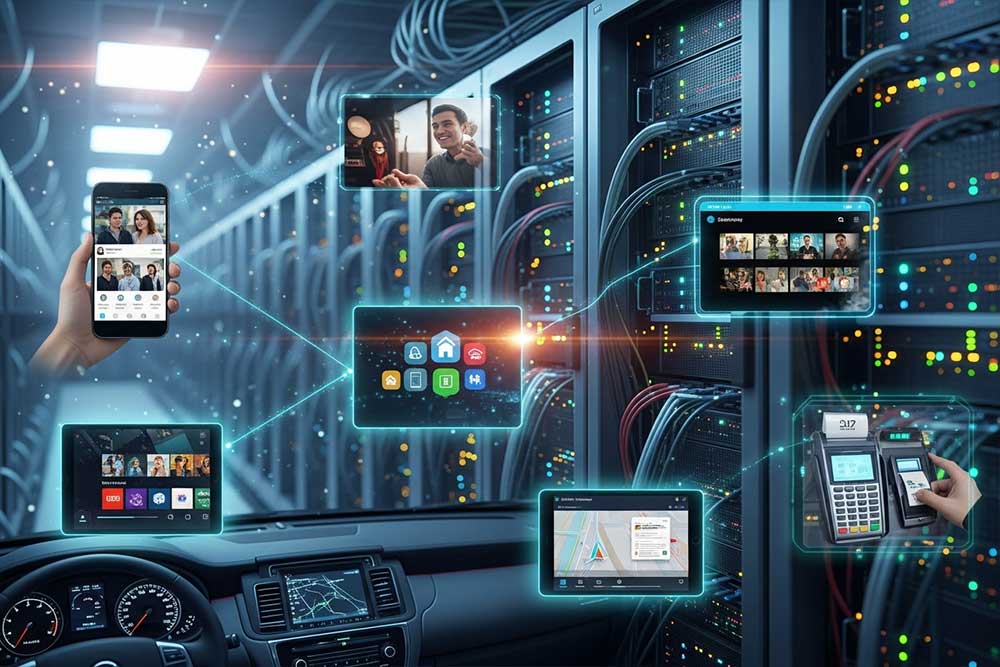
AI growth and IoT expansion require low latency. They also demand real-time processing of unprecedented speed and quality. The importance of edge computing is undeniable. Moving workloads closer to the data source brings significant improvements, since it decreases bandwidth traffic and reduces latency.
The impact of generative AI on data center requirements manifests in embracing innovative data center designs. Distributed AI architectures for the development of edge devices and networks are one of the most important new features. By improving data flow and increasing the efficiency and speed of operations, edge computing supports performance. As a plus, it brings remarkable changes in user experience.
Generative AI and Data Center Improved Security Requirements
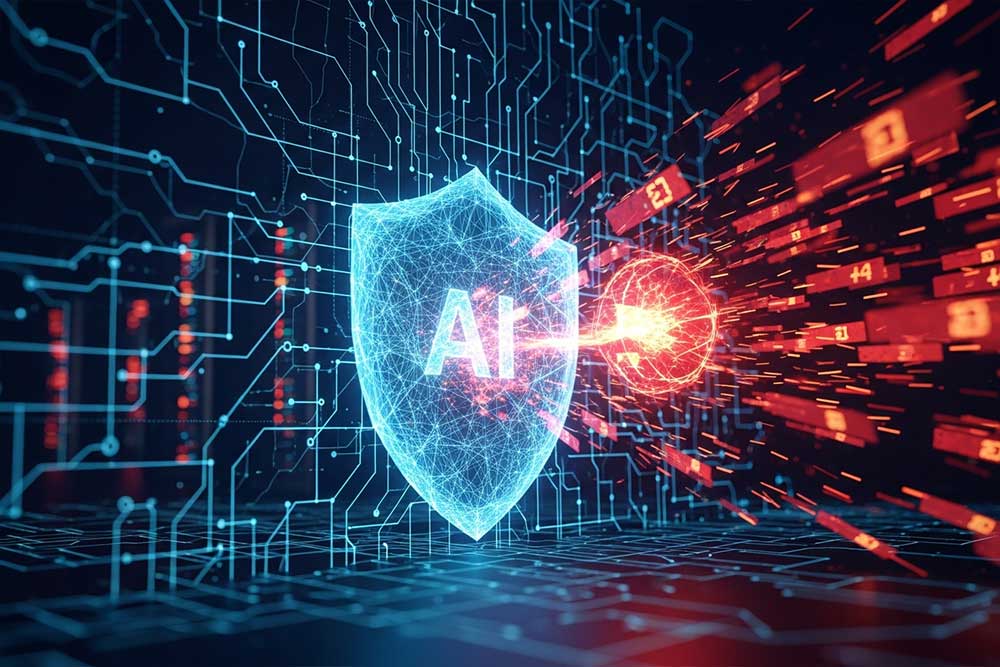
AI is now common in many areas, so we need stronger security in data centers and at the edge. AI used for cybercrime purposes poses a threat to security. The appearance of deepfakes as a cybersecurity concern is real and ingenious. We need robust measures to control future attacks. Security threats evolve as fast as new technology, so we always need to stay one step ahead.
The good news is that we can train AI to detect security threats. It can pinpoint potential risks and recognize anomalous behavior by analyzing network traffic in real-time. However, cybercriminals can also use AI to get access to a system. Hence, data centers must prepare to ward off these threats. They can improve security at the network infrastructure level and deploy other security mechanisms.
Generative AI and Data Center Changes Call For Energy-Efficient and Sustainable Solutions
Energy efficiency is a real concern for the future of data centers. Many data centers already use renewable energy, but powering one with solar panels alone is challenging. The impact of generative AI on data center requirements manifests in an increased demand for power consumption. This is because LLMs and generative AI model training need power-intensive data transfer and excellent network traffic.
If we look at the numbers, Open AI’s GPT-2, with its 1.5 billion parameters, needed 28,000 KWh of power for its training. GPT-3, with its 175 billion parameters, needed 284,000 KWh. This is already a 10 times increase compared to the previous model. The impact of generative AI on data center infrastructures creates an unprecedented demand for power-efficient solutions.
Data centers on renewable energy differ from those on fossil fuels, but the carbon footprint is still immense. As the world adopts generative AI, data centers do everything to accommodate it. So power usage effectiveness becomes paramount.
If scaling up continues at this pace, power demand and carbon footprints will grow proportionately. Renewable energy might not be enough for future data center needs, so power planning must become more comprehensive. There are rumors about some companies already adopting nuclear technology to power their data centers.
Conclusion
Generative AI and data center requirements continue to change in tandem with worldwide adoption. Communications, cloud computing, edge computing, network, and data management infrastructures are already impacted. Essentially, all data center technologies will change in the near future in order to keep up with this paradigm-shifting technology.
Got questions? Want to talk specifics? That’s what we’re here for.
Interested in Generative AI and data center technology changes in the forthcoming years? Discover how Volico Data Centers Colocation facilities and services can help you meet your forward-thinking plans. We offer flexible and efficient edge infrastructures, state-of-the-art hardware, and supreme connectivity solutions.
• Call: (305) 735-8098
• Chat with a member of our team to discuss which solution best fits your needs.