Many businesses at the start of their journey feel stuck choosing between a data center and a server room. It can feel like a Catch-22. However, knowing the pros and cons of each makes it easier to pick the one that fits.
Before fast internet became second nature, an on-premises data center meant a significant investment. A dedicated team had to maintain those on-site server rooms. They needed a whole infrastructure to keep running, and they carried a higher risk of data loss.
In recent years, technology has changed a lot and opened the door to less resource-demanding alternatives. Operators now offer better network and connectivity options and robust, safe data center infrastructures. Businesses can take advantage of increased performance, security, and managed services.
Every business needs a different approach to the data center and server room questions. This blog looks at the key differences, benefits, and main risks of each. Hopefully it helps you approach the dilemma with fresh insight. Let’s plunge in.

Key differences between data center and server room
Let’s first look at the main differences in general, as it will help us understand each particularity better.
Range and scalability
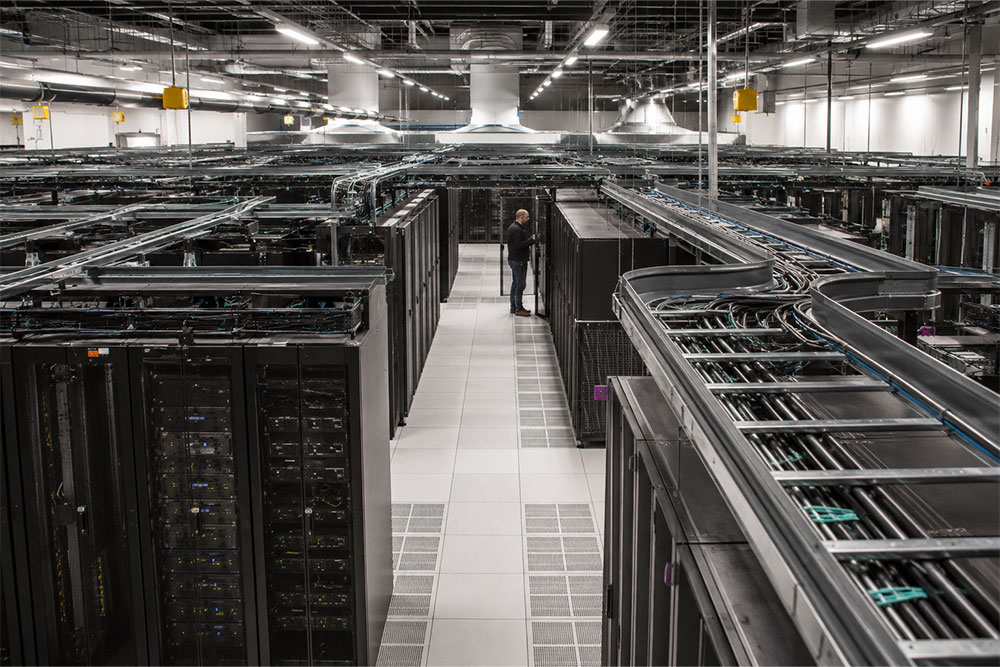
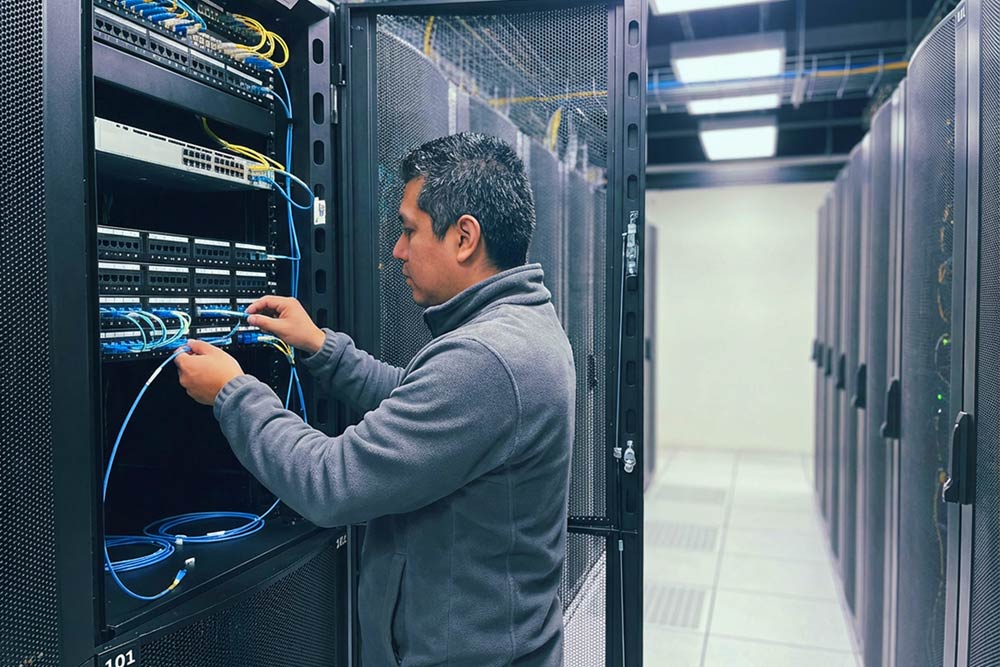
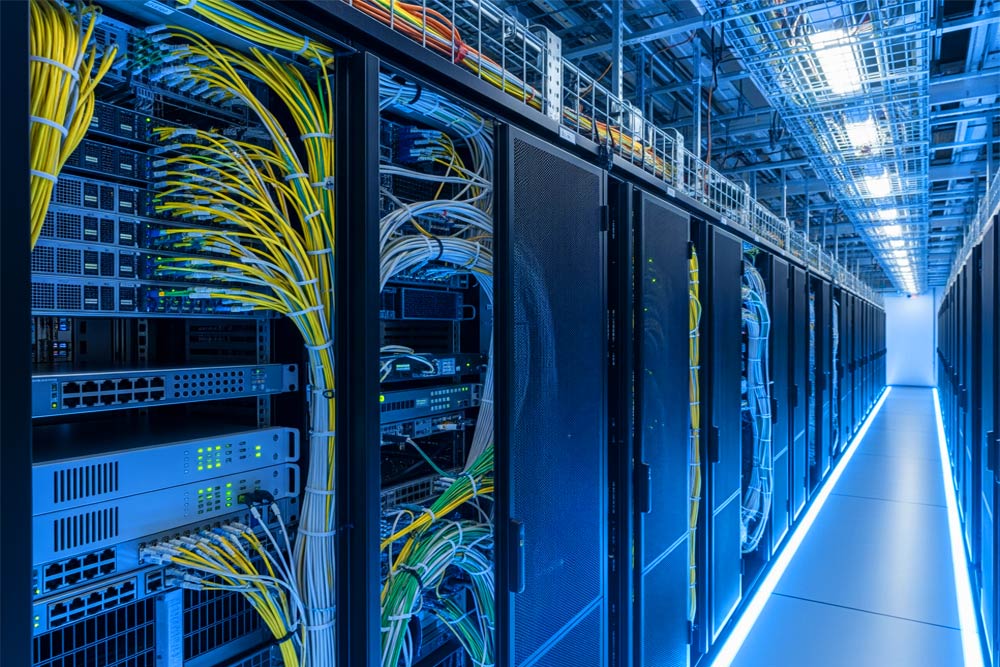
The main difference is size and setup. A server room is a designated area located on-premise. A data center is a whole dedicated building designed to store and manage data most efficiently. Both solutions serve the same purpose of managing data. Still, server rooms are much smaller. A data center can accommodate thousands of servers, so organizations with on-premise server rooms can hit a scalability wall at a given moment.
Cooling
Smaller server rooms only use HVAC systems for cooling. Data centers operate with more progressive, efficient, and sustainable cooling systems. Liquid cooling and immersion cooling, often combined with other designs, are measurably more effective than HVAC cooling. They are also less resource-intensive.
Security
Both a data center and server room can have efficient physical security protocols. However, a data center offers robust, multi-level security. It has authentication points and several layers of security control for each cabinet. Data centers keep security access logs and monitor everything within their perimeter. On-premises server rooms often need more robust security rules and infrastructure than they can offer.
Sustainability and energy-efficiency
Data center and server room infrastructures differ hugely when it comes to sustainability. The volumes of data keep growing at an unprecedented pace. Consequently, the need for performance and computing power is increasing. Data centers must look for ways to lower their energy consumption, so they are more likely to use sustainable solutions. On-premises server rooms usually need to be much bigger before an extensive renewable power infrastructure becomes worth the investment.
Data center vs. server room: the advantages and the disadvantages
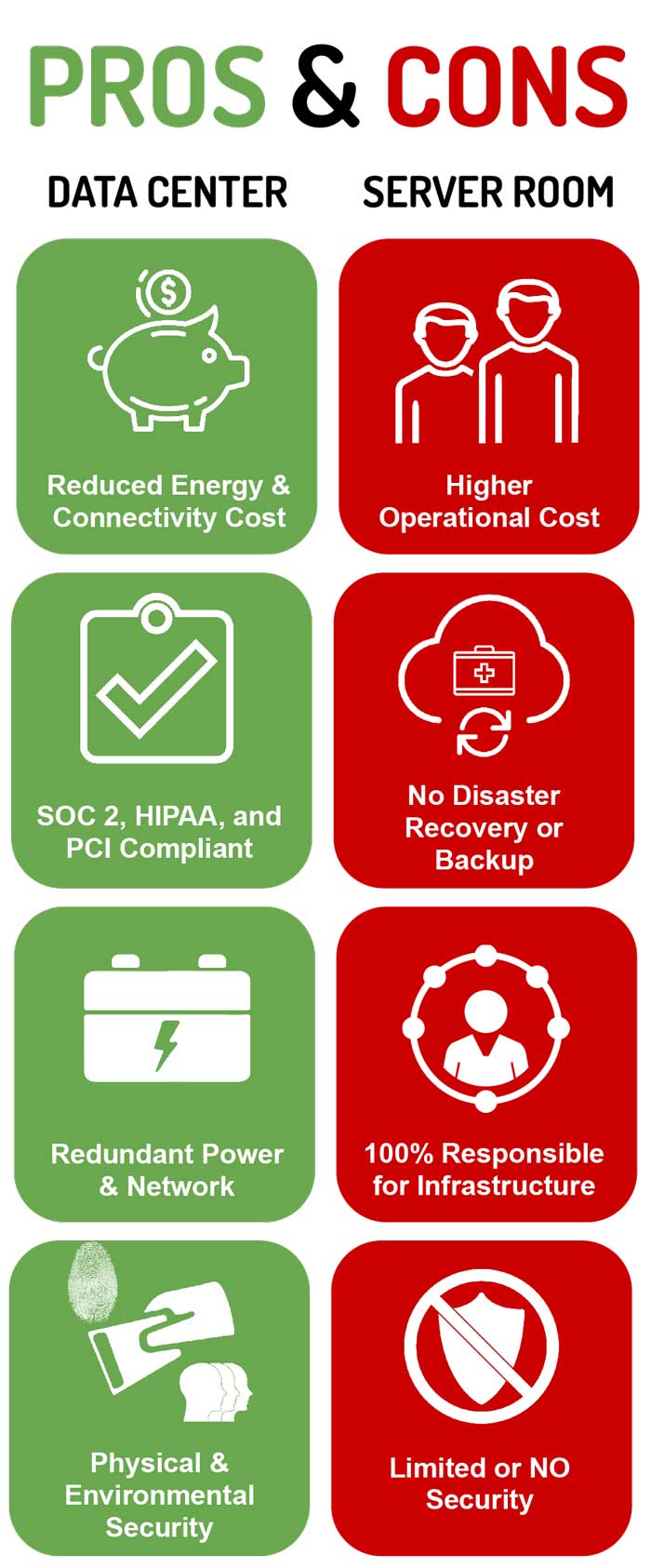 Let’s take a look at the key benefits and drawbacks of each.
The advantages of server rooms
The data center and server room dilemma has a pivotal point: control. Owning your server room and having total control over your data may be the most significant advantage of an on-prem solution. You can access it quickly, whenever needed. You can also make all the changes you need instantly. Customize them to your business’s particular needs at any moment. Complete control over your system also allows for customized security solutions. Those can be a significant advantage, depending on the specific circumstances.
The disadvantages of server rooms
As mentioned above, control is one of the core differences between the data center and server room. Owning your server room gives you complete control. However, it also gives you full responsibility.
Workload and staffing
The extra workload of managing a server room on-prem can strain your team. Issues can arise in the server room at any moment, drawing the workforce away from other tasks. Your business needs a team that can handle the unexpected challenges of the server room infrastructure efficiently. Maintaining the health of the servers will be a priority. Members of your team will have to drop other tasks from time to time to keep the server room running.
Scalability and cost
Scalability is essential for a business’s success, and expanding to new locations can be an important part of it. If you have a server room set up on-site but need to expand to further locations, it can become a hindrance. A colocation data center can be a better choice in the long run. It offers excellent connectivity and easy access to different locations, and it scales with you.
Setting up servers on-premises can also be quite costly, because you have to buy all the components and set up everything on your own. Because of this, there’s much more room for human error in the configuration, which leads to increased risks of data loss. Higher exposure to breaches, theft, fires, and floods can make the decision somewhat easier. The balance shifts to the advantage of the data center.
The advantages of data centers
Businesses of all sizes need to be online to stay competitive and grow. Initially, most businesses built their own online IT infrastructure. They converted a spare room in their office, or even their home, into a “Server Room.” In-house hosting gives you the most hands-on control of your servers, but it usually costs more and takes more time.
Key advantages over a server room
For businesses at the beginning of their development, an on-site server room can be a waste of time and resources. Server rooms come with maintenance and financial responsibilities, which can slow down the growth of a young business. On the other hand, data centers can lift the burden of costly data management. In most cases, businesses starting out can be perfectly efficient with a less resource-intensive virtual private server.
Managed services and security
Managed services offered by data center operators can solve many data center and server room dilemmas. Crossing data management responsibilities off the list is a winning argument for most businesses. This allows organizations to focus their energy on other, more critical areas, so they grow faster.
Security can also be a decisive element for most businesses, and managing data on-prem is not always the most secure solution. The complexity of the task can often become too much to handle, leading to errors and exposing vulnerabilities. Also, the robust infrastructure of data centers offers multiple layers of backup. It can guarantee your data’s safety even during a power outage.
And lastly, data center designs are built to handle data with the highest possible efficiency. This allows them to offer better security, network access, and climate control. Data centers are also more sustainable and energy-efficient than an on-premise server room.
The disadvantages of data centers
Data center and server room solutions differ in many things. One of the biggest disparities is that you entrust the data center with security, maintenance, and uptime. If you value full control over your equipment and data, a data center might not be the best choice for you.
Cost can also count as a disadvantage for the data center, because of the setup fees and deposits required at the beginning. After that, you pay monthly for the hosting. The amount depends on bandwidth requirements, IPs, and similar factors. However, choosing the right solution at the right moment can bring the costs down to a reasonable amount for the services received.
Also, whether you choose an in-house server stack or a data center, some upfront costs will be present anyway. It’s important to consider your needs and choose a solution you can fully take advantage of.
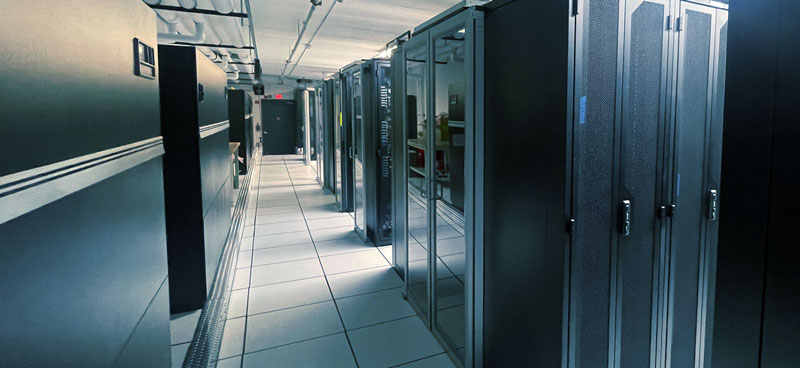
Server Room vs. Data Center: Which is Best for Your Business?
Looking at the advantages and disadvantages of the data center and server room, it’s easy to see that the data center is more complex in many ways. Nevertheless, for some businesses, it can make sense to operate a server room on-premises. The needs of businesses can be very different, so it’s important to weigh the options well before you decide.
For example, if your business needs only a few servers and you want the infrastructure close to your headquarters, an on-site server room can make sense.
However, if you have bigger server needs, a data center or colocation facility can be much more efficient. Also, if your business is in its beginning phase, a VPS can be more cost-effective than maintaining a server room on-premise. It can also beat the higher upfront costs of a colocation provider.
Data centers are specialized buildings that exist to handle data in the most efficient way. Organizations sharing space in the data center share the resources of the building as well. That includes housing, storage, support, and access to excellent quality hardware and networking infrastructure. Data centers are typically safer, more reliable, and more energy-efficient than managing a server room on-site.
Hopefully, looking at the advantages and disadvantages of data center and server room solutions helped clear up the fog around the two.
Which solution do you think would best suit your business?
If you’re interested in data center and server room solutions, contact us to discuss the details. Discover how Volico Data Centers can offer your organization robust, high-performance, redundant IT infrastructure and services to help your business stay ahead of the competition.
• Call: (305) 735-8098
• Chat with a member of our team to discuss which solution best fits your needs.